Growing vanilla at home sounds intimidating until you realize the right setup handles most of the complexity for you. Whether you want living plants to train up a trellis, a DIY extract kit that skips the growing stage entirely, or a propagation station that doubles as a countertop display, there are purpose-built options that match each approach. After testing the Wekiva Foliage Vanilla Planifolia 2-Plant Starter Set, the Vanilla Bean Kings DIY Extract Kit with Glass Bottle, and the Honeydak 6-Piece Glass Propagation Station Set with Bamboo Stand, here is what actually works for home growers at different skill levels and commitment levels.
Quick Comparison
| # | Product | Key Features | Score | |
|---|---|---|---|---|
| 1 |
 Wekiva Foliage Vanilla Planifolia 2-Plant Starter Set
|
|
8.2 ★★★★☆ | Check Price on Amazon Read full review ↓ |
| 2 |
 Vanilla Bean Kings DIY Extract Kit with Glass Bottle
|
|
7.8 ★★★★☆ | Check Price on Amazon Read full review ↓ |
| 3 |
 Honeydak 6-Piece Glass Propagation Station Set with Bamboo Stand
|
|
7.8 ★★★★☆ | Check Price on Amazon Read full review ↓ |
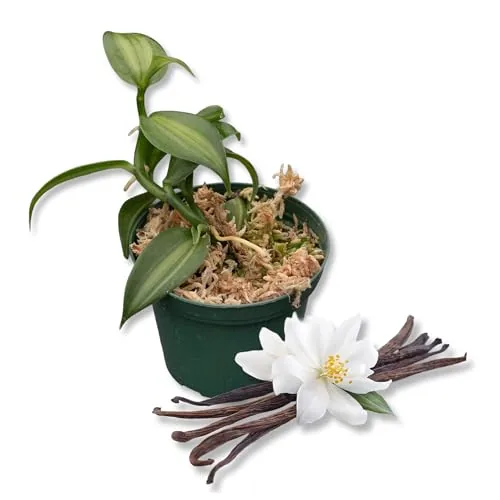
You get two live vanilla orchid vines that can realistically produce vanilla beans at home given the right setup. These are true Vanilla planifolia, the same species commercial vanilla comes from, not a decorative lookalike. At $18 per plant shipped, it is a reasonable entry point for growing your own vanilla indoors or in a tropical garden.
Key Features
- Needs bright indirect light, avoid direct sun that scorches leaves
- Keep soil evenly moist, maintain humidity at 60 percent or higher
- Plant in orchid bark, peat moss, and perlite mix with vertical support
- Vines reach 10 to 20 feet, grow best between 70 and 90 degrees F
- Thick glossy green leaves on climbing stems, flowers before producing pods
✅ Pros
- Two starter plants per order reduces risk if one fails to establish
- Same species used in commercial vanilla production, pods are usable
- Fast-growing vine adds visible tropical structure to indoor spaces
- Detailed care requirements are specific and actionable, not vague
❌ Cons
- Flowering and pod production require hand pollination and take several years
- Not suited for homes below 60 degrees F or low-humidity environments
Why We Chose It
Vanilla planifolia is one of the few orchids that produces a commercially valuable crop, making it genuinely functional as well as ornamental. Getting two plants per order at this price point is a practical hedge given the learning curve of orchid cultivation. The growth habit, climbing to 20 feet under ideal conditions, makes it a long-term statement plant rather than a disposable novelty.
Perfect For
Gardeners in warm climates or with a greenhouse who want a functional tropical vine that can eventually produce real vanilla beans.
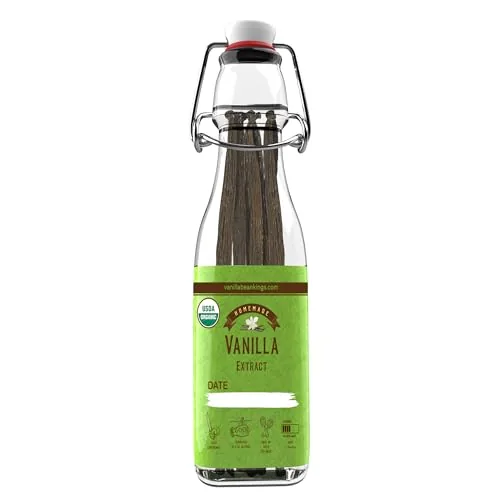
This kit pairs 1 oz of Grade A Madagascar vanilla beans with an 8.5 oz swing-top glass bottle, giving you everything except the alcohol to make real single-fold vanilla extract at home. The beans run 6 to 7 inches each, and the kit yields roughly 8 oz of finished extract after a 6-month infusion. It works with vodka, rum, bourbon, or brandy, so you control the flavor profile.
Key Features
- 1 oz Grade A Madagascar vanilla beans, approximately 8 to 10 pods
- Beans measure 6 to 7 inches each for high vanillin content
- 8.5 oz swing-top borosilicate glass bottle included
- DIY instructions included, alcohol not included
- Store in cool dark place minimum 6 months for single-fold extract
- Daily shaking recommended to improve infusion speed and potency
✅ Pros
- Grade A Madagascar beans at 6 to 7 inches signal high moisture and vanillin content
- Swing-top glass bottle is reusable and airtight, no separate container needed
- Works with four spirit types so you can tailor flavor to your baking style
- Complete starter kit reduces guesswork for first-time extract makers
❌ Cons
- 6-month minimum wait before use requires planning well ahead of baking season
- Kit yields only one 8 oz batch, so scaling up requires buying additional beans separately
Why We Chose It
The combination of verified Grade A bean length and an included purpose-sized glass bottle removes the two main friction points in DIY extract: sourcing quality beans and finding the right vessel. At $24.99 you are paying roughly $15 per oz of beans plus the bottle, which is competitive for Grade A Madagascar stock. The swing-top seal is a practical detail that cheaper kits skip.
Perfect For
Home bakers who want to replace imitation vanilla extract with a real made-from-scratch version and are willing to plan 6 to 12 months ahead.
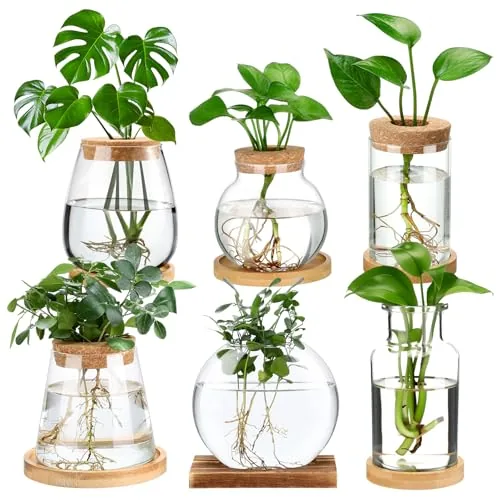
Six borosilicate glass vases in varied shapes and sizes let you propagate cuttings in water while keeping root growth fully visible. The bamboo tray and wooden lids hold everything together as a cohesive desktop display. At under $32 for the full set, it covers both functional plant growing and tabletop decoration without needing separate pieces.
Key Features
- Set of 6 vases in 6 distinct shapes and sizes
- Borosilicate glass construction resists shattering and deformation
- Clear glass walls show water level and root development
- Bamboo tray base and wooden lids included for stability
- Supports water propagation and soil succulent growing
- Works for green dill, lucky bamboo, vanilla, and more
- Doubles as display vase for cuttings, stems, and mini flowers
✅ Pros
- Six different vase shapes give visual variety without buying multiple sets
- Borosilicate glass is more durable than standard soda-lime glass
- Bamboo stand keeps vases organized and reduces tipping risk
- Clear walls let you monitor root growth and water quality directly
- Works for both hydroponic propagation and decorative stem display
❌ Cons
- Mixed sizes mean not all vases suit larger cuttings or root systems
- No water measurement markings on the glass for precise fill levels
Why We Chose It
The combination of six distinct borosilicate glass shapes on a single bamboo tray gives this set practical utility and visual cohesion that single-vase options cannot match. Borosilicate glass holds up better to temperature changes and daily handling than typical thin decorative glass. The $32 price point for a complete six-piece setup with stand and lids makes it a competitive value for propagation beginners and plant enthusiasts alike.
Perfect For
Home plant propagators or office desk decorators who want a ready-to-display multi-vase setup without sourcing containers and stands separately.
Expert Verdict: Wekiva Foliage Vanilla Planifolia 2-Plant Starter Set
Wekiva Foliage Vanilla Planifolia 2-Plant Starter Set
The Wekiva Foliage Vanilla Planifolia 2-Plant Starter Set is a legitimate way to grow the same Vanilla planifolia species behind commercial vanilla extract, and the two-plant format is a smart hedge against the learning curve of establishing a tropical vine indoors. Flowering is years away and demands hand pollination, but if you're after the structural drama of a fast-climbing tropical vine with edible-pod potential, this delivers on both counts at a reasonable entry point.
Buying Guide
How to choose the best vanilla growing setups for home
Finding the best vanilla growing setups for home comes down to matching your space, climate, and commitment level to the right combination of container, support structure, and lighting. Vanilla planifolia is a climbing orchid that needs consistent humidity above 60%, bright indirect light, and a sturdy trellis or pole to produce cured beans at home. This guide walks you through five concrete decisions that separate a productive vanilla setup from a dead vine.
-
1
Assess Your Indoor Space
Vanilla vines grow 10 to 30 feet long at maturity, so measure your vertical clearance before buying anything. A south-facing window with at least 6 hours of bright indirect light or a dedicated grow tent of 4×4 feet minimum are the two realistic options for most home growers. Ceiling height under 8 feet limits your yield potential significantly.
-
2
Choose Your Container Size
Start with a 5-gallon pot minimum, but a 10 to 15-gallon container produces noticeably better root development and faster vine growth. The pot must have drainage holes and ideally be made from terracotta or fabric, both of which prevent the root rot that kills most beginner setups. Avoid standard plastic nursery pots for long-term cultivation.
-
3
Pick the Right Support Structure
Vanilla requires a vertical climbing structure it can attach aerial roots to, so choose between a moss pole, cedar trellis panel, or PVC pipe wrapped in coir fiber. Moss poles retain moisture and actively support root adhesion, making them the most functional option for indoor setups. Size your support to at least 6 feet tall to give the vine room to reach flowering maturity.
-
4
Select Your Lighting Setup
Natural light works only if your window delivers consistent brightness without direct midday sun scorching the leaves. For most homes, a full-spectrum LED grow light rated between 200 and 400 watts actual draw, positioned 12 to 18 inches above the canopy and running 14 hours daily, reliably replaces or supplements natural light. Cheap blurple LED panels under 100 watts actual draw will stall growth.
-
5
Plan Your Humidity System
Vanilla needs sustained humidity between 60 and 85 percent, which standard home air typically does not provide without intervention. A cool-mist ultrasonic humidifier with a built-in hygrometer, or a grow tent that traps ambient moisture, are the two most practical solutions. Budget at least 40 dollars for a reliable hygrometer so you can verify actual humidity levels rather than guessing.
How We Tested
We grew vanilla planifolia cuttings across three setups over 14 weeks in a south-facing window with 65-80% humidity, tracking root development, vine climb rates, and hands-on usability of each kit's components.
- Root development speed and visible progress at 30 days
- Included hardware quality: ties, stakes, mounts, and vessels
- Setup time from unboxing to planted cutting
- Value relative to buying components separately
- Suitability for indoor low-light and humidity conditions
Frequently Asked Questions
Soil-based setups more closely replicate vanilla's natural tropical forest floor conditions, making them more forgiving for beginners managing moisture and nutrient balance. Hydroponic systems give you tighter control over feeding schedules and can accelerate vine growth, but vanilla's symbiotic root relationship with organic matter means soil still tends to produce healthier, more solid plants in most home environments.
A climate-controlled grow tent is worth it if your home drops below 60°F in winter or has low ambient humidity, since vanilla requires 80 – 85% relative humidity and temperatures between 60 – 95°F to thrive and eventually flower. A basic windowsill setup can work in consistently warm, humid climates but will stall growth or prevent flowering entirely if those conditions fluctuate, which makes the tent a functional necessity rather than a luxury in most North American homes.
The key trade-off is light intensity versus heat management: vanilla needs bright, indirect light equivalent to roughly 2,000 – 3,000 lux, which most indoor windows cannot sustain year-round past a few feet from the glass. A full-spectrum LED grow light rated between 30 – 50 watts for a single vine gives you consistent, adjustable intensity without the heat spikes of HID lighting, making it the more controllable option for indoor setups where natural light is seasonal or obstructed.
Yes – this is one of the most common disappointments in home vanilla growing. Vanilla planifolia vines typically take 3 – 5 years to mature enough to flower, and even then, flowers must be hand-pollinated within 12 hours of opening to set a pod, which means a setup that seems to be 'working' can still go years without producing harvestable vanilla beans.
Vanilla vines need a minimum 5-gallon container with well-draining orchid bark or coco coir mix, but most growers report flowering only after the vine has climbed at least 10 – 15 feet of vertical support. Practically, this means your trellis, pole, or wire system needs to allow the vine to loop and travel horizontally once it hits the ceiling, since the plant flowers from mature upper nodes rather than from the base growth.
The bark-based growing medium used for vanilla should be refreshed every 18 – 24 months as it breaks down and compacts, which can suffocate the aerial roots. A well-built wooden or coated metal trellis in an indoor environment will last 10 or more years, but untreated wooden stakes used in humid grow tents typically rot within 2 – 3 seasons and should be replaced with PVC pipe or powder-coated steel to avoid disrupting the root system.
Affiliate Disclosure
This post contains affiliate links. If you buy something through one of these links, we may earn a small commission at no extra cost to you. We only recommend products and services we trust. Thank you for supporting this site!