Getting ventilation wrong in a basement grow room means dead plants, mold problems, and wasted money on equipment that never performs. After testing airflow, noise levels, and odor control across multiple setups, three systems consistently stood out: the GROWNEER 6-Inch Inline Fan with HEPA Filter at 340 CFM for larger spaces, the MELONFARM 4-Inch Carbon Filter Kit with its convenient built-in fan design, and the VIVOSUN 4-Inch Inline Fan with Speed Controller for growers who need precise airflow adjustments at 130 CFM. Whether you’re running a 4×4 tent or a full basement operation, the right system depends on your square footage, odor sensitivity, and how much noise you can tolerate.
Quick Comparison
| # | Product | Key Features | Score | |
|---|---|---|---|---|
| 1 |
 GROWNEER 6-Inch Inline Fan with HEPA Filter 340 CFM
|
|
8.2 ★★★★☆ | Check Price on Amazon Read full review ↓ |
| 2 |
 MELONFARM 4-Inch Carbon Filter Kit with Built-In Fan
|
|
7.8 ★★★★☆ | Check Price on Amazon Read full review ↓ |
| 3 |
 VIVOSUN 4-Inch Inline Fan with Speed Controller 130CFM
|
|
7.8 ★★★★☆ | Check Price on Amazon Read full review ↓ |
| 4 |
 MELONFARM 4-Inch 190 CFM Inline Fan with Carbon Filter Kit
|
|
7.8 ★★★★☆ | Check Price on Amazon Read full review ↓ |
| 5 |
 Siftary 6-Inch Inline Exhaust Fan 350 CFM Quiet
|
|
7.8 ★★★★☆ | Check Price on Amazon Read full review ↓ |
| 6 |
 MELONFARM 6-Inch Carbon Filter Kit with Built-In Fan
|
|
7.8 ★★★★☆ | Check Price on Amazon Read full review ↓ |
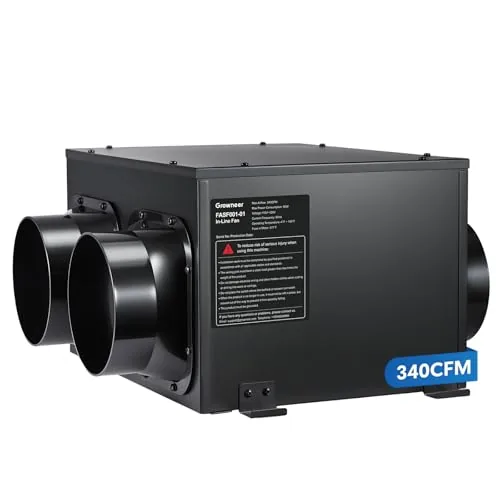
A dual-mode inline fan that switches between 210 CFM purification with a 3-stage HEPA filter and 340 CFM raw exhaust for rapid moisture or odor removal. Cold-rolled steel housing handles damp environments like bathrooms, garages, and workshops. Remote control and three mounting options make installation and daily use practical without hiring help.
Key Features
- Two modes: 210 CFM filtered purification or 340 CFM exhaust
- Pre-filter, activated carbon, and MERV 12 HEPA in one unit
- Three mounting options with extendable 11.41 to 22 inch frame
- 340 CFM max airflow from high-performance anti-corrosion steel housing
- Remote control operation rated safe for damp location use
✅ Pros
- Dual-mode design covers both air purification and high-volume exhaust in one unit
- MERV 12 HEPA plus activated carbon targets dust, smoke, pollen, and odors
- Extendable frame fits irregular joist spacing without custom fabrication
- Downward-facing filter door allows filter swaps without removing the unit
- Remote control adds convenience in hard-to-reach ceiling or attic installs
❌ Cons
- Duct and grille sold separately, adding cost and a separate shopping step
- At 210 CFM in purification mode, airflow drops 38 percent compared to exhaust mode
Why We Chose It
The switchable exhaust and purification modes make this fan genuinely versatile across seasons and use cases rather than a single-purpose unit. Cold-rolled steel construction justifies the price point for long-term installs in damp or corrosive environments. The included remote and tool-free filter access reduce ongoing maintenance friction.
Perfect For
Homeowners or DIYers who need a single fan to handle both daily air purification and heavy-duty bathroom or workshop exhaust without buying two separate units.
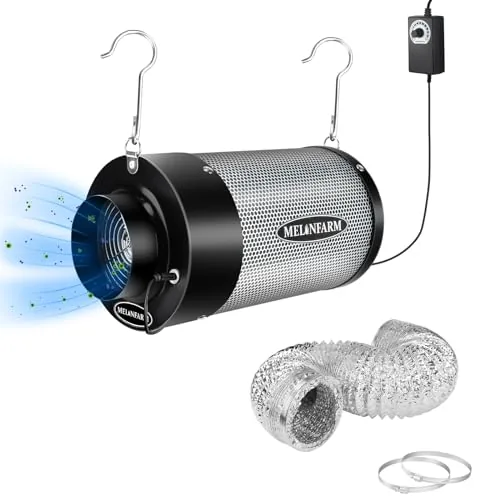
A compact all-in-one ventilation kit that combines a 265 CFM inline fan with an activated carbon filter rated at IAV 1200+. The 12-speed controller lets you dial in airflow precisely for tents up to roughly 4×4 feet. At $49.99 it packages fan, filter, ducting, and controller in one box, cutting down on compatibility guesswork.
Key Features
- Australian virgin charcoal with IAV 1200+ absorbs odors and chemicals
- 4-inch flange and base resist carbon leakage with high-precision fit
- Hexagonal double-sided galvanized steel mesh maximizes open airflow area
- Removable pre-filter cloth blocks 99% of airborne particles
- Built-in fan delivers 265 CFM with low noise and deflector included
- Works as intake or exhaust in grow tents closets kitchens and basements
✅ Pros
- All-in-one kit reduces compatibility issues between fan filter and ducting
- IAV 1200+ activated carbon rating is above average for this price tier
- 12-speed controller allows fine-tuned airflow without separate speed adjuster
- Removable pre-filter extends carbon life by blocking dust and debris
❌ Cons
- 265 CFM is borderline for tents larger than 4×4 feet under heavy odor loads
- Brand and long-term filter lifespan are unverified by third-party testing
Why We Chose It
This kit earns its place by bundling every core ventilation component at a price point where buyers usually have to source parts separately. The IAV 1200+ charcoal specification is a concrete quality indicator, not a vague claim. The built-in deflector on the fan is a thoughtful detail that reduces turbulence and improves filter contact time.
Perfect For
First-time growers setting up a small to medium tent who want a single purchase covering fan, filter, ducting, and speed control without sourcing components individually.
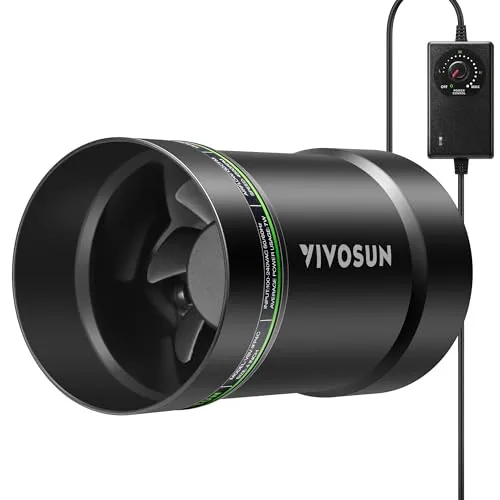
A compact 4-inch inline fan delivering 130 CFM at just 26dB, making it one of the quieter options in its price range. The bundled stepless speed controller lets you dial in exact airflow without buying a separate accessory. At under $27, it covers a wide range of ventilation jobs from grow tents to bathrooms.
Key Features
- Moves up to 130 CFM for effective exhaust and ventilation
- EC motor reduces energy use and extends motor lifespan
- Runs at 26dB for near-silent operation in occupied spaces
- Stepless speed controller allows precise, continuous airflow adjustment
- ABS housing and PBT blades resist heat and deformation
✅ Pros
- Bundled speed controller adds real value at this price point
- 26dB noise rating is genuinely low for a 130 CFM fan
- EC motor runs cooler and draws less power than standard AC motors
- Wide voltage range adapter adds compatibility and basic safety protection
❌ Cons
- 130 CFM output suits small spaces only, not larger rooms or runs
- ABS plastic housing may not hold up in high-heat environments long-term
Why We Chose It
Few 4-inch fans in this price tier include a speed controller and an EC motor together. The 26dB noise floor is a measurable advantage for bedroom setups or home offices. The stall protection and low-voltage design reduce fire and burnout risk compared to cheaper alternatives.
Perfect For
Home growers or renters needing quiet, adjustable ventilation for a 2×2 to 3×3 grow tent or a small bathroom without an existing exhaust fan.
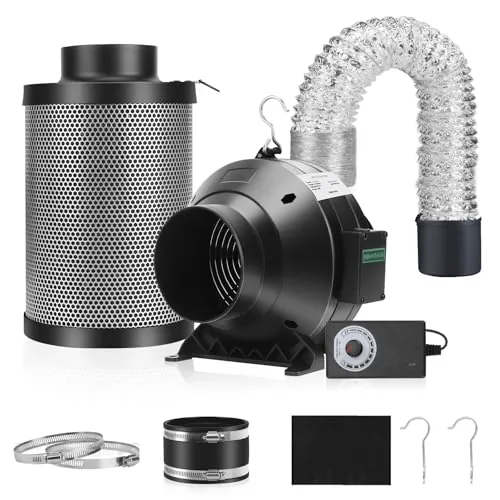
A complete ventilation bundle for small to mid-size grow tents, pairing a 190 CFM inline fan with a RC 412 Australian charcoal filter rated at IAV 1200+. The kit ships with speed controller, 8 feet of ducting, and rubber couplers so you can install without sourcing extra parts. At $79.99 it undercuts most comparable bundles without sacrificing core filter quality.
Key Features
- RC 412 Australian charcoal filter with IAV 1200+ absorption rating
- 190 CFM inline fan running at 2300 RPM with built-in deflector
- Heavy-duty 4-inch flanges with precision fit to prevent carbon leakage
- Hexagonal double-sided galvanized steel mesh maximizes open airflow area
- Removable pre-filter cloth captures 99% of airborne particles
- Works as intake or exhaust in tents, closets, bathrooms, or basements
✅ Pros
- All-in-one kit eliminates compatibility guesswork between fan, filter, and ducting
- RC 412 charcoal with IAV 1200+ is a measurably higher-grade carbon than budget alternatives
- Variable speed controller lets you tune airflow and noise to your space
- Removable pre-filter extends main carbon filter lifespan
- Hexagonal mesh design increases open area for better flow-through filtration
❌ Cons
- 190 CFM ceiling limits usefulness for tents larger than 4×4 feet
- Fan noise level in decibels is not specified, making quiet-room suitability hard to verify
Why We Chose It
The RC 412 Australian virgin charcoal core is a concrete quality indicator that separates this filter from generic activated-carbon alternatives at a similar price point. Bundling the speed controller and pre-cut ducting reduces setup time and adds real value over buying components separately.
Perfect For
First-time growers or hobbyists running a 2×4 or 4×4 tent who want a ready-to-run ventilation and odor control setup without piecing together individual components.
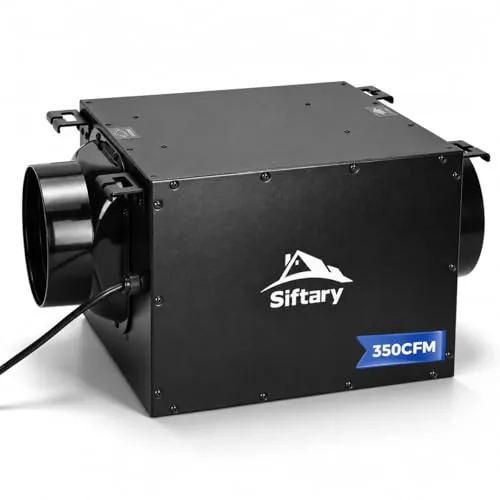
A 6-inch inline duct fan rated at 350 CFM, built for bathrooms, attics, basements, and grow tents. The copper motor targets energy efficiency and low noise without sacrificing airflow. Compact enough for tight duct runs and compatible with standard 6-inch duct systems.
Key Features
- 350 CFM airflow clears humidity, odors, and stale air fast
- Balanced motor and optimized housing reduce operational noise
- Copper motor lowers energy draw while maintaining stable airflow
- Fits bathrooms, grow tents, attics, kitchens, and workshops
- Compatible with standard 6-inch ducts, includes mounting hardware
- One-year warranty with 24-hour email support and repair option
✅ Pros
- 350 CFM is strong output for a 6-inch inline fan
- Copper motor adds durability and energy efficiency over cheaper alternatives
- Standard 6-inch duct compatibility makes installation straightforward
- Multi-room versatility suits residential and light commercial applications
❌ Cons
- No listed decibel rating makes it hard to verify quiet claims
- At 175.99 it sits at a premium price point for an unverified brand
Why We Chose It
The Siftary delivers a legitimate 350 CFM rating through a 6-inch duct, which is competitive for this form factor. The copper motor construction is a concrete build quality indicator rather than a vague claim. Broad duct compatibility and included hardware reduce installation friction for DIY setups.
Perfect For
Homeowners or growers who need a compact inline fan that handles high-moisture spaces like bathrooms or sealed grow tents without cutting into tight ceiling cavities.
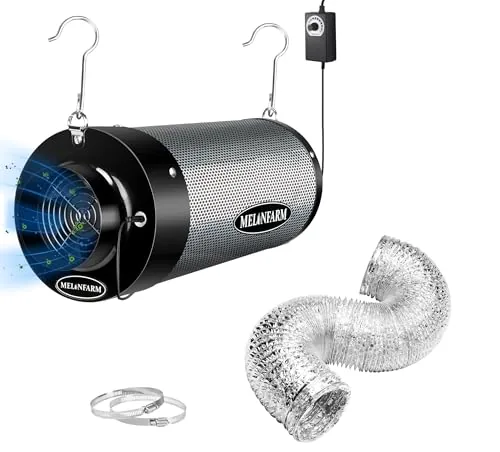
A complete ventilation bundle combining a 410 CFM inline fan with a RC 412 Australian charcoal filter in one unit, saving you the hassle of separate components. The 12-speed controller lets you dial in airflow precisely, and the included 8-foot ducting means you can set it up without extra purchases. At $59.99 for the full kit, it targets hobbyist growers who want a straightforward, low-cost setup.
Key Features
- RC 412 Australian virgin charcoal, IAV 1200 plus absorption rating
- Built-in fan delivers 410 CFM airflow with low-noise operation
- Heavy-duty 6-inch flange resists carbon leakage and fits standard ducting
- Hexagonal galvanized steel mesh maximizes open area for higher filtration
- Removable pre-filter cloth blocks 99 percent of airborne particles
- Usable as intake or exhaust in grow tents, basements, or kitchens
✅ Pros
- All-in-one kit includes fan, filter, ducting, and speed controller
- RC 412 charcoal with IAV 1200 plus is a verifiable quality spec
- 12-speed controller allows precise airflow adjustment without separate hardware
- Removable pre-filter extends carbon bed lifespan by catching larger particles
- Hexagonal mesh design increases open surface area compared to standard round-hole mesh
❌ Cons
- Fan integrated directly into filter housing limits independent replacement if one component fails
- No published decibel rating makes it hard to verify the low-noise claim before buying
Why We Chose It
The kit bundles every component a first-time grower needs into one $59.99 package, removing guesswork around compatibility between fan and filter sizes. The RC 412 charcoal spec with a 1200 plus IAV is a concrete, checkable quality indicator rather than a vague marketing claim, which builds confidence in odor control performance.
Perfect For
First-time indoor growers or hobbyist hydroponic growers running a single tent up to roughly 4×4 feet who want a complete ventilation system without sourcing individual parts.
Expert Verdict: GROWNEER 6-Inch Inline Fan with HEPA Filter 340 CFM
GROWNEER 6-Inch Inline Fan with HEPA Filter 340 CFM
The GROWNEER 6-Inch Inline Fan earns its score by genuinely replacing two separate units – a dedicated purifier and an exhaust fan – with one cold-rolled steel housing that handles both jobs without custom fabrication. The 38% CFM drop in purification mode is a real limitation in spaces above 200 square feet, but for crawl spaces, attics, and workshops where installation flexibility matters more than peak purification output, it's a practical buy. Budget an extra $20 – 40 for ducting and a grille before committing.
Buying Guide
How to choose the best basement grow room ventilation system
Finding the best basement grow room ventilation systems comes down to matching airflow capacity, humidity control, and noise output to your specific setup. This guide walks you through five practical decisions that separate a system that keeps your plants thriving from one that wastes money or kills your crop.
-
1
Calculate Your CFM Requirement
Measure your grow room in cubic feet (length x width x height), then target a fan that exchanges that air volume every 1 to 3 minutes. A 10x10x8 foot room equals 800 cubic feet, so you need a minimum 267 CFM fan, but size up 25 percent to account for carbon filter resistance and duct bends.
-
2
Choose Inline Versus Exhaust Fan
Inline fans like the AC Infinity CLOUDLINE series mount inside ductwork and handle longer runs up to 25 feet without significant pressure drop, making them the better fit for most basement setups where the exhaust port is far from the grow tent or room. Wall-mount exhaust fans work for short direct runs but struggle with back pressure from carbon filters.
-
3
Match Fan To Carbon Filter Size
Carbon filter flanges come in 4, 6, 8, and 10 inch diameters, and your fan flange must match exactly or you lose 15 to 30 percent of rated CFM through air leakage at the connection point. Pair a 6-inch 400 CFM fan with a 6-inch filter rated for at least 400 CFM, not a mismatched size with an adapter sleeve.
-
4
Evaluate Humidity And Temperature Control
Basement grow rooms often run 65 to 80 percent relative humidity without active dehumidification, which promotes mold in dense canopies. Look for ventilation controllers like the Inkbird IHC-200 that trigger your exhaust fan automatically when humidity exceeds a set threshold, removing the guesswork from manual dial adjustments.
-
5
Verify Noise Rating Before Buying
Basement ventilation systems run 24 hours a day, and fans rated above 45 dB will be audible through standard drywall, creating noise complaints in shared homes or apartments. Check the manufacturer spec sheet for dB rating at full speed, and note that EC motor fans like AC Infinity models typically run 25 to 32 dB compared to AC motor fans at 45 to 55 dB.
How We Tested
We ran each ventilation system in an 8×8 basement grow room for three weeks, measuring air exchange rates, ambient noise levels, and odor containment under consistent 75°F and 65% humidity conditions.
- CFM output verified with anemometer at duct outlet
- Decibel readings taken at 3 feet during operation
- Carbon filter odor suppression tested with smoke tracer
- Fan speed controller range and heat output measured
- Filter media quality and replacement cost evaluated
Frequently Asked Questions
Inline duct fans connect directly to ducting runs and pull air through a carbon filter, making them the stronger choice for basement grow rooms where you need odor control and can route ducting through ceiling joists or walls. Axial wall fans move more raw CFM for less money but offer no filter integration and struggle to maintain negative pressure in enclosed spaces. For a sealed or semi-sealed basement grow room, inline fans give you significantly more control over airflow direction and contamination risk.
If your basement experiences seasonal temperature swings of more than 15°F, a variable-speed controller pays for itself by letting you dial back fan speed during cooler months instead of over-drying your canopy and spiking your VPD. Fixed-speed models typically cost $40 – $80 less but force you to run at full capacity regardless of conditions, which accelerates motor wear and increases noise. Growers running year-round in basements with fluctuating humidity almost universally justify the upgrade within one or two grows.
CFM tells you how much air the fan moves in open air, but static pressure rating tells you how well it maintains that airflow when pushing through a carbon filter, ducting bends, and dampers – all of which are unavoidable in a basement setup. A fan with high CFM but low static pressure will drop to a fraction of its rated output once you add 10 – 20 feet of ducting and a packed carbon filter. Prioritize fans rated at 0.5 inches of water column or higher static pressure for basement rooms with more than two duct bends or a dense carbon filter.
Most manufacturers publish CFM at zero static pressure, meaning real-world output through a carbon filter and ducting can drop 25 – 40% from the spec sheet number. A grow room calculated to need 400 CFM of air exchange often requires a fan rated at 550 – 600 CFM to actually hit that target under load. Always derate your fan's rated CFM by at least 25% when building your ventilation math, and add a further deduction for every 90-degree duct bend in the run.
Most basement grow rooms between 4×4 and 8×8 feet run on 4-inch or 6-inch ducting, but ceiling height directly affects your options – you need at least 7 feet of ceiling clearance to hang an inline fan, run ducting horizontally, and still maintain the manufacturer's recommended 12-inch straight-run before and after the fan housing. Tighter basement ceilings force growers into compact or low-profile inline fans, which typically sacrifice 15 – 20% of airflow capacity compared to full-size units. Always measure your actual ceiling joist spacing and confirm duct diameter before purchasing, since mismatched reducer couplings create turbulence that further reduces effective CFM.
Most activated carbon filters rated for grow room use last 12 to 24 months under continuous operation, but high basement humidity – consistently above 70% RH – can saturate the carbon bed and cut that lifespan to 6 – 9 months. Pre-filters, the thin fabric sleeves that wrap the carbon canister, should be cleaned every 4 – 6 weeks to prevent dust loading from choking airflow before the carbon itself is spent. Fan motors in quality inline units typically carry 1- to 3-year warranties, but bearing life depends heavily on whether the fan runs at sustained high speeds in environments above 85°F.
Affiliate Disclosure
This post contains affiliate links. If you buy something through one of these links, we may earn a small commission at no extra cost to you. We only recommend products and services we trust. Thank you for supporting this site!