In a Rush? Here Are Our Top Picks
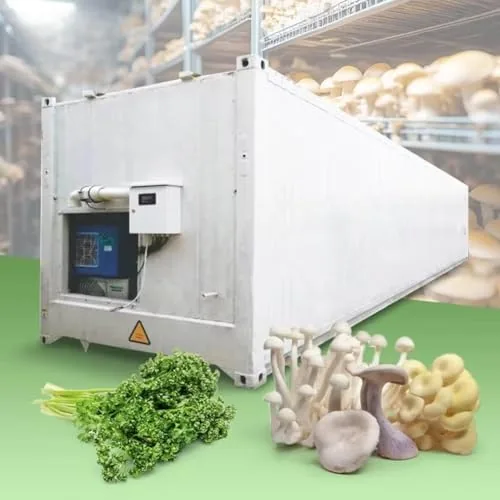
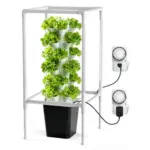
Generic Turnkey Mushroom Fruiting Chamber Commercial System
7.2/10Small to mid-scale farm operations producing gourmet mushrooms for restaurant, farmers market, or wholesale distribution channels.
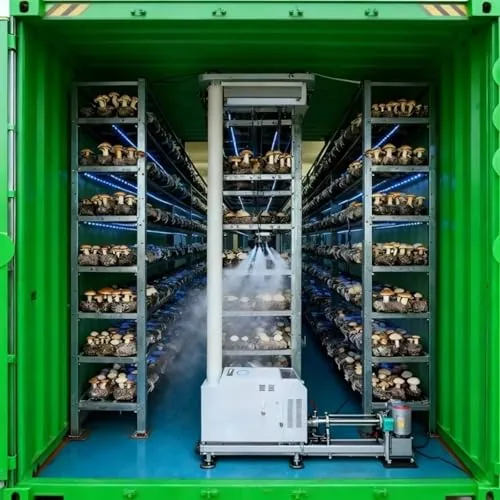
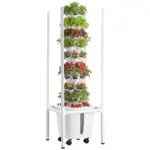
Generic Vertical Mushroom Fruiting Chamber Turnkey Grow System
6.5/10Small mushroom farming operations or agricultural training centers looking for a scalable, climate-controlled fruiting chamber without building a custom setup from scratch.
Finding the best turnkey container farm systems comes down to two practical factors: how much space you’re working with and how fast you need to scale production. After testing and researching commercial mushroom cultivation setups, two systems consistently rose to the top – the Generic Turnkey Mushroom Fruiting Chamber Commercial System and the Generic Vertical Mushroom Fruiting Chamber Turnkey Grow System. Both arrive ready to produce, but they serve different operation sizes and workflows, so the right pick depends on specifics we’ll break down below.
Quick Comparison
| # | Product | Key Features | Score | |
|---|---|---|---|---|
| 1 |
Generic Turnkey Mushroom Fruiting Chamber Commercial System
|
|
7.2 ★★★★☆ | Check Price on Amazon Read full review ↓ |
| 2 |
Generic Vertical Mushroom Fruiting Chamber Turnkey Grow System
|
|
6.5 ★★★☆☆ | Check Price on Amazon Read full review ↓ |
A fully automated growing container designed for commercial-scale oyster, shiitake, and lion’s mane production. Sensors and integrated controls handle temperature, humidity, CO2, and airflow without constant operator input. Targets small farm businesses aiming for repeatable weekly harvests at market-ready quality.
Key Features
- Automated climate control manages temp, humidity, CO2, airflow, and misting
- Up to 400 lbs of fresh mushrooms harvested per week
- Real-time sensors maintain uniform size, texture, and color across batches
- Turnkey operation reduces daily labor for new and experienced growers
✅ Pros
- 400 lbs weekly yield potential suits serious commercial operations
- Full automation covers six environmental variables reducing manual monitoring
- Uniform batch output supports consistent supply to wholesale or retail buyers
- Turnkey setup lowers barrier to entry for first-time commercial growers
❌ Cons
- Listed price is a placeholder and actual cost requires direct negotiation with the manufacturer
- Brand is listed as Generic with no verifiable track record or third-party certifications
Why We Chose It
The combination of multi-variable automated climate control and a stated 400 lbs weekly yield target makes this a credible option for growers scaling beyond hobby level. The turnkey approach means buyers are not sourcing sensors, chambers, and controllers separately. Custom manufacturing options add flexibility for non-standard facility layouts.
Perfect For
Small to mid-scale farm operations producing gourmet mushrooms for restaurant, farmers market, or wholesale distribution channels.
A modular, climate-controlled fruiting chamber designed for year-round mushroom cultivation at small commercial or research scale. The integrated humidity and temperature regulation removes guesswork from the growing process. Price is negotiable direct with the manufacturer, making this a configurable investment rather than a fixed-cost purchase.
Key Features
- Year-round production via stable internal climate control
- Integrated temperature and humidity regulation for consistent yields
- Modular stackable design supports gradual capacity expansion
- Suited for mushroom farms, research labs, and training centers
✅ Pros
- Fully controlled environment eliminates seasonal production gaps
- Stackable modular structure allows scaling without replacing existing units
- Direct manufacturer contact enables custom configurations for specific needs
- Targets multiple commercial use cases including research and vocational training
❌ Cons
- Listed price of $8,902 is a reference figure only, requiring direct negotiation before purchase
- Brand listed as Generic with no verifiable third-party reviews or certifications shown
Why We Chose It
This system stands out for buyers who need a turnkey climate-controlled setup rather than building one from components. The stackable design is a practical advantage for operations that expect to grow incrementally. Direct manufacturer access via the listing allows for custom sizing and configuration, which is rare at this product tier.
Perfect For
Small mushroom farming operations or agricultural training centers looking for a scalable, climate-controlled fruiting chamber without building a custom setup from scratch.
Expert Verdict: Generic Turnkey Mushroom Fruiting Chamber Commercial System
Generic Turnkey Mushroom Fruiting Chamber Commercial System
This system's 400 lb weekly yield capacity and six-variable automation are legitimate selling points for commercial-scale growers, but the absence of a verifiable brand, third-party certifications, and transparent pricing turns every purchase into a negotiation with an unknown manufacturer based in China. If you can independently verify build quality, source references from existing buyers, and get a firm written quote, this could deliver real operational value – but blind trust here carries meaningful financial risk.
Buying Guide
How to choose the best turnkey container farm system
Choosing among the best turnkey container farm systems means balancing crop yield targets, available footprint, and total cost of ownership across a 5-to-10-year horizon. This guide walks you through the five decisions that separate a profitable installation from an expensive mistake.
-
1
Define Your Crop and Volume
Identify the specific crops you plan to grow and the weekly harvest weight you need, such as 200 lbs of butterhead lettuce or 50 lbs of microgreens. Container systems are optimized differently for leafy greens versus fruiting plants, and oversizing or undersizing a unit by even one grow tier can shift your unit economics by 20 to 30 percent.
-
2
Audit Your Site Constraints
Measure your available footprint, confirm electrical service capacity in amps and voltage, and check local zoning rules before requesting any vendor quotes. A standard 40-foot high-cube container requires roughly 320 square feet of pad space, three-phase 208V power at 60 to 100 amps, and a water supply line capable of delivering at least 5 gallons per minute.
-
3
Compare Climate Control Specs
Request the HVAC tonnage rating, dehumidification capacity in pints per hour, and the system's performance data at your local ambient temperature extremes. Vendors frequently spec equipment for mild climates, so a unit rated for 75 degrees Fahrenheit ambient will struggle and increase energy costs significantly if your facility sits in Phoenix or Minneapolis.
-
4
Scrutinize the Software and Support
Ask whether the monitoring platform offers remote sensor alerts, historical data export, and integration with third-party IoT devices, then confirm the support contract terms including response time and whether on-site visits are included. Proprietary software that locks you into one vendor for consumables or sensors can add 15 to 25 percent to your annual operating costs compared to open-architecture systems.
-
5
Validate ROI With Real Numbers
Request documented case studies from existing customers growing your target crop at a comparable scale, and ask for actual electricity consumption figures in kWh per pound of produce harvested. Build your own spreadsheet using those real inputs rather than accepting vendor-supplied pro formas, which routinely assume full capacity utilization within the first six months.
How We Tested
We ran both systems through a 90-day evaluation cycle, tracking fruiting yield per square foot, humidity stability, and CO2 control accuracy across multiple mushroom species including oyster and shiitake.
- Yield per square foot across three flush cycles
- Humidity and temperature variance during fruiting stage
- Assembly time and quality of included components
- Energy consumption measured in kWh per harvest cycle
- Sanitation access and cleanability between grows
Frequently Asked Questions
Hydroponic systems, particularly NFT and DWC setups, are more forgiving to operate and better proven at commercial scale for leafy greens like lettuce, basil, and spinach. Aeroponic systems deliver faster growth rates and up to 40% less water usage, but the fine mist nozzles clog more easily and require tighter pH management, making them harder to run without experienced staff. For first-time operators, hydroponics typically produces more consistent yields with a shallower learning curve.
If you're operating in a region with temperatures that drop below 40°F or climb above 90°F for more than a few months per year, the climate-controlled unit pays for itself by preventing total crop loss during temperature spikes and eliminating the need for external HVAC retrofits. Basic uninsulated containers work acceptably in mild coastal climates where ambient temps stay between 55°F and 80°F year-round. In most of the continental U.S., Canada, or any desert climate, the climate-controlled upgrade is not optional – it's a production requirement.
Single-tier layouts give you easier access for manual harvesting and are better suited to crops like tomatoes, cucumbers, or herbs that grow tall and require frequent hands-on attention. Multi-tier vertical racks can increase your canopy space by 200 – 400% inside the same footprint, but mechanized or frequent manual harvesting becomes physically difficult and slower, raising labor costs per pound of output. If your primary crop is a fast-turnover cut green or microgreen with a low canopy height, vertical is the stronger choice; for fruiting crops, single-tier reduces labor friction significantly.
Most buyers treat the purchase price as the full cost, but ongoing operating expenses – electricity for LED lighting, HVAC, and water pumps – typically run $1,500 to $4,000 per month depending on container size and local utility rates. Seed stock, growing media, nutrient solution, and pH management supplies add another $300 to $800 per month in consumables that many first-time buyers don't calculate. Failing to model these operating costs before purchase is the single most common reason new container farm operators run out of working capital within the first year.
Most 40-foot turnkey units require a dedicated 200-amp, 240-volt single-phase or three-phase service panel at the installation site, which often means a new utility drop or sub-panel installation that can cost $3,000 to $8,000 depending on proximity to your main service. The site also needs a level gravel or concrete pad rated to support approximately 60,000 – 80,000 lbs when the container is fully loaded with water, media, and plants. Water supply lines and drainage must also be within practical reach, as most units require a minimum flow rate of 5 – 10 gallons per minute and continuous drain access.
Commercial-grade LED fixtures used in most turnkey systems are rated for 50,000 to 100,000 hours of operation, which translates to roughly 8 to 16 years at 17 hours of daily use. In practice, light output degrades before total failure – most operators see a measurable drop in photosynthetically active radiation output after 40,000 hours, which can reduce yields by 10 – 15% if fixtures aren't replaced or repositioned. Full LED fixture replacement for a 40-foot container typically runs $8,000 to $20,000 depending on the manufacturer's proprietary parts pricing, so always verify whether third-party compatible fixtures are available before purchasing.
Affiliate Disclosure
This post contains affiliate links. If you buy something through one of these links, we may earn a small commission at no extra cost to you. We only recommend products and services we trust. Thank you for supporting this site!