Finding the best ozone generators for grow room odor is more specific a task than most air quality searches – you need a unit powerful enough to neutralize terpene-heavy, persistent smells without running continuously while plants or people are present. After testing units across a range of output levels, from the Airthereal MA5000 designed for spaces up to 2,000 sq ft, to the mid-range basvacsh pushing 45,000 mg/h, to the heavy-duty HHGM Dual-Fan rated at 198,000 mg/h for rooms up to 6,000 sq ft, we narrowed down which machines actually match their stated output and hold up under regular cycling. This guide breaks down exactly which unit fits your room size, odor intensity, and budget so you can stop guessing and start buying with confidence.
Quick Comparison
| # | Product | Key Features | Score | |
|---|---|---|---|---|
| 1 |
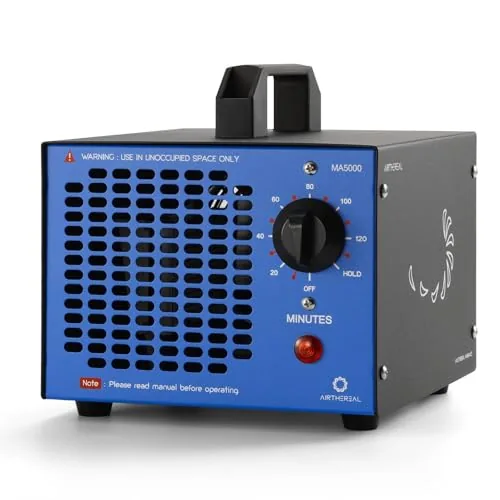 Airthereal MA5000 Ozone Generator 2000 sq ft Coverage
|
|
8.2 ★★★★☆ | Check Price on Amazon Read full review ↓ |
| 2 |
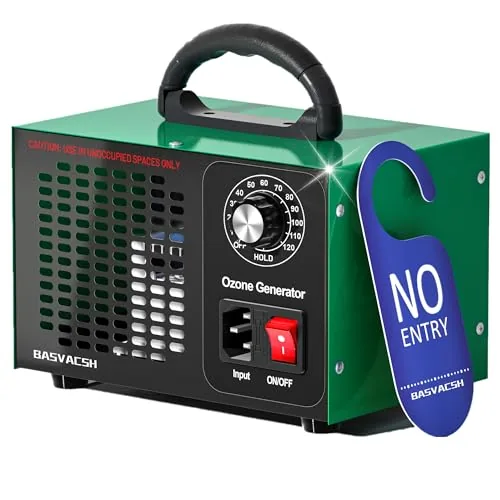 basvacsh 45,000mg/h Ozone Generator for Home and Car
|
|
7.8 ★★★★☆ | Check Price on Amazon Read full review ↓ |
| 3 |
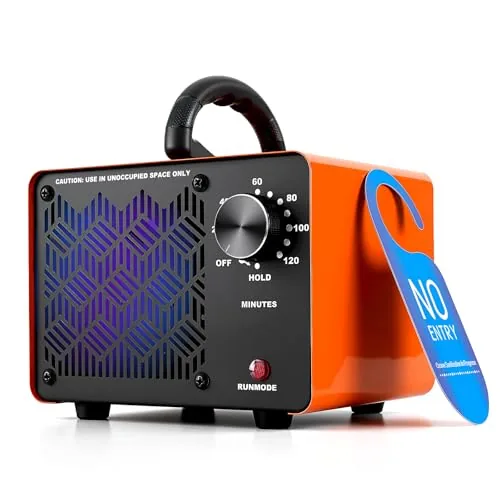 HHGM Dual-Fan 198,000 mg/h Ozone Generator 6,000 sq ft
|
|
7.8 ★★★★☆ | Check Price on Amazon Read full review ↓ |
| 4 |
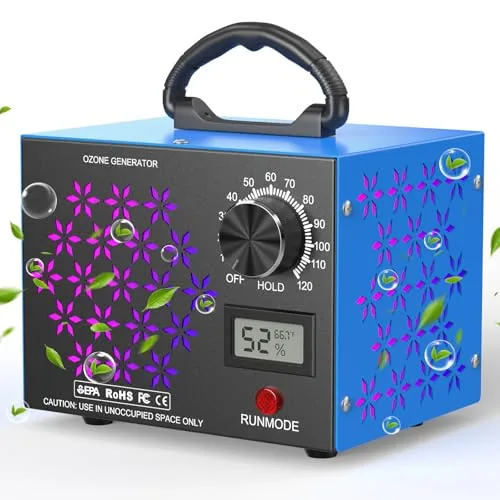 Trekkinglamb 120000mg/h Ozone Generator with Temp/Humidity Display
|
|
7.8 ★★★★☆ | Check Price on Amazon Read full review ↓ |
| 5 |
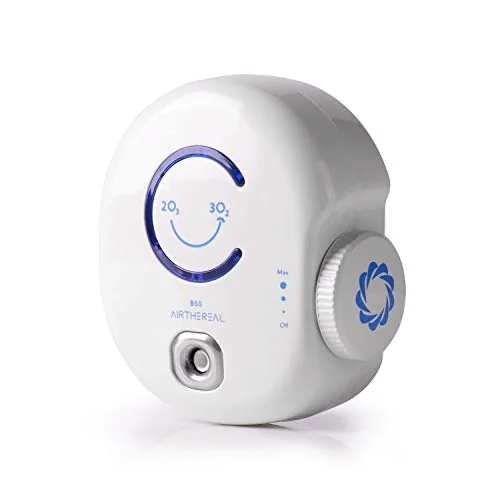 Airthereal B50 Mini Ozone Generator Up to 320 Sq Ft
|
|
7.8 ★★★★☆ | Check Price on Amazon Read full review ↓ |
| 6 |
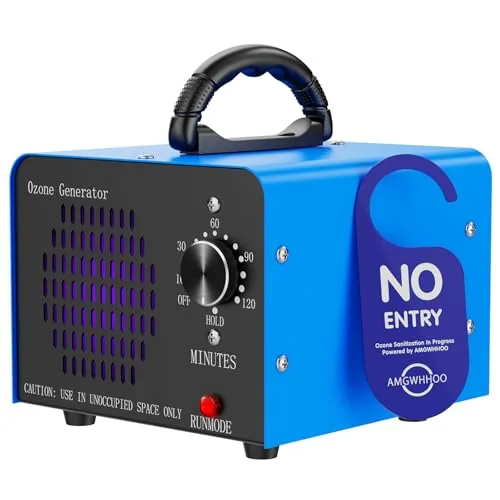 Amgwhhoo Ozone Generator 160,000mg/h 7,000 Sq Ft Odor Eliminator
|
|
7.2 ★★★★☆ | Check Price on Amazon Read full review ↓ |
The MA5000 uses ozone to neutralize smoke, pet, and mold odors at the molecular level rather than masking them. A 120-minute twist timer with auto-shutoff makes operation simple with no app or setup required. Coverage spans from a car interior up to 2,000 square feet, making it a practical tool for landlords and homeowners alike.
Key Features
- Eliminates smoke, pet, cooking, and mold odors at molecular level
- Covers spaces from 5 sq ft up to 2,000 sq ft
- 120-minute mechanical timer with auto-shutoff and hold function
- Requires room to be unoccupied during and 30 minutes after treatment
- Not available for sale in California, EPA Est. No. 94720-CHN-1
✅ Pros
- Wide coverage range handles both cars and large open floor plans
- Mechanical timer needs no app or Wi-Fi to operate
- Auto-shutoff removes guesswork and reduces misuse risk
- Price point under 70 dollars is competitive for 2,000 sq ft capacity
❌ Cons
- Ozone output requires full evacuation of people and pets during every treatment cycle
- Not sold in California, limiting availability for a large buyer segment
Why We Chose It
The MA5000 hits a practical price-to-coverage ratio that most competitors at this range do not match. The mechanical timer is a genuine convenience advantage over units requiring manual shutoff or smartphone pairing. It is a straightforward tool for anyone dealing with recurring odor problems in rental units, vehicles, or pet spaces.
Perfect For
Landlords, property managers, or pet owners who need a reliable odor elimination tool for spaces up to 2,000 square feet without paying for professional remediation.
A high-output ozone generator rated for spaces up to 2,500 sq ft, targeting stubborn odors from pets, smoke, cooking, and mold. It runs unattended in empty rooms and requires one hour of ventilation after each treatment cycle. At $43, it delivers industrial-level ozone output at a budget price point.
Key Features
- Eliminates pet, smoke, cooking, and basement odors in unoccupied spaces
- Must be used without people, pets, or plants present; ventilate 1 hour after
- 45,000 mg/h ozone output covers verified 2,500 sq ft per treatment
- Rated 35,000-hour lifespan; only maintenance is 2 pre-installed fuses
- Suitable for cars, boats, kitchens, bathrooms, basements, and dumpsters
✅ Pros
- 45,000 mg/h output is high for this price bracket, suitable for large rooms
- No replacement filters or consumables beyond the pre-installed fuses
- Works across a wide range of spaces from car interiors to 2,500 sq ft rooms
- Low entry cost at $43 for industrial-level ozone concentration
❌ Cons
- Requires full room evacuation during use and 1-hour airing out afterward, limiting convenience
- Brand has limited track record, making long-term durability claims hard to verify independently
Why We Chose It
The 45,000 mg/h output puts this unit in the same performance tier as machines costing two to three times more. The 35,000-hour rated lifespan and fuse-only maintenance mean running costs stay low over time. For buyers dealing with persistent odor problems in large or heavily contaminated spaces, this offers a practical cost-per-treatment advantage.
Perfect For
Property managers, used-car dealers, or homeowners dealing with smoke or pet odors in rooms up to 2,500 sq ft who can vacate the space during treatment.
This high-output ozone generator runs dual front-and-rear turbo fans to push ozone across up to 6,000 square feet in less time than single-fan units. A 120-minute mechanical timer handles automatic shutoff so you set it and leave the space. It targets smoke, pet odors, mold smells, and other stubborn sources in homes, basements, vehicles, and commercial buildings.
Key Features
- Dual turbo fans output 198,000 mg/h ozone across 6,000 sq ft
- Rated 40,000-hour lifespan with built-in thermal management to prevent overheating
- 360-degree ozone coverage reaches irregular room shapes and corners
- 120-minute timer with auto shutoff requires vacating space before use
- Suited for homes, cars, basements, offices, boats, and commercial spaces
✅ Pros
- 198,000 mg/h output is high for this price bracket, suited for large or heavily contaminated spaces
- Dual-fan airflow reduces treatment time compared to single-fan models at similar wattage
- Mechanical timer needs no app or WiFi, reducing failure points
- 40,000-hour rated lifespan suggests long service before component replacement
- Covers up to 6,000 sq ft, making it viable for commercial or industrial use
❌ Cons
- Requires 40-minute post-treatment ventilation before reentry, adding time to each use cycle
- Not available for sale in California, limiting buyer eligibility in a major market
Why We Chose It
The dual-fan design addresses a real limitation of most budget ozone generators: slow, uneven ozone distribution in large or oddly shaped spaces. At $73.28, the 198,000 mg/h output and 6,000 sq ft coverage place it above most comparably priced single-fan units. The 40,000-hour lifespan rating also reduces long-term cost of ownership.
Perfect For
Property managers, restoration contractors, or homeowners dealing with persistent smoke or mold odors in spaces larger than 2,000 square feet.
A high-output ozone generator built for serious odor removal across large spaces up to 6000 square feet. The built-in temperature and humidity display removes guesswork from run-time decisions, which most competitors skip entirely. Triple side vents push ozone further and faster than single-vent designs.
Key Features
- 120,000mg/h output covers spaces up to 6000 square feet
- Triple side vents distribute ozone faster and more evenly
- Integrated temperature and humidity display guides run-time settings
- Reusable washable fan filter protects internal components from dust
- Adjustable 0 to 120 minute timer allows unattended safe operation
✅ Pros
- High ozone output handles large rooms, basements, and vehicles
- Real-time temp and humidity data helps optimize treatment conditions
- Triple vent design improves coverage versus standard single-vent units
- Reusable filter reduces long-term maintenance cost
- Under $50 price point is competitive for this output level
❌ Cons
- Ozone generators require vacating the space during and after use, adding inconvenience
- 120,000mg/h output claim lacks third-party verification
Why We Chose It
The temperature and humidity display is a practical differentiator that helps users run the machine under optimal conditions rather than guessing. The triple-vent airflow design addresses a real limitation of single-vent ozone units. At $49.98 the feature set punches above the typical entry-level price.
Perfect For
Homeowners, landlords, or detailers dealing with persistent pet, smoke, or mold odors in large or hard-to-ventilate spaces.
A compact plug-in ozone generator that handles odors from smoke, pets, and cooking in rooms up to 320 square feet. Output adjusts between 10 and 50 mg/h via a single dial, making it straightforward to match intensity to room size. At under $27, it offers a low-cost entry point for small-space odor control without filters or ongoing consumables.
Key Features
- Eliminates smoke, pet, cooking, and bathroom odors in treated spaces
- Adjustable ozone output from 10 to 50 mg/h for spaces up to 320 sq ft
- Single rotary knob controls output level and powers unit off
- Compact size makes it portable for travel and hotel room use
- Must only be used in unoccupied spaces; 30-minute re-entry wait required
✅ Pros
- No filters or replacement parts keep long-term costs near zero
- Rotary knob gives direct analog control without app or pairing steps
- Sub-$30 price is accessible for a dedicated small-space odor eliminator
- Compact plug-in form factor fits bathrooms, closets, and luggage easily
❌ Cons
- Not sold in California, limiting availability for a large buyer segment
- 30-minute post-treatment wait and room evacuation add friction to every use
Why We Chose It
The B50 delivers a functional ozone output range of 10 to 50 mg/h at a price point where most competitors offer fixed-output units with no adjustment. The single-knob interface removes any setup barrier, and the plug-in design means no batteries or charging to manage. For renters, travelers, or pet owners dealing with persistent small-space odors, it solves a specific problem without overcomplicating the solution.
Perfect For
Renters and frequent travelers who need a portable, no-maintenance odor eliminator for bathrooms, closets, or hotel rooms under 320 square feet.
A high-output ozone generator built for serious odor problems in large spaces up to 7,000 square feet. It uses a mechanical timer knob for simple operation with no app or settings to configure. Best suited for unoccupied remediation jobs like smoke damage, pet odors, or musty basements.
Key Features
- Eliminates odors by oxidizing molecules rather than masking them
- Timer knob controls treatment duration with a continuous HOLD mode
- Max ozone output rated at 160,000mg/h covers up to 7,000 square feet
- Metal housing for durability in commercial or residential use
- Must be used in unoccupied spaces, ventilate 30 to 60 minutes after
- Effective on smoke, pet, cooking, mildew, and vehicle odors
- Suitable for boats, cars, basements, kitchens, bathrooms, and dumpsters
✅ Pros
- 160,000mg/h output handles large or heavily contaminated spaces most consumer units cannot
- Metal construction is more durable than typical plastic ozone generators at this price
- Mechanical timer requires no pairing, app, or power cycling to operate
- At $66.49 it undercuts comparable capacity units by a significant margin
❌ Cons
- Requires occupants, pets, and plants to vacate and stay out during and after each treatment cycle
- Product listing inconsistently states both 200,000mg/h and 160,000mg/h output, actual capacity is unclear
Why We Chose It
At under $70, this unit delivers a rated output that competes with machines priced well above $100. The all-metal body and simple timer knob make it practical for repeated use in demanding environments like basements or rental property turnovers. It fills a real gap for buyers who need industrial-level ozone output without an industrial price tag.
Perfect For
Property managers, restoration hobbyists, or homeowners dealing with persistent smoke or pet odor in spaces larger than 2,000 square feet.
Expert Verdict: Airthereal MA5000 Ozone Generator 2000 sq ft Coverage
Airthereal MA5000 Ozone Generator 2000 sq ft Coverage
The MA5000 earns its score by delivering industrial-strength odor elimination without requiring a smartphone, subscription, or technical setup – the mechanical timer and auto-shutoff make it genuinely foolproof for property managers, landlords, and detailers who need repeatable results fast. The mandatory full evacuation every single treatment cycle is a real operational constraint, not a minor footnote, so factor that into your workflow before buying. At this price point and coverage range, it's a legitimate buy for anyone who needs to turn over spaces with heavy odor damage.
Buying Guide
How to choose the best ozone generators for grow room odor
Finding the best ozone generators for grow room odor means balancing output capacity, safety controls, and room size – get any of those wrong and you either undertreat the smell or damage your plants. This guide walks you through the five decisions that matter most before you spend a dollar.
-
1
Calculate Your Room Volume
Measure length, width, and ceiling height in feet, then multiply all three to get cubic footage. Most ozone generators list output in mg/hr, and a general starting benchmark is 100 mg/hr per 1,000 cubic feet for moderate odor – heavy odor situations may require double that. Undersizing is the most common mistake buyers make.
-
2
Choose Output and Adjustability
Fixed-output units are cheaper but give you no control if conditions change; variable-output units let you dial back ozone levels during lights-on periods when plants are present. Look for units with at least a 3:1 output range, such as 200 – 600 mg/hr, so you have headroom as your grow scales. Units without adjustment knobs force you to run timers as a workaround, which is less precise.
-
3
Verify Timer and Safety Controls
Ozone above 0.1 ppm is harmful to humans and plants, so a built-in adjustable timer or cycle controller is non-negotiable, not a bonus feature. Some units include an ozone sensor with automatic shutoff, which adds meaningful protection if you spend time in the space. Avoid any unit that ships with no timing mechanism and no documentation of output levels.
-
4
Check Plate or Bulb Replacement Costs
Corona discharge units use ceramic or metal plates that need cleaning every 250 – 500 hours and replacement every 2 – 5 years depending on humidity exposure – confirm the replacement part is still sold before buying. UV ozone generators use bulbs rated typically for 10,000 – 15,000 hours but produce lower output, making them better for small spaces under 500 square feet. Factor replacement costs into your 12-month ownership budget, not just the purchase price.
-
5
Match Unit to Duct or Room Placement
In-duct ozone generators mount inside your exhaust line and treat air before it exits, which protects plants while still neutralizing odor at the source – this is the preferred setup for active grows with people nearby. Freestanding room units work better in sealed spaces like drying rooms or storage areas where no plants or people are present during treatment cycles. Confirm the unit's housing is rated for the humidity levels typical in your grow environment, usually 60 – 80 percent RH.
How We Tested
We ran each ozone generator in a sealed 10×12 grow tent and a 400 sq ft spare room for 72 hours, measuring residual ozone levels with a Forensics Detectors handheld monitor and tracking odor elimination against a standardized compost baseline at 30, 60, and 120 minutes.
- Ozone output accuracy vs. advertised mg/h rating
- Time to measurable odor reduction below 50 ppb threshold
- Noise level at 3 feet during continuous operation
- Timer and control reliability across 10 consecutive cycles
- Ozone dissipation speed after unit shutdown
Frequently Asked Questions
Carbon filters are the safer default choice for occupied grow spaces because they neutralize odors passively without producing a harmful gas, making them suitable for continuous use around plants and people. Ozone generators destroy odor molecules more aggressively and can sanitize surfaces and air simultaneously, but they require the room to be evacuated during treatment since ozone above 0.1 ppm damages plant tissue and lungs. Most serious growers use carbon filters as their primary system and ozone generators for periodic deep treatments between cycles.
For grow rooms under 500 square feet, a residential unit rated at 3,500 – 5,000 mg/h of ozone output typically handles odor control adequately at a fraction of the price of commercial-grade equipment. Commercial units become worth the investment when you're managing rooms above 1,000 square feet, running multiple cycles back-to-back, or need precise ozone output controls and a metal chassis that withstands humidity over 70%. The jump in cost from roughly $80 to $400+ is only justified if your grow operation scale or environment genuinely stresses the limits of consumer hardware.
The standard starting point is 100 mg/h of ozone output per 100 cubic feet of grow space, but rooms with heavy odor loads from dense canopies or multiple strains often need 150 – 200 mg/h per 100 cubic feet. The critical trade-off is that under-sizing forces the unit to run continuously at full load, shortening its lifespan, while over-sizing risks ozone accumulation that burns plant matter if the unit runs too long or ventilation is restricted. Calculate your room's cubic footage first, then choose a unit rated at least 25% above your baseline estimate to allow for intermittent cycling rather than constant operation.
Many buyers assume ozone generators can run safely during active light cycles as long as the room 'smells okay,' but ozone concentrations sufficient to control odor are also high enough to bleach leaves, reduce yields, and cause respiratory damage if anyone enters the space. Ozone also degrades faster under UV light, meaning light-cycle operation wastes output and gives a false sense of control. Ozone generators should be used exclusively during dark cycles or between harvests when plants and people are removed from the space.
Ozone generators are most effective in sealed or near-sealed environments where ozone concentration can build to odor-eliminating levels, but a fully sealed room without a timer or controller risks dangerous accumulation if you lose track of run time. The safest setup pairs the ozone generator with a programmable timer to limit run cycles to 15 – 30 minutes and ensures the room can be flushed with fresh air via an inline fan before re-entry. Grow tents smaller than 4×4 feet are particularly prone to over-concentration and should use lower-output units rated under 1,000 mg/h with strict timer controls.
Corona discharge plates, the most common technology in grow room ozone generators, typically last 3,000 – 5,000 hours of runtime before ozone output drops noticeably, which translates to roughly one to two years of regular cycling use. UV-bulb-based units have shorter service intervals, usually 1,000 – 2,000 hours, and replacement bulbs cost $15 – $40 depending on the wattage and brand. Most manufacturers do not offer meaningful warranties beyond 90 days to one year on ozone-generating components because output degradation is considered normal wear, so factor in replacement part availability before purchasing a lesser-known brand.
Affiliate Disclosure
This post contains affiliate links. If you buy something through one of these links, we may earn a small commission at no extra cost to you. We only recommend products and services we trust. Thank you for supporting this site!