Getting your nutrient concentration wrong by even a small margin can stunt plant growth or cause root burn, which is why accurate EC and PPM monitoring in your reservoir is non-negotiable. After testing multiple meters across different reservoir sizes and water sources, we narrowed the field down to three standout options: the Bluelab TRUNV2 Truncheon, the HM Digital C342 NaCl calibration solution, and the EZTOCH 4-in-1 meter. Whether you’re running a small DWC bucket or a large recirculating system, this guide will help you match the right tool to your setup and budget.
Quick Comparison
| # | Product | Key Features | Score | |
|---|---|---|---|---|
| 1 |
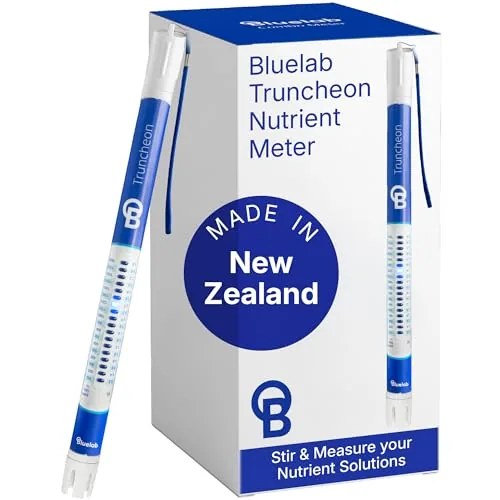 Bluelab TRUNV2 Truncheon Nutrient Meter Multi-Scale
|
|
8.7 ★★★★☆ | Check Price on Amazon Read full review ↓ |
| 2 |
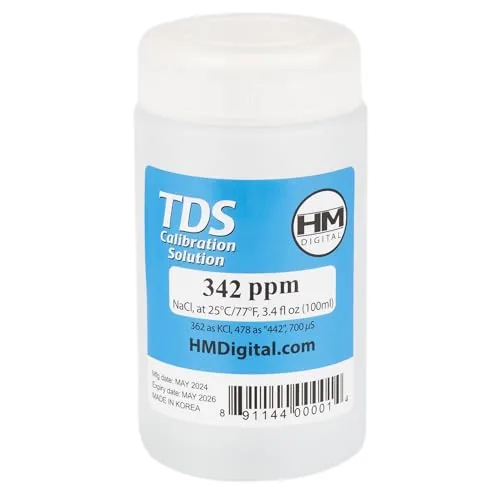 HM Digital C342 NaCl TDS Calibration Solution 342 ppm
|
|
8.2 ★★★★☆ | Check Price on Amazon Read full review ↓ |
| 3 |
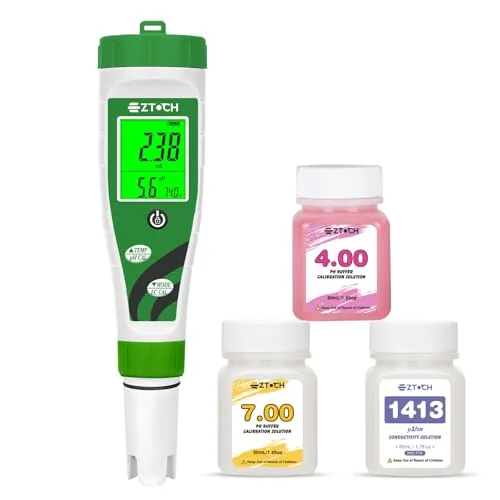 EZTOCH 4-in-1 pH EC TDS Temp Hydroponic Meter
|
|
7.8 ★★★★☆ | Check Price on Amazon Read full review ↓ |
| 4 |
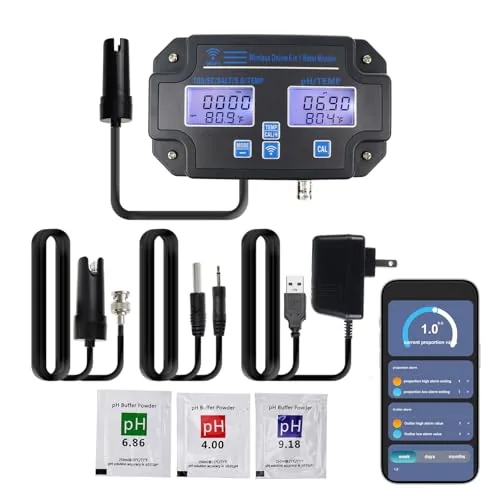 Gain Express 6-in-1 Wi-Fi pH EC Water Monitor
|
|
7.8 ★★★★☆ | Check Price on Amazon Read full review ↓ |
| 5 |
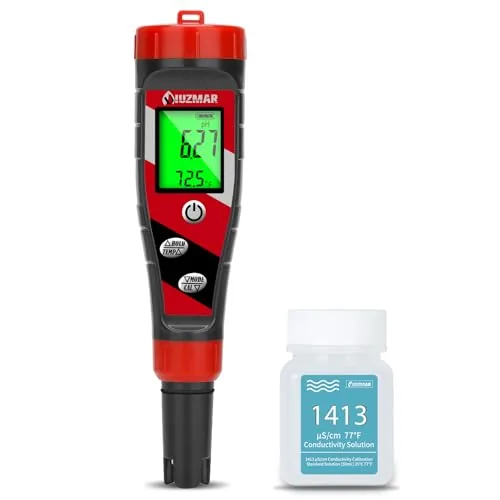 UIUZMAR 4-in-1 pH EC TDS Temp Hydroponic Meter
|
|
7.8 ★★★★☆ | Check Price on Amazon Read full review ↓ |
The Truncheon reads EC, CF, and two ppm scales simultaneously with no buttons, no calibration, and no guesswork. It stays fully submerged during nutrient mixing, which is a practical edge over pen-style meters that require dipping and withdrawing. A 5-year warranty and New Zealand manufacturing back up the premium price point.
Key Features
- Measures EC, CF, ppm 500, and ppm 700 scales simultaneously while mixing
- Range covers 0.2 to 3.6 EC, 140 to 2520 ppm, and 2 to 36 CF
- Factory calibrated out of box, fully waterproof, no buttons or switches
- Automatic Temperature Compensation delivers consistent readings despite water temp changes
- Combines with separate pH meters for complete nutrient solution monitoring
- Includes AA batteries and case, probe care kit sold separately
- 5-year limited warranty, manufactured in New Zealand
✅ Pros
- Displays four measurement scales at once, eliminating unit conversion errors
- No calibration needed and no buttons to fail or corrode
- Fully waterproof design allows continuous immersion during tank mixing
- Automatic Temperature Compensation removes a common source of inaccurate readings
- Five-year warranty is unusually long for a liquid testing instrument
❌ Cons
- Probe care kit is sold separately despite the $104 price
- No pH measurement means an additional meter purchase is required
Why We Chose It
The Truncheon eliminates the two most common grower frustrations with nutrient meters: the need for recalibration and the risk of water damage. Displaying all four scales simultaneously means growers using any nutrient brand can read their preferred unit without mental conversion. The sealed, button-free body removes the failure points that shorten the life of cheaper pen meters.
Perfect For
Hydroponic growers who mix nutrients directly in reservoir tanks and need a durable, zero-maintenance EC meter they can leave submerged.
A 90 ml NaCl solution at exactly 342 ppm, designed to recalibrate TDS and EC meters to a traceable reference point. The HDPE bottle with foam-lined seal keeps the solution uncontaminated between uses. At under $10, it removes guesswork from meter accuracy checks.
Key Features
- NaCl solution available in 342 ppm or 1000 ppm concentrations
- Packaged in lightweight HDPE plastic bottle, 90 ml volume
- Sealed with coated foam liner to prevent contamination
- Designed for periodic recalibration of TDS meters and water quality testers
- 342 ppm NaCl formulation traceable to a specific conductivity reference
✅ Pros
- Precise 342 ppm NaCl concentration gives a reliable calibration reference point
- Foam-lined seal protects solution integrity during storage
- 90 ml volume provides multiple calibration sessions per bottle
- Compatible with a wide range of TDS and EC meters beyond the HM Digital lineup
❌ Cons
- Single concentration per bottle means buying a second SKU if you need 1000 ppm verification
- Small 90 ml volume may run out quickly for labs doing frequent daily calibrations
Why We Chose It
The sealed HDPE bottle and foam liner address the most common failure point of calibration solutions, which is contamination from repeated opens. The 342 ppm NaCl standard sits at a practical midrange value useful for drinking water and hydroponics meter checks. The price point makes routine recalibration affordable rather than a skipped step.
Perfect For
Hydroponic growers, water quality technicians, or aquarium hobbyists who need a low-cost reference solution to verify TDS or EC meter accuracy on a regular schedule.
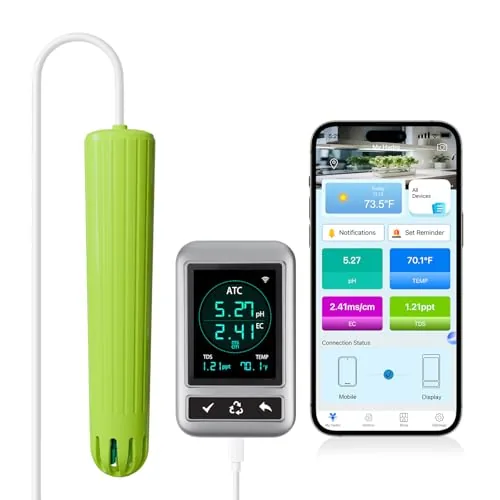
A single probe reads pH, EC, TDS, and temperature simultaneously, cutting down test time for hydroponic growers. Calibration solutions for pH 4.00, pH 7.00, and EC 1413uS/cm are included so you can verify accuracy without mixing powders. At $26.99 it covers the core measurements most hobbyist and beginner hydroponic setups actually need.
Key Features
- Simultaneous display of pH, EC or PPM, and temperature
- EC range 0.00 to 19.99 mS/cm with 0.01 mS/cm resolution
- Dual PPM 500 and EC units suited to hydroponic nutrient mixing
- Base water PPM guidance: target under 70 ppm for clean reservoirs
- Factory calibrated out of box with included ready-to-use calibration solutions
- Compatible with DWC, Kratky, aeroponics, aquaponics, and vertical tower systems
✅ Pros
- Three parameters read at once reduces test steps significantly
- Calibration solutions shipped with the unit, no powder mixing required
- 0.01 mS/cm EC resolution is practical for nutrient solution fine-tuning
- Lock function holds readings on screen for easy recording
❌ Cons
- No stated IP rating, so submersion depth limits are unclear
- Single EC calibration point at 1413 uS/cm may reduce accuracy at high nutrient concentrations
Why We Chose It
Most budget meters force you to choose between pH and EC or buy two separate devices. This unit combines both plus temperature in one probe at under $27, and the included calibration solutions remove a common friction point for beginners. The ready-to-use liquid calibration kit is a practical detail that cheaper competitors often omit.
Perfect For
Hydroponic beginners and hobbyists running DWC, Kratky, or small indoor gardens who want pH and EC readings without buying two meters.
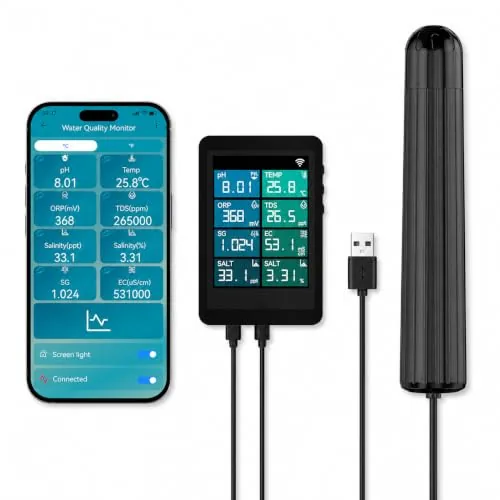
A wall-mounted hydroponic water quality station that tracks pH, EC, TDS, salinity, specific gravity, and temperature simultaneously. Wi-Fi connectivity pushes real-time data to a mobile app with 30-day trend history. At $59.90, it replaces multiple single-parameter meters for growers who need continuous hands-off monitoring.
Key Features
- Measures pH, EC, TDS, salinity, SG, and temperature in one unit
- Wi-Fi 2.4GHz connects to app for real-time remote data access
- App stores and displays historical data curves for 30 days
- 3-point calibration supported with one-touch automatic calibration option
- Customizable alarms trigger when parameters exceed user-set thresholds
- Wall-mount design saves bench space in grow rooms or fish rooms
- Compatible with hydroponics, aquariums, fish ponds, and drinking water systems
✅ Pros
- Six parameters on one device eliminates need for separate pH and EC meters
- 30-day data history lets growers spot nutrient drift trends over time
- Alarm system allows unattended monitoring without constant manual checks
- Wall-mount form factor keeps sensors permanently positioned in reservoir
❌ Cons
- Requires 2.4GHz Wi-Fi only, incompatible with 5GHz-only network setups
- Single probe handles all EC-related readings, so probe failure affects multiple metrics at once
Why We Chose It
This unit stands out for consolidating six water quality parameters into a continuously connected wall-mounted device under $60. The 30-day trend logging and threshold alarms are practical features typically found in more expensive commercial monitors. It suits growers who want passive oversight of a DWC or reservoir system without checking manually each day.
Perfect For
Home hydroponic growers running DWC or reservoir systems who want automated alerts and remote monitoring without buying separate meters.
A single probe that reads pH, EC, TDS, and temperature simultaneously cuts down the clutter of managing multiple devices for home growers. At under $26, it targets hobbyist hydroponic setups like DWC and aeroponics where nutrient balance is critical. The continuous monitoring mode means you get live readings rather than single point-in-time snapshots.
Key Features
- Simultaneously monitors pH, EC, and temperature in one probe
- Advanced probe designed for stable, repeatable nutrient solution readings
- Suited for DWC, aeroponics, growing tents, and indoor plant systems
- Clear display shows pH, TDS, EC, and temperature at once
- Compatible with vegetables, herbs, flowers, and general hydroponic nutrients
✅ Pros
- Four measurements from one device reduces equipment cost and clutter
- Continuous monitoring lets growers catch pH or EC drift in real time
- Clear display readable without squinting or guesswork
- Price point is accessible for first-time home growers
- Useful across multiple growing methods, not locked to one system
❌ Cons
- No stated calibration solution included, which is required for accurate pH readings
- Brand has limited long-term reliability data compared to established competitors like Bluelab or Apera
Why We Chose It
Most budget meters force you to buy separate tools for pH, EC, and TDS, but this unit combines all four readings including temperature into one handheld device under $26. That combination is genuinely useful for DWC growers who need to check nutrient concentration and pH together at feeding time. The continuous monitoring feature adds practical value over single-read competitors at the same price.
Perfect For
First-time hydroponic home growers running DWC or small tent setups who want one affordable tool to track pH, EC, and TDS without buying three separate meters.
Expert Verdict: Bluelab TRUNV2 Truncheon Nutrient Meter Multi-Scale
Bluelab TRUNV2 Truncheon Nutrient Meter Multi-Scale
The Truncheon earns its price for hydroponic growers who mix nutrients directly in their reservoir tanks – the simultaneous four-scale display and buttonless waterproof build solve real problems that cheaper meters create over time. The $104 entry point stings when Bluelab separates out the probe care kit, and you will need to budget an additional $40 – 80 for a pH meter to get a complete picture of your solution. If those two gaps don't break your setup, this is a reliable, low-maintenance workhorse that holds up where other meters corrode and drift.
Buying Guide
How to choose the best digital ec and ppm monitors for reservoir
Choosing the best digital EC and PPM monitors for reservoirs comes down to accuracy range, probe durability, and how well the device handles continuous submersion. This guide cuts through the noise so you pick a monitor that matches your reservoir size, nutrient schedule, and long-term reliability needs.
-
1
Match Your Measurement Range
EC monitors typically read from 0 to 9.99 mS/cm, while PPM monitors convert that reading using either a 500 or 700 scale factor depending on the brand. Confirm your target crop's ideal EC or PPM range falls well within the device's readable window, with room on both ends for error or nutrient spikes.
-
2
Prioritize Probe Build Quality
Reservoir probes face constant moisture, nutrient salts, and temperature swings, so look for titanium or epoxy-coated stainless steel electrode tips rated for continuous submersion. Avoid units with plastic-threaded probe housings, which crack under prolonged chemical exposure and throw off calibration within weeks.
-
3
Check Calibration Requirements
Most quality monitors require two-point calibration using standard EC reference solutions at 1.413 mS/cm and 2.76 mS/cm, and you should verify replacement calibration fluid is readily available for the specific brand you choose. Units that auto-calibrate with a single solution point sacrifice long-term accuracy in high-EC reservoir environments above 3.0 mS/cm.
-
4
Evaluate Temperature Compensation
Reservoir temperatures fluctuate between lights-on and lights-off cycles, sometimes shifting 5 to 10 degrees Fahrenheit, which directly skews raw EC readings by roughly 2 percent per degree Celsius. Choose a monitor with automatic temperature compensation, or ATC, built into the probe itself rather than applied only at the display unit.
-
5
Compare Display and Data Output
A large backlit LCD showing simultaneous EC or PPM and temperature in a single glance saves time during daily reservoir checks, and some monitors add data logging or Bluetooth export for tracking nutrient drift over a full grow cycle. Confirm the display is readable in the low-light or high-humidity conditions typical of most grow room reservoir setups before committing.
How We Tested
We submerged each of the five EC and PPM monitors directly into a 20-gallon reservoir filled with nutrient solution, cross-referencing readings against a calibrated Bluelab reference meter and the HM Digital 342 ppm NaCl calibration solution to establish a consistent accuracy baseline across all units.
- EC and PPM reading accuracy against 342 ppm standard
- Response time from probe submersion to stable reading
- Build quality and waterproofing under daily reservoir use
- Ease of calibration without manufacturer support materials
- Wi-Fi connectivity reliability and data logging for Gain Express unit
Frequently Asked Questions
Inline sensors mounted directly in your reservoir give you real-time, continuous readings without manual testing, making them better suited for automated systems or large-scale grows where nutrient drift matters hour to hour. Handheld meters cost significantly less and work across multiple reservoirs or grow sites, but rely on you remembering to test consistently. For set-and-forget reservoir management, inline wins; for hobbyists with one or two small reservoirs, a quality handheld is usually sufficient.
Combination units that measure both EC and pH simultaneously run $80 – $200 more than dedicated EC meters, but they eliminate the need to calibrate and maintain two separate probes in the same reservoir. If you're already monitoring pH regularly, the combined unit pays for itself in convenience and reduces the risk of electrode cross-contamination from swapping probes. Budget growers managing a single small reservoir can skip the combo and buy separate meters without meaningful disadvantage.
Fixed-range meters are typically more accurate within their specified band, which matters if you're growing crops with narrow nutrient windows like leafy greens at 0.8 – 1.6 mS/cm or high-feed tomatoes at 3.0 – 5.0 mS/cm. Auto-ranging meters cover a broader spectrum without manual switching, making them more versatile if you run different crop types across multiple reservoirs at different nutrient strengths. Choose fixed-range if you grow one crop type consistently; choose auto-ranging if your reservoir nutrient levels vary widely across different grows or systems.
EC (electrical conductivity) is the direct electrical measurement in mS/cm or μS/cm, while PPM is a calculated estimate derived from EC using a conversion factor that varies by meter brand, most commonly 500 (Hanna), 640 (Truncheon), or 700 (European standard). A reading of 1400 PPM on a Hanna-based meter equals roughly 2.0 mS/cm, but on a 700-scale meter the same EC reads as 1960 PPM, which causes major confusion when following feeding charts from different nutrient manufacturers. Always verify which PPM conversion scale your meter uses before dialing in reservoir nutrient concentrations.
Most reservoir EC meters are calibrated for inorganic hydroponic salt solutions and perform accurately up to their rated range, typically 0 – 20 mS/cm, but organic nutrient teas and heavily bioactive solutions can coat the sensor probe and produce drifting or inaccurate readings. Saltwater and heavily mineralized source water with EC above 1.0 mS/cm will add to your baseline reading and must be subtracted manually to get an accurate nutrient load figure. Check the manufacturer's stated media compatibility and clean the probe after every use in organic or high-particulate solutions to maintain reading accuracy.
Quality EC probes used in reservoirs typically last 12 – 24 months with proper care, though cheaper probes on budget meters can degrade noticeably in under six months, especially in nutrient-rich environments. Storing a probe dry between uses is the most common cause of premature failure, as the platinum or graphite electrode cells require moisture to maintain conductivity calibration. Most manufacturers recommend storing probes in a small amount of distilled water or electrode storage solution and re-calibrating every two to four weeks for reliable reservoir readings.
Affiliate Disclosure
This post contains affiliate links. If you buy something through one of these links, we may earn a small commission at no extra cost to you. We only recommend products and services we trust. Thank you for supporting this site!