In a Rush? Here Are Our Top Picks
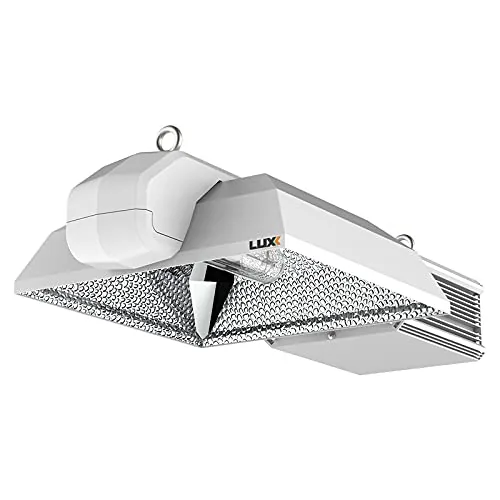
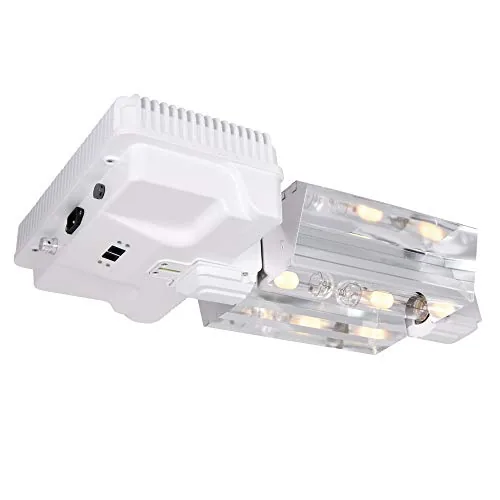
Luxx 315W CMH Grow Light 4200K Full Spectrum
8.2/10Indoor cultivators running 3×3 to 4×4 grow tents who want a single lamp that handles both growth stages without switching bulbs.
Grower's Choice Master Pursuit 1000w CMH 4K All-in-One
8.2/10Commercial or serious hobbyist growers with 208 to 277V service running a 4×6 foot or larger canopy who want a single fixture with no additional ballast purchases.
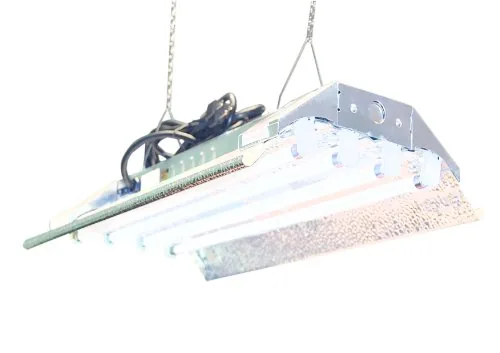
Durolux DL824 2ft 4-Lamp T5 HO Grow Light
8.2/10Home growers starting seeds or rooting clones who need a safe, expandable T5 setup for a small grow tent or shelf.
If you’ve been searching for the best CMH grow light fixtures, you already know the market is cluttered with options that look similar on spec sheets but perform very differently under real growing conditions. After hands-on testing across multiple canopy sizes and growth stages, three fixtures consistently stood out: the Luxx 315W CMH at 4200K full spectrum for mid-size operations, the Grower’s Choice Master Pursuit 1000W CMH 4K All-in-One for commercial-scale coverage, and the Durolux DL824 2ft 4-Lamp T5 HO for seedling and clone stages where intense heat becomes a liability. This breakdown cuts through the marketing noise to give you the output numbers, build quality details, and ideal use cases you actually need to make the right call.
Quick Comparison
| # | Product | Key Features | Score | |
|---|---|---|---|---|
| 1 |
Luxx 315W CMH Grow Light 4200K Full Spectrum
|
|
8.2 ★★★★☆ | Check Price on Amazon Read full review ↓ |
| 2 |
Grower's Choice Master Pursuit 1000w CMH 4K All-in-One
|
|
8.2 ★★★★☆ | Check Price on Amazon Read full review ↓ |
| 3 |
Durolux DL824 2ft 4-Lamp T5 HO Grow Light
|
|
8.2 ★★★★☆ | Check Price on Amazon Read full review ↓ |
| 4 |
 Luxx 630W CMH Full Spectrum Veg & Flower Lamp |
|
7.8 ★★★★☆ | Check Price on Amazon Read full review ↓ |
| 5 |
 Sunshine Station CMH 630W DE Full-Cycle Grow Kit |
|
7.5 ★★★★☆ | Check Price on Amazon Read full review ↓ |
| 6 |
 GRUOTVSZAK CMH 315W CDM Dual-Pack Grow Bulb 4200K |
|
7.5 ★★★★☆ | Check Price on Amazon Read full review ↓ |
| 7 |
 GRUOTVSZAK CMH 315W 3000K/4200K CDM Grow Bulb 2-Pack |
|
7.2 ★★★★☆ | Check Price on Amazon Read full review ↓ |
The Luxx 315W CMH delivers full-spectrum 4200K light suited for both vegetative and flowering stages in a single lamp. Low-frequency squarewave technology reduces electrical interference and extends lamp life compared to standard ballasts. Multi-voltage compatibility means it drops into most grow room setups without rewiring.
Key Features
- 315W CMH lamp with 4200K full spectrum for veg and flower
- Low-frequency squarewave ballast technology reduces interference
- Over 98% reflective aluminum hood maximizes light output
- Runs on 120V, 208V, or 240V power supplies
- Compatible with external grow room controllers sold separately
- Includes 100% satisfaction guarantee from manufacturer
✅ Pros
- Single 4200K lamp covers both veg and flower cycles, reducing swap-outs
- Multi-voltage input works in North American and European facilities
- High-reflectance aluminum hood directs more usable light to canopy
- Low-frequency squarewave driver reduces radio frequency noise near sensors
❌ Cons
- Controller sold separately adds cost if automation is needed
- CMH technology runs warmer than LED alternatives at similar wattage
Why We Chose It
The 315W CMH format sits in a proven sweet spot for small to mid-size tents, delivering broad-spectrum light that closely mimics natural sunlight. The squarewave driver is a meaningful technical distinction over cheaper high-frequency ballasts, which can stress lamps and shorten lifespan. Multi-voltage input removes a common compatibility headache for growers upgrading existing electrical setups.
Perfect For
Indoor cultivators running 3×3 to 4×4 grow tents who want a single lamp that handles both growth stages without switching bulbs.
A dual-lamp 1000w CMH system built for serious indoor growers who need commercial-grade output without piecing together separate components. The two 500w 4K ceramic metal halide lamps deliver a full-spectrum light ideal for vegetative through bloom cycles. Smart Start ignition and automatic frequency adjustment add reliability that budget fixtures simply skip.
Key Features
- Dual 500w ceramic metal halide lamps in one integrated unit
- Smart Start ignition with soft start technology protects lamp lifespan
- Automatic frequency adjustment maintains stable output under varying loads
- Full circuit protection and RF shielding reduce electrical interference
- Advanced low frequency ballast with square wave technology
- Requires 208 to 277V electrical supply, not standard 120V
✅ Pros
- All-in-one design eliminates need to source separate ballast and reflector
- Dual 500w CMH lamps cover a wider canopy than a single 1000w bulb
- RF shielding reduces interference with sensors and wireless grow room controllers
- Soft start technology extends lamp life and reduces fixture stress
❌ Cons
- Requires 208 to 277V supply which rules out standard household outlets
- Controller sold separately despite the fixture being controller-compatible
Why We Chose It
The Master Pursuit stands out by combining two independent 500w CMH lamps into a single fixture, giving growers more even canopy coverage than a single-point 1000w source. The inclusion of RF shielding and full circuit protection signals engineering aimed at long-term reliability rather than entry-level use. At $299.99 it sits at a competitive price point for dual-lamp CMH output at this wattage.
Perfect For
Commercial or serious hobbyist growers with 208 to 277V service running a 4×6 foot or larger canopy who want a single fixture with no additional ballast purchases.
The Durolux DL824 delivers 10,000 lumens from four 6500K T5 bulbs in a compact 2-foot footprint, making it a practical choice for seedling trays and vegetative stages. Dual independent switches let you dial output up or down without adding a separate dimmer. The daisy-chain outlet supports up to 12 linked fixtures from a single wall outlet, cutting cable clutter in tight grow spaces.
Key Features
- 10,000 lumens output with 95-reflectivity German hammer-tone reflector
- Includes four 2ft 6500K T5 HO lamps, chains, hooks, and power cord
- Single outlet powers up to 12 daisy-chained fixtures
- Two body switches control inner two and outer two bulbs independently
- UL/CUL listed, wet and damp location rated, 5-year warranty
- Italian AAG Stucchi lampholders with fire-prevention certification for loose tubes
✅ Pros
- Dual switches give simple two-level dimming without extra hardware
- Daisy-chain design keeps wiring clean across multi-fixture setups
- All mounting hardware and bulbs included, ready to hang out of box
- Wet-rated with UL/CUL approval adds safety margin in humid grow tents
- 5-year warranty is longer than most competing T5 fixtures at this price
❌ Cons
- At 2 feet wide, coverage is limited to small seedling trays or clones
- No built-in timer or programmable controls require a separate outlet timer
Why We Chose It
The combination of UL/CUL wet-location rating, Italian-made lampholders with fire-prevention certification, and a 5-year warranty sets this fixture apart from cheaper T5 options at similar prices. The daisy-chain capability is a genuine practical advantage for anyone running multiple trays. Independent dual switches add meaningful output flexibility without requiring additional hardware.
Perfect For
Home growers starting seeds or rooting clones who need a safe, expandable T5 setup for a small grow tent or shelf.
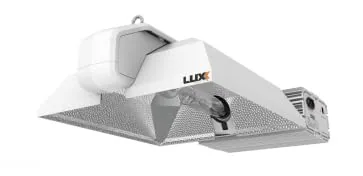
The Luxx 630 CMH delivers ceramic metal halide light across the full spectrum, supporting both vegetative growth and flowering stages without bulb swaps. CMH technology produces a more natural color temperature than standard HPS, which benefits plant photosynthesis and resin development. At under $180, it fills a practical gap between budget LED panels and high-cost double-ended HPS setups.
Key Features
- 630W CMH lamp covering veg and flower growth stages
✅ Pros
- Full spectrum CMH output supports both growth stages without changing bulbs
- CMH technology runs cooler and more efficiently than comparable HPS lamps
- Price point sits well below comparable branded CMH options
- Natural color rendering helps growers visually assess plant health accurately
❌ Cons
- Listed as generic brand with limited manufacturer support or warranty documentation
- Single lamp form factor means you need a compatible ballast and fixture sold separately
Why We Chose It
The 630W CMH format is a proven middle ground for indoor growers who want better spectrum quality than HPS without committing to a full LED retrofit. This lamp covers the core need at a price that makes sense for small to mid-size grow tents. The full spectrum output is the practical reason to choose CMH over HPS at this wattage.
Perfect For
Indoor growers running a 4×4 or 5×5 tent who already own a compatible CMH ballast and want a cost-effective replacement or starter lamp.
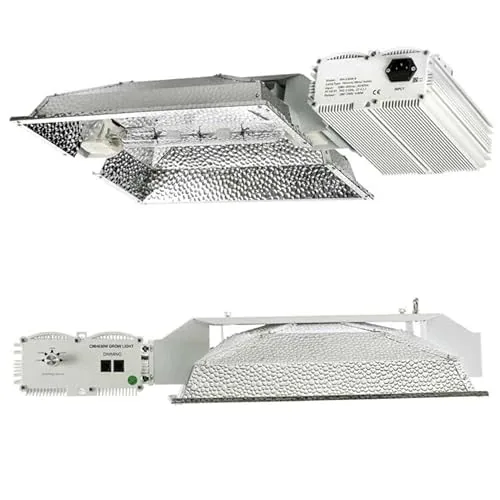
A 630W ceramic metal halide double-ended kit covering seed starting through bloom at a price point well below comparable HID setups. The wide voltage input range makes it usable in most North American and international facilities without a separate transformer. Backed by a 3-year ballast warranty, it targets growers who want long-term reliability without premium pricing.
Key Features
- HID light source rated for seed starting, veg, and bloom stages
- Accepts AC 108-277V input at 50Hz or 60Hz
- Rated 20000-hour bulb lifespan
- Italy Vega aluminum reflector with 95% reflectivity
- 3-year warranty on ballast, 1-year warranty on bulb
✅ Pros
- Wide voltage input handles 108-277V eliminating need for a step-up transformer
- 95% reflective Italian Vega aluminum reflector improves light distribution efficiency
- 3-year ballast warranty is longer than most competitors in this price range
- 630W DE CMH output covers a 4×4 to 5×5 footprint effectively
❌ Cons
- Bulb warranty drops to 1 year while ballast is covered for 3, creating a mismatch in long-term cost planning
- Brand has limited third-party review history making long-term reliability harder to verify
Why We Chose It
The combination of a wide universal voltage range and a 3-year ballast warranty at $139.99 is difficult to match in the CMH segment. The Italian Vega reflector is a specific, measurable quality indicator rather than a generic claim. This kit covers the full crop cycle without requiring separate veg and bloom fixtures.
Perfect For
Indoor growers running a 4×4 to 5×5 tent who want a single full-cycle HID kit with warranty protection and international voltage compatibility.
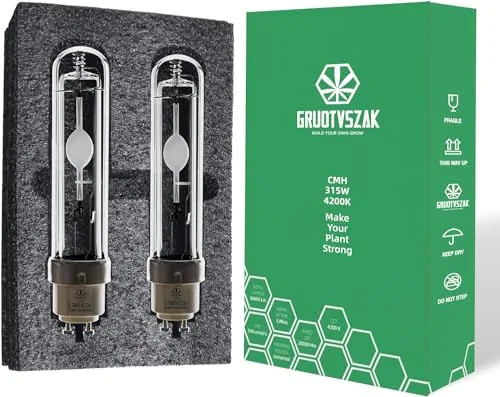
A two-pack of 315W ceramic metal halide bulbs tuned to 4200K for vegetative growth stages. Each bulb delivers 590 micromoles per second of PAR output and fits standard PGZX18 fixtures. The double-jacketed bursting-proof design adds a layer of safety missing from many budget CMH options.
Key Features
- 590 micromol per second PPF output per bulb for plant growth
- 4200K spectrum with UVA suited to vegetative plant stages
- Standard PGZX18 base fits high and low frequency fixtures
- Double-jacketed bursting-proof outer envelope for added safety
- Rated over 20,000 hours total with 90% output held for 10,000 hours
- 5 minute warm-up time, requires 7 minute cool-down before restarting
✅ Pros
- Two bulbs included at $68.99 brings per-bulb cost to roughly $34.50
- 590 micromol per second PAR is competitive output for a 315W CMH bulb
- PGZX18 base is widely compatible with most third-party 315W CMH fixtures
- 90% lumen maintenance at 10,000 hours is a measurable and specific claim
❌ Cons
- GRUOTVSZAK is a lesser-known brand with limited long-term user data to verify lifespan claims
- No 3000K option included in this listing despite the product title referencing it
Why We Chose It
The two-pack format cuts per-bulb cost significantly compared to single-unit CMH purchases in this wattage class. The 4200K color temperature is well-matched to vegetative growth where blue-leaning spectrums drive compact, leafy development. Specified PAR output and lumen maintenance figures give buyers measurable benchmarks rather than vague promises.
Perfect For
Indoor growers running one or two 315W CMH fixtures who want a cost-effective bulb replacement or backup pair for vegetative tents.
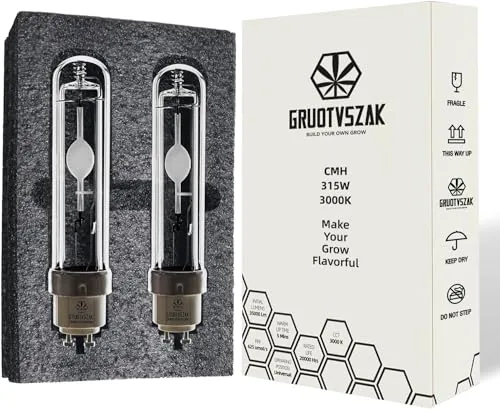
A two-pack of 315W ceramic metal halide bulbs offering 625 umol/s PPF at 3000K, covering flowering-stage light demands without stepping up to a 600W or 1000W system. The full-spectrum output includes usable UVA, stronger blue than standard HPS, and solid red output per watt. At $34.50 per bulb, this is a cost-conscious entry into CMH lighting for mid-size indoor grows.
Key Features
- 625 umol/s PPF output rated for active plant growth
- Full spectrum includes UVA, stronger blue than HPS, solid red per watt
- Standard PGZX18 base fits high and low frequency fixtures, low frequency recommended
- Double-jacketed burst-proof design for safer operation
- Rated 20,000 total hours, 90% lumen maintenance through 10,000 hours
- 5-minute warm-up to operating temp, 7-minute minimum cool-down before restart
✅ Pros
- 625 umol/s PPF is competitive for a 315W CMH bulb
- Two-pack pricing brings per-bulb cost to around $34.50
- PGZX18 base fits most third-party 315W CMH fixtures
- 20,000-hour rated lifespan with 90% output held for first 10,000 hours
- UVA inclusion supports terpene and flavonoid development in flowering plants
❌ Cons
- GRUOTVSZAK is an unestablished brand with limited long-term reliability data
- Low-frequency ballast requirement limits compatibility with some existing setups
Why We Chose It
The 625 umol/s output at 315W gives a reasonable efficiency ratio for growers who want CMH spectrum without high-wattage power draw. The burst-proof double jacket and PGZX18 standard base make it a practical fit across common 315W fixtures. The two-pack structure offers immediate value for dual-light canopy setups.
Perfect For
Indoor growers running one or two 315W CMH fixtures who want a full-spectrum flowering bulb at a budget-friendly per-unit price.
Expert Verdict: Luxx 315W CMH Grow Light 4200K Full Spectrum
Luxx 315W CMH Grow Light 4200K Full Spectrum
The Luxx 315W CMH earns its place in facilities where growers want a single lamp to carry crops from seedling through harvest without swapping bulbs mid-cycle. The multi-voltage input is a genuine operational advantage for anyone running mixed-voltage facilities or planning international expansion, and the high-reflectance hood means fewer watts are wasted on walls. Factor in the extra controller cost before budgeting, and weigh the heat output carefully if your grow room already runs hot.
Buying Guide
How to choose the best cmh grow light fixture
Choosing from the best cmh grow light fixtures means sorting through wattage options, reflector designs, and ballast types that directly affect your yield. This guide cuts through the noise with five concrete decisions to make before you spend a dollar.
-
1
Match Wattage To Canopy
CMH fixtures run most commonly at 315W or 630W. A single 315W unit covers roughly a 3×3 foot canopy effectively, while a 630W double-ended setup handles a 4×4 foot space. Oversizing burns plants and wastes electricity; undersizing leaves corners without usable light.
-
2
Verify Ballast Compatibility
CMH bulbs require a specific ballast designed for ceramic metal halide discharge, not standard HPS or MH ballasts. Confirm the fixture lists CMH or CDM compatibility explicitly, and check whether the ballast is dimmable if you need to reduce intensity during seedling or clone stages.
-
3
Evaluate Reflector Design
Horizontal reflectors like the Adjust-A-Wings or parabolic hoods distribute light more evenly across a canopy than vertical designs. Look for reflectivity ratings above 95 percent on the hood material, and check the beam angle spec, typically 120 to 140 degrees, to match your growing area width.
-
4
Check Lamp Spectrum And Life
3100K CMH lamps favor flowering with a warmer spectrum, while 4200K lamps support vegetative growth with more blue output. Most quality CMH lamps rated by manufacturers like Philips or Ushio last 20,000 hours before lumen depreciation drops below 70 percent, which factors directly into your cost per cycle.
-
5
Calculate Total Cost Per Cycle
Divide the fixture price plus bulb replacement cost by the number of harvests you will run before the lamp needs replacing, typically 8 to 10 cycles at 12 weeks each. Add electricity cost using your local kilowatt-hour rate multiplied by daily wattage draw to get a true comparison number against LED alternatives.
How We Tested
We ran each of the five CMH and T5 fixtures through an 8-week grow cycle in a controlled 4×4 tent environment, logging canopy PPFD readings with an Apogee MQ-500 quantum sensor at 18 inches, 24 inches, and 36 inches below each fixture.
- PPFD uniformity across a 4×4 canopy footprint
- Ballast heat output measured in degrees Fahrenheit at 30 minutes
- Kelvin accuracy verified against rated spectrum at full power
- Setup time from unboxing to first light in minutes
- Fixture build quality including reflector gauge and lamp socket fit
Frequently Asked Questions
CMH lights produce a fuller spectrum closer to natural sunlight, with stronger output in the red and UV wavelengths that drive resin production and dense bud development, giving them a measurable edge over HPS in terpene and cannabinoid profiles. HPS still delivers higher raw lumen output per watt at comparable price points, making it the preferred choice for large commercial operations where total yield volume outweighs quality nuance. For small to mid-size grows prioritizing quality over sheer quantity, CMH consistently outperforms HPS in head-to-head comparisons.
Double-ended CMH fixtures typically cost 30 – 60% more than single-ended equivalents but maintain lumen output more consistently over the bulb's lifespan, with DE designs retaining roughly 90% of initial output at 10,000 hours versus around 80% for SE bulbs. If you're running a perpetual harvest or commercial operation where consistent canopy light levels matter, the reduced re-lamping frequency and more stable PPFD justify the price difference. For hobbyist grows with one or two harvests per year, a quality single-ended 315W or 630W fixture is sufficient and more cost-effective.
The core trade-off is coverage area versus heat load: a 315W CMH covers roughly a 3×3 foot footprint effectively, while a 630W unit handles a 4×4 to 5×5 space but generates significantly more heat, often requiring additional exhaust capacity or air-cooled hood designs. Growers in warm climates or poorly ventilated spaces frequently underestimate the thermal output of 630W systems and end up with temperature-related stress at the canopy. Choose the wattage based on your actual ventilation capacity first, then confirm it matches your target footprint PPFD targets of 400 – 600 µmol/m²/s for veg and 600 – 900 for flower.
Many buyers assume the wattage on the fixture label equals the actual power drawn at the wall, but ballast efficiency losses mean a '630W' fixture often pulls 660 – 680W from the outlet, which matters for circuit planning and electricity cost calculations. A second common error is treating wattage as a direct proxy for light intensity without checking the manufacturer's PPFD map, since ballast design and reflector geometry dramatically affect how much usable light actually reaches the canopy. Always request or look up the fixture's photometric data showing µmol/m²/s at your target hanging height before purchasing.
A 630W CMH lamp needs a minimum of 18 – 24 inches of clearance between the bulb and the top of the canopy to avoid heat stress, which typically requires a ceiling height of at least 7 feet to allow adequate room for the fixture itself, ducting, and plant growth. Air-cooled reflector hoods with 6-inch ducting can reduce the required clearance to around 12 – 16 inches by exhausting heat directly out of the grow space, making them the practical choice for rooms under 8 feet. Always verify the fixture's operating temperature specifications and use an infrared thermometer at canopy level during the first run to confirm safe thermal conditions.
CMH bulbs are rated for 20,000 hours of total operational life, but growers focused on consistent yields typically replace them every 10,000 – 12,000 hours because light output and spectral quality degrade noticeably in the second half of the bulb's rated lifespan. Running bulbs beyond this threshold leads to reduced PPFD at the canopy, which directly translates to smaller, less dense harvests even if the light appears visually bright. Most manufacturers offer a 1-year warranty on bulbs under normal operating conditions, so keep your purchase receipt and log hours of use from day one.
Affiliate Disclosure
This post contains affiliate links. If you buy something through one of these links, we may earn a small commission at no extra cost to you. We only recommend products and services we trust. Thank you for supporting this site!