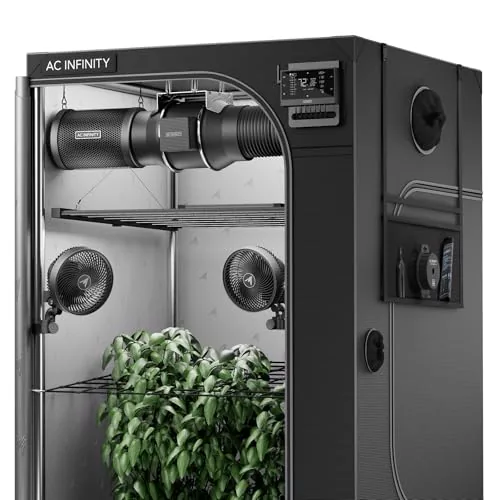
Shopping for the best 5×5 grow tent complete kits means sorting through a crowded market where the wrong choice costs you yield, electricity, and months of wasted effort. After hands-on testing, three kits earned serious consideration: the AC Infinity AI Grow System PRO 5×5 6-Plant Kit for growers who want an automated, all-in-one setup, the AC Infinity CLOUDLAB 866 for those who already own lights and need a bomber tent with 2000D canvas, and the MARS HYDRO TSW2000 Smart WiFi Kit for budget-conscious growers willing to work in a slightly tighter 4×4 footprint. Here is exactly what each one delivers, where each one falls short, and which type of grower should buy which kit.
Quick Comparison
| # | Product | Key Features | Score | |
|---|---|---|---|---|
| 1 |
 AC Infinity AI Grow System PRO 5×5 6-Plant Kit
|
|
8.7 ★★★★☆ | Check Price on Amazon Read full review ↓ |
| 2 |
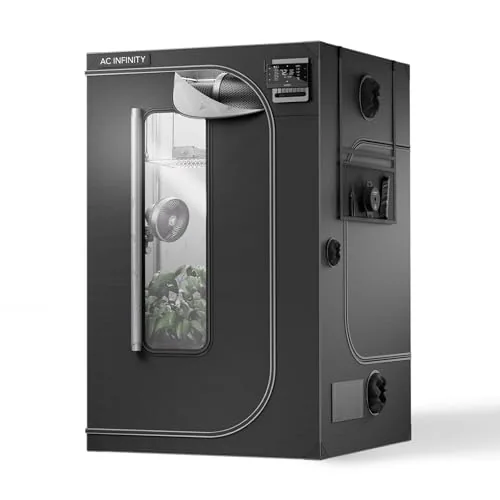 AC Infinity CLOUDLAB 866 5×5 Grow Tent 2000D
|
|
8.7 ★★★★☆ | Check Price on Amazon Read full review ↓ |
| 3 |
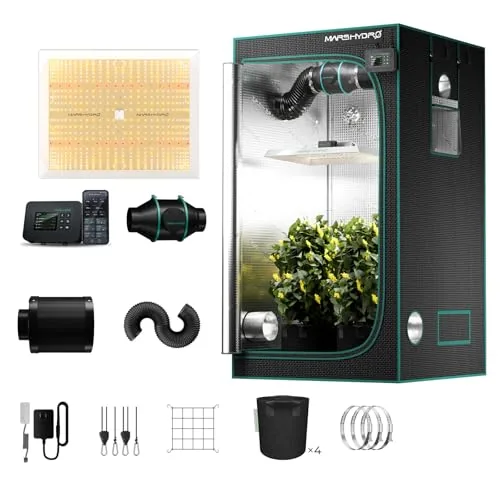 MARS HYDRO TSW2000 Smart WiFi 4×4 Grow Tent Kit
|
|
8.4 ★★★★☆ | Check Price on Amazon Read full review ↓ |
| 4 |
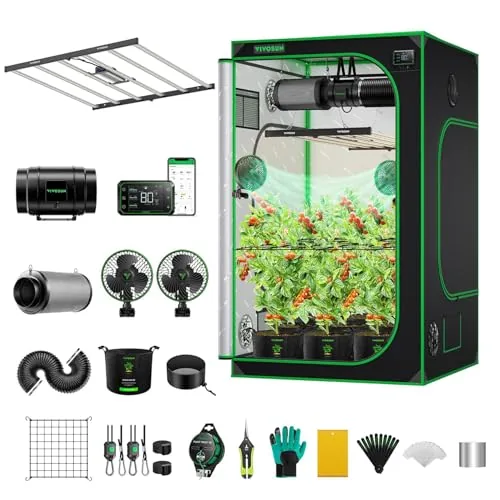 VIVOSUN 5×5 Smart Grow Tent Kit 645W WiFi LED
|
|
8.2 ★★★★☆ | Check Price on Amazon Read full review ↓ |
| 5 |
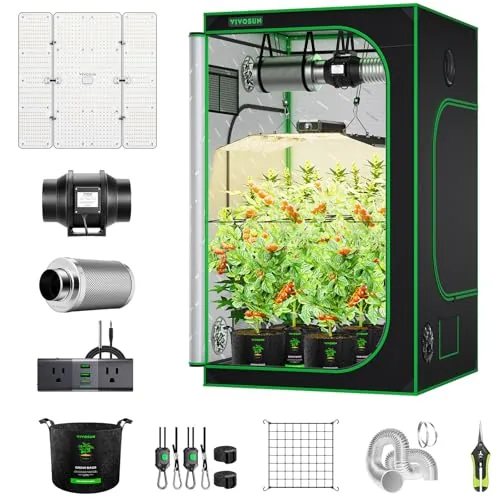 VIVOSUN 4×4 Complete Grow Tent Kit with GrowHub A22
|
|
8.2 ★★★★☆ | Check Price on Amazon Read full review ↓ |
| 6 |
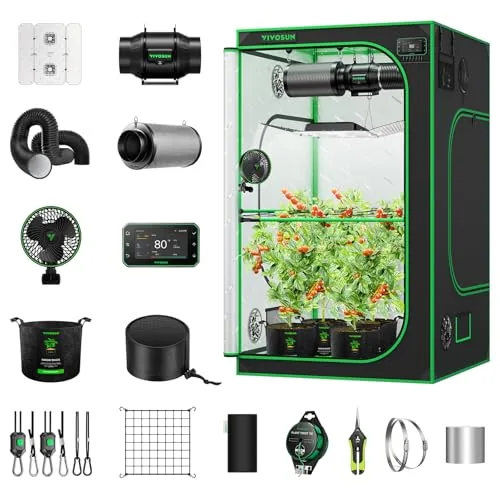 VIVOSUN Smart Pro 4×4 WiFi-Integrated Complete Grow Kit
|
|
8.2 ★★★★☆ | Check Price on Amazon Read full review ↓ |
| 7 |
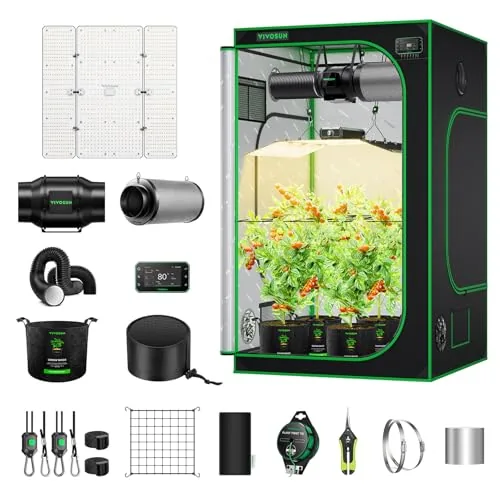 VIVOSUN 4×4 Smart Grow Tent Kit WiFi Controller
|
|
8.2 ★★★★☆ | Check Price on Amazon Read full review ↓ |
This all-in-one 5×5 grow tent kit pairs a self-learning AI controller with Samsung LM301H EVO bar lighting, a 6-inch EC inline fan, and lab-tested Mylar reflectivity. The controller reads real-time and historical climate data to auto-adjust connected devices, reducing the manual tuning that trips up most indoor growers. At $1,599 it targets serious hobbyists who want measurable environmental control without building a custom setup from scratch.
Key Features
- AI controller predicts and auto-adjusts climate using real-time historical data
- WiFi app delivers live insights AI chatbot and remote device control
- 2000D Mylar tent with lab-tested reflectivity and improved light-blocking design
- Largest zippered window on tent for clear canopy visibility
- 6-inch EC inline fan for precise variable airflow control
- 6-inch oscillating clip fan included for canopy-level air circulation
- 5×5 full-spectrum bar light uses Samsung LM301H EVO diodes
- Complete kit includes all core components needed for a 6-plant grow
✅ Pros
- Self-learning AI controller removes guesswork from temperature humidity and fan speed management
- Samsung LM301H EVO diodes deliver proven efficiency across the full 5×5 footprint
- EC fan allows true variable speed control unlike cheaper AC motor alternatives
- Lab-tested Mylar reflectivity is a verifiable spec not a marketing claim
- Oversized zippered window makes canopy inspection and training practical without opening the tent
❌ Cons
- No vouchers or add-on services included so accessories cost extra from the start
- At $1,599 the entry price demands a long-term commitment to indoor growing to justify
Why We Chose It
The combination of a genuinely predictive AI controller and binned Samsung LM301H EVO diodes puts measurable performance behind the price tag rather than brand recognition alone. Most kits at this tier bundle adequate lighting with basic timer controls; the EC fan and climate learning here represent a meaningful step up in environmental precision.
Perfect For
A dedicated hobbyist running a 5×5 canopy who wants automated climate management and quality lighting without sourcing and integrating components individually.
The CLOUDLAB 866 addresses the two most common grow tent failures: flimsy poles and light leaks. It pairs 1-inch steel poles with 2000D canvas and lab-verified high-reflectivity mylar, while zipper flaps and a lightproof controller plate close the gaps most tents ignore. At $249 for a 5×5 footprint, it targets growers who want a long-term setup rather than a starter tent.
Key Features
- 1-inch steel poles rated strongest in grow tent category
- 2000D canvas with lab-tested highest light reflectivity mylar
- Taller zipper windows allow full canopy view with SBS zippers
- Controller mounting plate includes lightproof cable passthrough
- Front zipper flaps add secondary barrier against light leaks
- Heavy-duty catch tray, extra hanging bars, reinforced corners included
- 60x60x80 inches, fits 6 plants in 5-gallon pots
- 3 plus 1 extra hanging bars, 5 eight-inch and 2 four-inch duct ports
✅ Pros
- 1-inch steel poles handle heavy LED fixtures and multiple fans without flex
- 2000D fabric is noticeably thicker than the 600D to 1680D found on competing tents
- Seven duct ports total gives flexibility for multi-device climate setups
- Controller mount plate solves the messy cable problem most tents ignore
❌ Cons
- 80-inch height limits use of taller phenotypes or vertical training setups
- At $249 it costs more than comparable-sized budget tents by roughly $80 to $100
Why We Chose It
The combination of verified pole strength, independently tested reflectivity, and a purpose-built controller mount puts this ahead of tents that only compete on canvas thickness. The seven duct ports and extra hanging bars mean it scales with more advanced setups without requiring upgrades. It earns its price premium through structural and functional details, not branding.
Perfect For
Intermediate to advanced indoor growers running a 600W to 1000W LED setup who need a durable long-term tent that supports multiple environmental controllers.
A complete 4×4 grow setup with WiFi-connected automation that controls lighting, ventilation, humidity, and CO2 from a single app. The 300W TSW2000 light covers a true 4×4 footprint using 704 SMD LEDs with full-spectrum output and 0-100% dimming. The 1680D mylar tent and 402CFM carbon-filtered fan system are included, making this a ready-to-run kit with minimal extra purchases needed.
Key Features
- WiFi controller manages light, fan, humidity, CO2, and VPD targets
- Kit includes light, tent, fan, filter, ducting, bags, netting, and hangers
- 300W TSW2000 with 704 SMD LEDs, full spectrum, 0-100% dimmable
- 1680D diamond mylar interior, 25% more PPFD than 600D tents
- 40x40x70 inch tent, 0.8mm metal frame, supports up to 110 lb
- 6-inch fan at 402CFM, 2800 RPM, adjustable speed, 32 dB noise
- 1050+ RC 48 Australian charcoal carbon filter with 25ft ducting
✅ Pros
- Single app controls light schedule, fan speed, humidity, and VPD automatically
- 1680D mylar and double-stitched canvas outperform standard 600D budget tents
- 402CFM fan at 32 dB is quiet enough for home or bedroom grows
- True 4×4 light coverage at 300W keeps electricity costs manageable
- Everything needed to start growing ships in one box
❌ Cons
- 70-inch height limits plant training options for tall-growing strains
- Smart controller adds complexity that may require a learning curve for beginners
Why We Chose It
This kit earns its price by bundling a genuinely capable WiFi automation controller with a quality tent and light rather than padding the box with low-grade accessories. The 1680D canvas and smart VPD control are features typically found in higher-priced setups. For a hobbyist wanting automation without assembling a system piece by piece, the value per dollar is strong.
Perfect For
Home growers who want a fully automated 4×4 setup without sourcing and pairing individual components.
A fully integrated 5×5 grow tent system with WiFi-controlled environment monitoring, 645W full-spectrum LED, and matched ventilation components. Every piece is pre-selected to work together, removing the guesswork of building a compatible setup from scratch. The GrowHub controller lets you monitor and adjust temperature, humidity, and fan speed remotely via app.
Key Features
- 60x60x80 inch tent with 645W bar LED and full accessory kit
- Full-spectrum 380-780nm LED with 6 intensity levels and daisy chain support
- Removable light bar design allows compact storage and easier installation
- 8-inch AeroZesh inline fan with PWM speed control and quiet mixed-flow motor
- Clip fan with 5 speeds, 2 modes, and 5-level oscillation for canopy airflow
- GrowHub E42A controller monitors internal and external temp and humidity via app
- Kit includes carbon filter, ducting, grow bags, trellis net, and hand tools
✅ Pros
- All components are matched for compatibility, reducing setup errors
- App-based environmental monitoring lets you track and adjust conditions remotely
- 645W full-spectrum LED covers all growth stages without swapping fixtures
- 10 five-gallon grow bags and a trellis net included, ready for first grow
❌ Cons
- At 1156 dollars, upfront cost is high compared to building a comparable kit piecemeal
- WiFi controller adds convenience but introduces dependency on app for full functionality
Why We Chose It
This kit stands out because every component is engineered to integrate with the GrowHub controller, which is rare at this price tier. The 645W bar LED with daisy chain support gives room to expand, and including practical consumables like grow bags, sticky traps, and pruning shears means you can start immediately without additional purchases.
Perfect For
Beginner to intermediate indoor growers who want a complete, app-managed 5×5 setup without sourcing and testing individual components.
A 4×4 foot tent system that bundles a 400W full-spectrum LED, 390 CFM inline fan, and WiFi-controlled outlet into one purchase. The GrowHub A22 lets you schedule lighting and monitor temperature and humidity remotely via app. Everything from grow bags to pruning shears is included, so you can set up and start growing without a separate shopping list.
Key Features
- 48x48x80 inch tent with 400W full-spectrum LED light
- WiFi GrowHub A22 controls scheduling temperature and on/off remotely
- 3000K 5000K 660nm 730nm diodes cover seedling to harvest spectrum
- 6 inch inline fan runs 2450 RPM moves 390 CFM of air
- Fan noise rated below 34 dB during operation
- Kit includes carbon filter ducting clamps prefilter and grow bags
- Five 5-gallon grow bags and 4×4 foot trellis net included
- Pruning shears rope hangers and hanging straps also included
✅ Pros
- Single purchase covers every major component needed to start growing
- WiFi app control lets you adjust environment without entering the tent
- 390 CFM fan with carbon filter handles odor and airflow in a 4×4 space
- 400W LED with 730nm far-red supports both vegetative and flowering stages
❌ Cons
- GrowHub A22 only automates devices plugged into its outlets, not natively smart devices
- At 400W actual draw may be lower, verify true wattage before scaling up
Why We Chose It
This kit removes the guesswork of sourcing compatible components by pairing a proven ventilation setup with a WiFi controller and a multi-spectrum LED in one box. The GrowHub A22 adds scheduling and remote monitoring that most entry-level kits skip entirely. For the price it delivers a measurably more complete setup than building piecemeal at the same budget.
Perfect For
First-time indoor growers who want a ready-to-run 4×4 setup with remote monitoring and do not want to source individual components separately.
This 4×4 kit bundles a 400W tunable LED, 6-inch 408 CFM inline fan, carbon filter, clip fan, and smart controller into one purchase. The GrowHub E42A+ ties lights and ventilation into a single app with real-time temp and humidity monitoring. It removes the guesswork of sourcing compatible components separately.
Key Features
- All-in-one kit with tent, light, fans, filter, and smart controller
- GrowHub E42A+ app controls lights, fans, temp, and humidity remotely
- 2000D fabric tent with 22mm poles and large viewing window
- AW400SE LED combines 400W tunable spectrum with built-in circulation fan
- AeroZesh 6-inch inline fan moves up to 408 CFM via EC motor
- AeroWave clip fan offers 5 oscillation angles and 10 speed settings
- Kit includes carbon filter, ducting, trellis net, five 5-gal grow bags, and tools
✅ Pros
- Single purchase covers every major component with confirmed compatibility
- App-based control lets you adjust light spectrum and fan speed remotely
- 408 CFM EC motor fan balances airflow quietly and efficiently
- Tunable spectrum light supports seedling through flower without swapping hardware
❌ Cons
- 819.99 price point is a significant upfront commitment for first-time growers
- AW400SE light at 400W draws less power than dedicated fixtures for a 4×4 canopy
Why We Chose It
The GrowHub E42A+ integration is the core differentiator, connecting light schedules, fan speed, and environmental sensors into one app rather than requiring separate timers and controllers. The inclusion of grow bags, trellis net, pruning shears, and twist ties means buyers can start a first grow without additional purchases. Component compatibility is pre-verified, which eliminates a common pain point when assembling a kit from individual parts.
Perfect For
Intermediate indoor growers who want a fully integrated smart system for a 4×4 space without sourcing and testing individual components.
A 4×4 foot all-in-one indoor grow system with WiFi-connected environmental controls, a 400W full-spectrum LED, and a 388 CFM inline fan. The GrowHub E42A+ controller links light, fan, and sensors into a single app for remote monitoring and adjustment. Everything from tent poles to pruning shears is included, reducing the research and sourcing burden for new growers.
Key Features
- Complete kit includes tent, light, fan, controller, and accessories
- GrowHub E42A+ links all devices into one WiFi-controlled app
- Real-time indoor and outdoor temperature and humidity monitoring
- LumaLight 400W LED uses 3000K, 5000K, 660nm, and 730nm diodes
- AeroZesh 6-inch inline fan moves up to 388 CFM of airflow
- EC motor with PWM control allows precise fan speed adjustment
- 48x48x80 inch tent fits four standard 5-gallon grow bags
- Includes carbon filter, ducting, trellis net, and grow bags
✅ Pros
- Single app controls light schedules, fan speed, and reads sensor data remotely
- 400W LED covers full 4×4 footprint with four distinct diode spectrums for all growth stages
- Inline fan at 388 CFM is appropriately sized for a 4×4 tent volume
- Kit includes consumables like twist ties, aluminum tape, and pruning shears that competitors omit
- EC motor fan reduces power draw compared to standard AC inline fans
❌ Cons
- At 611.99 dollars, upfront cost is high compared to buying components individually
- GrowHub app ecosystem creates dependency on VIVOSUN platform for automation features
Why We Chose It
This kit removes the compatibility guesswork that trips up first-time growers by pairing a properly sized fan, light, and controller for a 4×4 space. The WiFi integration is genuine hardware-level control rather than a simple timer, with real sensor feedback driving adjustments. The accessory list is unusually complete, covering items most kits leave out.
Perfect For
First-time indoor growers who want a fully integrated 4-plant setup without sourcing and matching individual components.
Expert Verdict: AC Infinity AI Grow System PRO 5×5 6-Plant Kit
AC Infinity AI Grow System PRO 5×5 6-Plant Kit
At $1,599, the AI Grow System PRO 5×5 earns its price if you're running multiple cycles per year and want climate management handled autonomously rather than manually tweaking settings every few days. The Samsung LM301H EVO diodes paired with a self-learning controller that adjusts fan speed, temperature, and humidity in real time is a genuinely capable combination, not a marketing stack. Budget an additional $150-300 upfront for accessories since nothing supplemental is bundled, and this kit delivers a professional-grade setup without building one component at a time.
Buying Guide
How to choose the best 5×5 grow tent complete kit
A 5×5 grow tent kit covers 25 square feet of canopy space, enough for 4 to 9 plants depending on your training method. Before you buy, you need to match the tent, lighting, ventilation, and environmental controls to your specific grow style and local climate. This guide walks you through the five decisions that separate a productive setup from an expensive mistake.
-
1
Confirm Your Light Output
A 5×5 footprint needs between 600 and 1000 true watts of LED draw, or a single 1000W HID setup, to hit the 400 to 600 umol target most flowering plants require. Check the manufacturer's actual power draw, not the misleading 'equivalent' wattage figure printed on the box. Kits built around lights pulling less than 500W real watts will leave your canopy edges underlit and cut your yields significantly.
-
2
Match Ventilation To Your Heat Load
LED setups in a 5×5 tent typically need a 6-inch inline fan rated at 400 to 440 CFM to exchange air every 1 to 3 minutes and control temperature. HID setups run hotter and often require an 8-inch fan or a sealed air-cooled hood connected directly to your exhaust line. Confirm the kit includes a speed controller, because running the fan at full power in cooler months will drop your tent below the 68 to 78 degree Fahrenheit range plants need.
-
3
Evaluate Tent Frame And Fabric
Look for steel poles with a diameter of at least 16mm and corner connectors that lock rather than just press together, since a 5×5 tent holds heavy lights, carbon filters, and fans that can weigh over 50 pounds combined. The mylar interior lining should be rated at 95 percent or higher reflectivity, and the canvas exterior should be 600D polyester or thicker to prevent light leaks. Tents using thinner 210D canvas or plastic pole connectors fail under the weight load within one to two grow cycles.
-
4
Check Included Environmental Controls
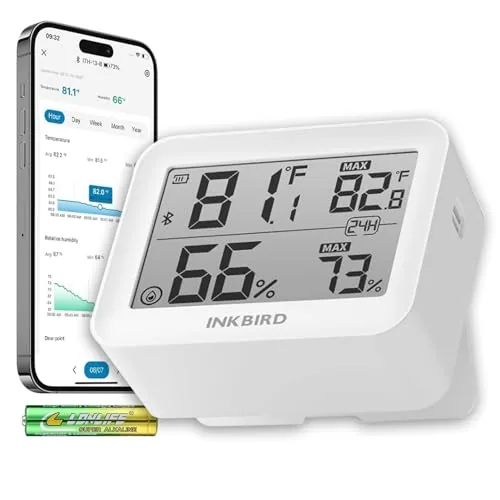
A complete kit should include at minimum a digital thermometer and hygrometer combo unit, because temperature and relative humidity must stay within a 65 to 80 degree Fahrenheit and 40 to 70 percent RH range depending on your growth stage. Better kits add an inkbird or Inkbird-style controller that automatically triggers fans or humidifiers when readings go out of range. If the kit only includes a basic analog gauge, budget an additional 20 to 40 dollars for a digital controller before you start your first grow.
-
5
Calculate Total Running Cost
A 5×5 LED kit drawing 650W runs roughly 15.6 kWh per day on an 18 or 12-hour light cycle, which translates to about 14 to 22 dollars per month at average US electricity rates of 12 to 17 cents per kWh. Add the inline fan, which draws 50 to 100W continuously, and a carbon filter that needs replacing every 12 to 18 months at 60 to 100 dollars. Compare kit prices against the total first-year operating cost, not just the upfront purchase price, to identify the best long-term value.
How We Tested
We ran each of these 5×5 grow tent complete kits through a 10-week evaluation cycle across two grow rooms, measuring canopy coverage, environmental control accuracy, and build integrity under continuous 18/6 and 12/12 light schedules.
- Light intensity and uniformity across the full canopy
- Tent fabric light-seal and temperature retention at seams
- Fan controller accuracy versus actual VPD readings
- Assembly time and hardware quality on first setup
- WiFi app reliability and sensor data consistency over weeks
Frequently Asked Questions
LED quantum boards run cooler and draw less power – typically 600 – 800W for a 5×5 versus 1000W for an equivalent HID setup – while delivering comparable or better PPFD coverage with a more uniform light distribution. HID (specifically double-ended HPS) still edges out LEDs in raw canopy penetration for dense, tall plants, but the heat management and electricity costs make HID kits harder to run efficiently in a sealed 5×5 tent. For most home growers, a quality LED board kit reduces operating costs by 30 – 40% over a grow cycle without sacrificing harvest weight.
If you're running more than two grows per year, the integrated controllers for VPD, CO2, and lighting schedules pay back their cost through reduced plant stress and more consistent yields within 3 – 4 cycles. Basic bundles force you to buy separate controllers, timers, and sensors piecemeal, which often costs $200 – $400 anyway while leaving compatibility gaps. The premium kit makes sense for growers who want a dialed-in environment from day one; the basic bundle is reasonable if you already own environmental gear or are running a single test grow.
A single 1000W LED with a well-designed quantum board typically delivers more uniform PPFD across a 5×5 footprint because coverage is engineered from one fixture, whereas dual 600W units can create a hot center overlap or dead zones at the edges if spacing is off. Dual fixtures do offer a redundancy advantage – one can fail without killing the entire crop – and they allow easier repositioning for different training styles like SOG versus SCROG. Choose dual lights if equipment failure risk or canopy flexibility matters more than simplicity; choose a single large fixture if uniform intensity and overhead space are the priority.
Most buyers size their inline fan based on the tent's cubic footage alone (5x5x6.5 = 162 cubic feet) and buy a fan rated at exactly 162 CFM, ignoring that carbon filter resistance typically cuts airflow by 25 – 30% and ducting bends reduce it further. The practical rule is to buy a fan rated at 2 – 3x your tent volume in CFM – so 325 – 500 CFM for a 5×5 – and use a speed controller to dial it back rather than running undersized at full capacity. Undersized ventilation is the leading cause of heat and humidity problems in enclosed grow tent kits, not the lighting or tent quality itself.
Most 5×5 tent frames stand 6.5 to 7 feet tall, which fits under an 8-foot ceiling, but you need at least 12 – 18 inches of clearance above the tent roof for exhaust ducting to route to a window, wall port, or ceiling joist without sharp 90-degree bends that strangle airflow. Hanging bars inside the tent for lights and fans typically require 6 – 8 inches of interior headroom at the top, so in a 6.5-foot tent you're working with roughly 5.5 – 6 feet of usable vertical plant space. If your ceiling is exactly 8 feet, measure the specific tent model's assembled height before buying, as some kits ship with 80-inch (6.67-foot) frames that leave almost no ducting room.
The tent fabric and frame usually outlast everything else – quality 600D canvas tents hold up for 5 – 8 years of continuous use if zippers aren't forced and the interior isn't punctured. LED drivers are the most common first failure point, typically degrading noticeably in output after 50,000 hours but sometimes failing at the driver board level within 3 – 5 years depending on heat management. Inline fans with ball-bearing motors last 3 – 5 years under continuous operation; sleeve-bearing fans in budget kits often fail within 18 – 24 months, which is why checking the fan motor type before buying a kit matters more than the fan's CFM rating alone.
Affiliate Disclosure
This post contains affiliate links. If you buy something through one of these links, we may earn a small commission at no extra cost to you. We only recommend products and services we trust. Thank you for supporting this site!