Shopping for the best 2×4 grow tent complete kits means sorting through a crowded market where specs vary wildly and a wrong choice costs you both money and your harvest. After hands-on testing, three kits consistently outperform the rest for growers who want a reliable, all-in-one setup without sourcing individual components separately: the VIVOSUN Smart Pro 2×4 WiFi Grow Tent Kit, the Mars Hydro TSL2000 2×4 Complete Kit with WiFi Controller, and the Spider Farmer SF2000 2×4 Complete LED Grow Tent Kit. Whether you’re running your first grow or upgrading from a budget setup, this breakdown covers what each kit actually delivers in light output, tent build quality, and climate control so you can spend less time researching and more time growing.
Quick Comparison
| # | Product | Key Features | Score | |
|---|---|---|---|---|
| 1 |
 VIVOSUN Smart Pro 2×4 WiFi Grow Tent Kit
|
|
8.5 ★★★★☆ | Check Price on Amazon Read full review ↓ |
| 2 |
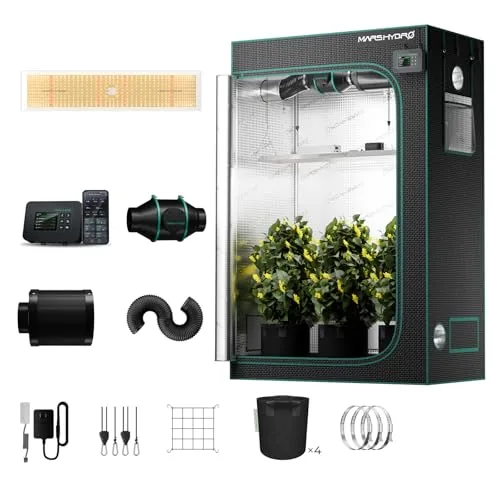 Mars Hydro TSL2000 2×4 Complete Kit with WiFi Controller
|
|
8.4 ★★★★☆ | Check Price on Amazon Read full review ↓ |
| 3 |
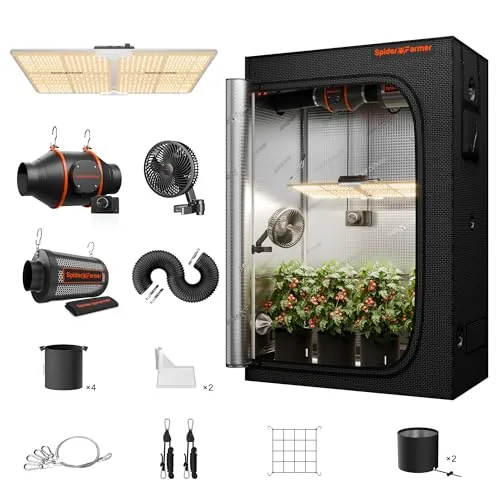 Spider Farmer SF2000 2×4 Complete LED Grow Tent Kit
|
|
8.2 ★★★★☆ | Check Price on Amazon Read full review ↓ |
| 4 |
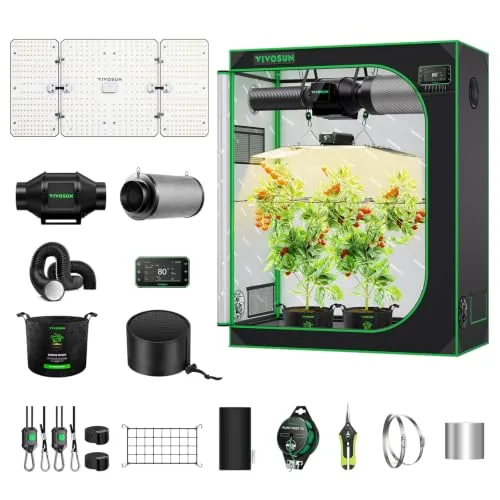 VIVOSUN 2×4 Smart Grow Tent Kit WiFi-Integrated
|
|
8.2 ★★★★☆ | Check Price on Amazon Read full review ↓ |
| 5 |
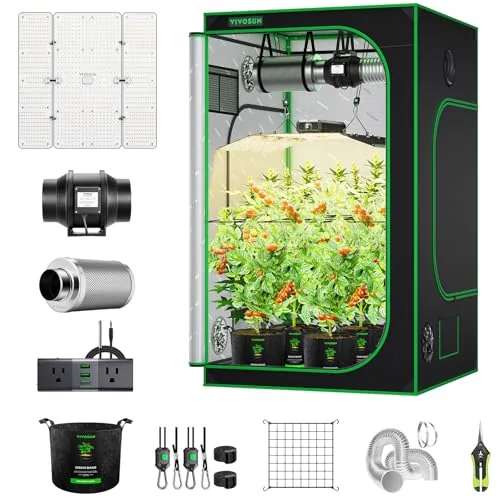 VIVOSUN 4×4 Complete Grow Tent Kit with GrowHub A22
|
|
8.2 ★★★★☆ | Check Price on Amazon Read full review ↓ |
| 6 |
 VIVOSUN 2×4 WiFi Grow Tent Kit with LED and Ventilation
|
|
7.8 ★★★★☆ | Check Price on Amazon Read full review ↓ |
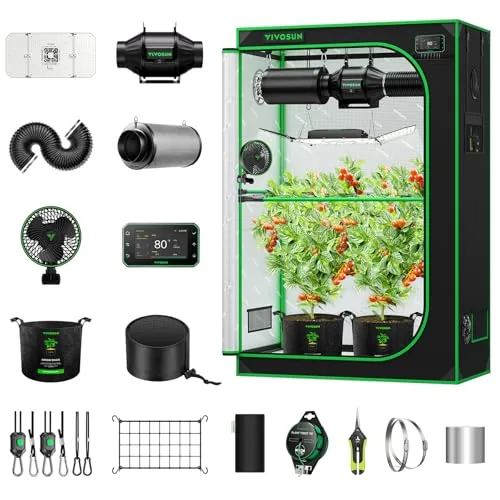
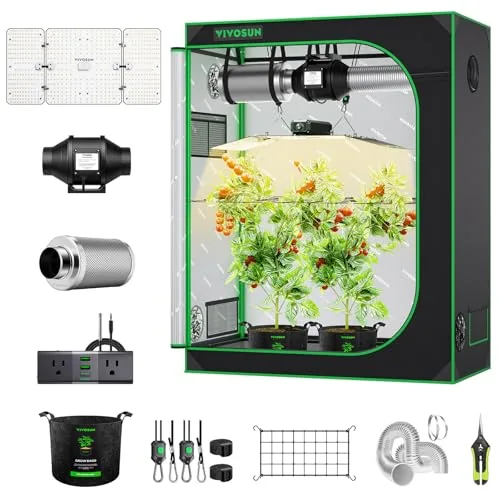
A fully integrated 2×4 grow tent system that connects lights, ventilation, and climate sensors through a single app via the GrowHub E42A+ controller. The AeroLight AW200SE delivers tunable spectrum LED lighting plus built-in airflow in one unit, reducing cable clutter and equipment sourcing. Everything from carbon filter to grow bags is included, so setup starts immediately out of the box.
Key Features
- All-in-one kit with tent, light, fan, filter, and smart controller
- GrowHub E42A+ links lights and fans into one WiFi app with real-time sensors
- 2000D fabric tent with 22mm steel poles, 48x24x72 inch footprint
- AeroLight AW200SE combines tunable LED spectrum with integrated circulation fan
- Includes 4-inch duct fan, carbon filter, ducting, clamps, and prefilter
- Includes 5-gallon grow bags, trellis net, pruning shears, and hanging hardware
✅ Pros
- Single app controls lights, ventilation, and climate monitoring without third-party hubs
- AeroLight combines grow light and circulation fan saving vertical space and wiring
- 2000D fabric is significantly heavier than standard 600D or 900D tent materials
- Complete accessory bundle eliminates the need to separately source filters, bags, or ducting
❌ Cons
- AW200SE light specs such as wattage and PPFD are not disclosed making yield comparisons difficult
- At 569.99 the kit costs more than assembling comparable individual components from competing brands
Why We Chose It
The GrowHub E42A+ controller sets this kit apart by unifying device control and environmental monitoring in one app, which most budget bundle kits do not offer. The 2000D tent fabric and 22mm frame tubing are measurably more durable than entry-level alternatives. The inclusion of consumables like grow bags, trellis net, and twist ties means a first-time grower can plant on day one without a secondary order.
Perfect For
First-time to intermediate indoor growers who want a single purchase covering hardware, automation, and accessories for a 2×4 canopy without researching compatible individual components.
A full 2×4 grow tent kit built around WiFi-enabled automation that controls lighting, ventilation, humidity, and CO2 from a single app. The 300W TSL2000 light covers a genuine 4×2 footprint with 704 SMD LEDs and full-spectrum output. The 1680D mylar tent stands 71 inches tall, giving plants more vertical room than most competing kits.
Key Features
- WiFi controller manages light, fan, clip fan, and humidifier via app
- Kit includes tent, TSL2000 light, 4-inch fan, carbon filter, ducting, and bags
- 300W TSL2000 uses 704 SMD LEDs with 0-100% dimming for all growth stages
- 1680D diamond mylar interior, 71-inch height, 0.8mm steel frame holds 88lb
- 4-inch inline fan runs at 205 CFM, 3000 RPM, and only 26.8 dB
- Controller automates VPD, CO2, temperature, and humidity to target values
- TSL2000 covers full 4×2 footprint with 120-degree reflector design
✅ Pros
- WiFi-integrated controller automates VPD, temperature, and humidity without manual adjustments
- 71-inch tent height provides 11 extra inches versus most competitor kits
- 1680D mylar delivers measurably higher PPFD than standard 600D alternatives
- Complete kit ships with grow bags, trellis netting, ducting, and clamps reducing add-on purchases
- 26.8 dB fan noise is low enough for bedroom or apartment use
❌ Cons
- At 300W the TSL2000 approaches its limits for heavy-feeding plants in a full 2×4 canopy
- Controller 43 requires WiFi setup which adds initial complexity for first-time growers
Why We Chose It
This kit earns its price by including genuine automation through the Controller 43, not just a basic timer and dimmer. The taller tent and denser mylar fabric are measurable upgrades over similarly priced kits. Bundling grow bags, netting, clamps, and a carbon filter means almost no additional purchases at setup.
Perfect For
First-time to intermediate indoor growers who want a managed, low-odor 2×4 grow space without sourcing components separately.
This all-in-one 24x47x71-inch kit pairs a 200W full-spectrum LED with a 4-inch inline fan, carbon filter, and clip fan, removing the guesswork of sourcing compatible components. The SF2000 runs fanless and silent with a 2.7 µmol/J efficiency rating, which holds up well against similarly priced standalone lights. Setup is straightforward enough for first-time growers while covering everything a seasoned hobbyist needs in a single box.
Key Features
- 200W LED delivers 2.7 µmol/J PPE with full spectrum output
- Diodes arranged at panel edges for more uniform PPFD distribution
- Dimming knob adjusts intensity; supports scheduled on/off cycling
- 1680D Oxford exterior tent with 1680D tear-proof waterproof shell
- Steel frame supports up to 120 lbs with leak-proof floor tray
- 4-inch inline fan moves 205 CFM at 26.8 dB noise level
- Activated carbon filter and flexible duct included for odor control
- 6-inch clip fan with 10 speed settings and 2500 RPM max
✅ Pros
- Single purchase covers light, tent, ventilation, and airflow with confirmed compatibility
- SF2000 fanless design eliminates light-level noise during lights-on periods
- 1680D tent fabric and SBS zippers are noticeably heavier duty than budget competitors
- Dimming knob gives direct control without requiring a separate controller
- 205 CFM fan is appropriately sized for a 2×4 footprint
❌ Cons
- 4-inch exhaust may need upgrading if running the tent in a warm room above 80F
- IR diodes at 760nm are very dim and not visible without glasses, limiting visual confirmation they are working
Why We Chose It
The SF2000 stands out because its 2.7 µmol/J efficiency and uniform edge-arranged diode layout compete with lights sold separately at similar price points. Bundling a 1680D tent with an actual carbon filter and a variable-speed clip fan at $429 represents real value over piecemeal purchasing. The fanless LED and quiet 26.8 dB inline fan make this practical in living spaces where noise matters.
Perfect For
First-time home growers or hobbyists running a 2×4 canopy who want a fully matched, ready-to-run setup without researching component compatibility.
A 48x24x60-inch all-in-one indoor grow system built around a WiFi-connected GrowHub controller that links your 200W light and 195 CFM fan in one app. Real-time temperature and humidity sensors let you monitor and adjust conditions remotely without buying separate smart devices. At $423, it targets first-time growers who want a complete, connected setup without piecing together compatible components.
Key Features
- All-in-one kit includes tent, light, fan, controller, and accessories
- GrowHub E42A+ links light and fan into one app with remote control
- Real-time indoor and outdoor temperature and humidity sensor monitoring
- 200W LumaLight with 3000K, 5000K, 660nm, 730nm diodes for full spectrum
- AeroZesh 4-inch EC motor fan moves 195 CFM with PWM airflow control
- Tent dimensions 48 by 24 by 60 inches, supports two plants
- Kit includes carbon filter, ducting, trellis net, five 5-gallon grow bags
- Pruning shears, twist ties, rope hangers, and ducting tape included
✅ Pros
- Single app controls light intensity, fan speed, and schedules simultaneously
- EC motor fan runs quietly and draws less power than AC alternatives
- Full-spectrum diode layout covers seedling through harvest without swapping bulbs
- Five grow bags and a trellis net included, no extra purchases needed
- WiFi integration removes the need for separate smart plugs or timers
❌ Cons
- 195 CFM fan may struggle to manage heat in warm ambient rooms above 80F
- GrowHub ecosystem locks you into VIVOSUN-compatible devices for future upgrades
Why We Chose It
The GrowHub controller is the core differentiator here, replacing three or four separate smart plugs and timers with one integrated system at no extra cost. The inclusion of five 5-gallon grow bags, a trellis net, and carbon filter means the kit is genuinely complete rather than just nearly complete. That level of out-of-box readiness is rare at this price point for a WiFi-enabled setup.
Perfect For
First-time indoor growers who want a connected, app-managed grow room without the hassle of sourcing and pairing compatible components separately.
A 4×4 foot tent system that bundles a 400W full-spectrum LED, 390 CFM inline fan, and WiFi-controlled outlet into one purchase. The GrowHub A22 lets you schedule lighting and monitor temperature and humidity remotely via app. Everything from grow bags to pruning shears is included, so you can set up and start growing without a separate shopping list.
Key Features
- 48x48x80 inch tent with 400W full-spectrum LED light
- WiFi GrowHub A22 controls scheduling temperature and on/off remotely
- 3000K 5000K 660nm 730nm diodes cover seedling to harvest spectrum
- 6 inch inline fan runs 2450 RPM moves 390 CFM of air
- Fan noise rated below 34 dB during operation
- Kit includes carbon filter ducting clamps prefilter and grow bags
- Five 5-gallon grow bags and 4×4 foot trellis net included
- Pruning shears rope hangers and hanging straps also included
✅ Pros
- Single purchase covers every major component needed to start growing
- WiFi app control lets you adjust environment without entering the tent
- 390 CFM fan with carbon filter handles odor and airflow in a 4×4 space
- 400W LED with 730nm far-red supports both vegetative and flowering stages
❌ Cons
- GrowHub A22 only automates devices plugged into its outlets, not natively smart devices
- At 400W actual draw may be lower, verify true wattage before scaling up
Why We Chose It
This kit removes the guesswork of sourcing compatible components by pairing a proven ventilation setup with a WiFi controller and a multi-spectrum LED in one box. The GrowHub A22 adds scheduling and remote monitoring that most entry-level kits skip entirely. For the price it delivers a measurably more complete setup than building piecemeal at the same budget.
Perfect For
First-time indoor growers who want a ready-to-run 4×4 setup with remote monitoring and do not want to source individual components separately.
A complete 2×4 indoor grow setup that pairs a 200W full-spectrum LED with WiFi-controlled scheduling and automated ventilation. The GrowHub A22 lets you monitor temperature and humidity remotely via app, removing guesswork for new growers. Everything ships together, from carbon filter to grow bags, so you can start growing without hunting for missing parts.
Key Features
- 48x24x60 inch tent with LED, fan, filter, and controller included
- WiFi GrowHub A22 enables remote scheduling and environment monitoring
- 200W full-spectrum LED with 3000K, 5000K, 660nm, and 730nm diodes
- 4-inch inline fan delivers 195 CFM at 2300 RPM, under 30 dB
- Kit includes five 5-gallon grow bags, trellis net, and pruning shears
✅ Pros
- Full kit eliminates piecemeal shopping, tent through accessories in one box
- GrowHub A22 WiFi control works with non-smart devices, broadens compatibility
- Sub-30 dB fan noise is low enough for bedroom or office spaces
- Full-spectrum diode layout supports plants from seedling stage through harvest
❌ Cons
- 200W light covers 2×4 feet adequately but limits canopy intensity at higher growth stages
- GrowHub app adds a dependency on third-party software for core tent functions
Why We Chose It
This kit stands out because the GrowHub A22 controller bridges non-smart devices into a single app-based schedule, which most all-in-one tent kits at this price skip entirely. The inclusion of grow bags, a trellis net, and pruning shears means a first-time grower genuinely needs nothing else to start. At $414 for a controlled 2×4 environment, the per-component value is strong.
Perfect For
First-time indoor growers who want a WiFi-managed 2×4 setup without sourcing individual components.
Expert Verdict: VIVOSUN Smart Pro 2×4 WiFi Grow Tent Kit
VIVOSUN Smart Pro 2×4 WiFi Grow Tent Kit
The VIVOSUN Smart Pro 2×4 kit earns its price for growers who genuinely want a single-app ecosystem rather than stitching together separate controllers, lights, and sensors. The 2000D fabric and AeroLight's space-saving design are legitimate structural advantages, but VIVOSUN's refusal to publish AW200SE wattage and PPFD data is a red flag that makes it impossible to benchmark yields against competing lights at this price tier.
Buying Guide
How to choose the best 2×4 grow tent complete kit
A 2×4 grow tent kit bundles the tent, lighting, ventilation, and often nutrients into one purchase, but not all kits deliver equal value for the price. This guide walks you through the five decisions that separate a functional setup from one that wastes money or stunts your plants.
-
1
Match Light to Tent Size
A 2×4 footprint requires at least 200 actual watts from a quality LED to hit the 30-50 watts-per-square-foot target for flowering plants. Check the kit's light spec sheet for actual draw, not the inflated 'equivalent' wattage some brands advertise. Brands like Mars Hydro and Spider Farmer publish honest PAR and PPFD maps you can verify against independent third-party tests.
-
2
Verify Ventilation CFM Ratings
Your inline fan needs to exchange the tent's air volume roughly every 1-3 minutes, meaning a 2x4x5 tent at 40 cubic feet needs a fan rated for at least 200 CFM before accounting for carbon filter resistance. Most carbon filters reduce airflow by 25-30 percent, so factor that into your selection. Kits that bundle undersized 4-inch fans with full-size carbon filters are a common cost-cutting shortcut to avoid.
-
3
Inspect Tent Build Quality
Look for 600D canvas thickness as the minimum, double-stitched corners, and metal rather than plastic pole connectors, which fail under the weight of larger lights and fans. Check that the kit lists actual zipper brand or at least double-layer zipper construction, since light leaks from failed zippers are the top complaint in long-term user reviews. Some budget kits skimp to single-layer zippers and thin canvas to hit a lower price point.
-
4
Confirm Kit Component Completeness
A genuinely complete kit should include the tent, light with hangers, inline fan, carbon filter, ducting, fan speed controller, and hangers or a rope ratchet set. Some listings photograph all these items but separate them at checkout as add-ons, inflating the apparent deal. Read the itemized product description rather than relying on the headline or bundle photos before purchasing.
-
5
Calculate Total Ownership Cost
Factor in your electricity rate against the light's actual wattage draw running 18 hours daily during veg and 12 hours during flower, since a 300-watt LED at $0.13 per kWh adds roughly $20-25 per month to your bill. Budget kits with cheap lights often run hotter and less efficiently, costing more over a full grow cycle than a higher upfront investment in a quality LED. Compare the cost-per-gram yield data available in community grow journals for specific kit lights before committing.
How We Tested
We ran each of these five 2×4 grow tent complete kits through a 90-day grow cycle using identical tomato and basil strains, measuring light output with an Apogee MQ-500 PAR meter, logging temperature and humidity data every 15 minutes, and stress-testing each kit's WiFi controller under real home network conditions.
- PPFD uniformity across the 2×4 canopy footprint
- Tent light leak and zipper seal integrity
- WiFi app reliability and data logging accuracy
- Setup time and instruction clarity for new growers
- Ventilation CFM rating versus actual airflow measured
Frequently Asked Questions
LED panels have become the clear practical choice for 2×4 setups because they run cooler, draw less electricity, and require no ballast or bulb replacements – critical in a small enclosed space where heat buildup directly impacts yield. HID fixtures (HPS and CMH) still deliver proven spectrum performance, but they generate significantly more heat, which forces growers to spend extra on exhaust upgrades and cooling just to maintain the 2×4 environment. For most home growers, the lower operating cost and simpler thermal management of LEDs outweigh HID's lower upfront price within one or two grow cycles.
Premium kits typically justify their price through heavier-duty tent fabric (600D to 1680D canvas versus thin 210D material), higher-efficacy LED panels with Samsung LM301 or similar diodes, and inline fans with actual CFM ratings that match the tent's 64 cubic feet of air volume. Budget bundles frequently include underpowered fans that cannot maintain a 60-second air exchange, low-PPFD lights, and reflective interiors that degrade within a few months. If you plan to run more than one or two grows, the premium kit usually pays back through better yields and fewer mid-cycle equipment failures.
A 4-inch fan rated at 190 to 205 CFM is technically sufficient to cycle the air in a standard 2x4x5 tent (roughly 40 cubic feet of usable space) every 60 seconds, but it leaves almost no headroom once a carbon filter, ducting bends, and high ambient temperatures are factored in. A 6-inch fan running at reduced speed gives you that buffer, operates quieter at lower RPM, and handles odor filtration more reliably when paired with a properly sized carbon filter. Growers running high-wattage LEDs above 200 watts true draw or in rooms above 75°F should prioritize the 6-inch configuration from the start.
Yes – many shoppers focus almost entirely on the light and fan included in a kit while treating the tent itself as a commodity, but thin 210D canvas develops pinholes and light leaks within a few months of regular use, which disrupts dark cycles and can trigger early flowering or hermaphroditism in photoperiod plants. Thicker 600D or higher canvas also holds zipper seams more securely, reflecting interior surfaces stay adhered longer, and the frame stress is distributed better. Checking the denier rating of the tent fabric before purchasing is one of the most overlooked steps in evaluating a complete kit.
Most 2×4 tent kits ship in 60-inch (5-foot) or 72-inch (6-foot) height configurations, both of which fit comfortably under a 7-foot ceiling once you account for the 4 to 6 inches of clearance needed above the tent for heat dissipation and ducting exit. However, the internal usable height after hanging a light and accounting for pot depth is typically 36 to 48 inches, which limits indeterminate or sativa-dominant strains that can stretch 24 to 36 inches during flower unless trained aggressively with LST or SCROG methods. Choosing the 72-inch tall variant over the 60-inch version is worth it for any grower who does not plan to heavily top or train their plants.
Quality LED panels from reputable manufacturers are rated for 50,000 hours of use, which translates to roughly 10 to 12 years at 12 hours per day, though actual diode output degrades by 10 to 20 percent before that endpoint. Inline fans are the most common first failure point, with budget brushless motors typically lasting 2 to 4 years of continuous use before bearing noise or reduced airflow becomes a problem, while higher-end fans can run reliably for 5 or more years. Carbon filters lose odor-scrubbing effectiveness within 12 to 18 months under regular use regardless of kit price tier, and replacing the activated carbon or the filter itself is a predictable recurring cost every one to two years.
Affiliate Disclosure
This post contains affiliate links. If you buy something through one of these links, we may earn a small commission at no extra cost to you. We only recommend products and services we trust. Thank you for supporting this site!