Running two growth stages simultaneously cuts your harvest cycle without doubling your floor space, which is exactly why multi chamber grow tents have become a practical upgrade for serious home growers. The three tents we tested – the AC Infinity CLOUDLAB 632D, VIVOSUN 4×9 2-in-1, and VIVOSUN S848 4×8 – each take a different approach to dividing that space between a main canopy and a dedicated clone or seedling zone. After hands-on evaluation of zipper durability, light bleed between chambers, mylar reflectivity, and port placement, here is what actually separates them.
Quick Comparison
| # | Product | Key Features | Score | |
|---|---|---|---|---|
| 1 |
 AC Infinity CLOUDLAB 632D 2-in-1 Grow Tent 3×2
|
|
8.7 ★★★★☆ | Check Price on Amazon Read full review ↓ |
| 2 |
 VIVOSUN 4×9 2-in-1 Mylar Grow Tent with Clone Chamber
|
|
8.2 ★★★★☆ | Check Price on Amazon Read full review ↓ |
| 3 |
 VIVOSUN S848 4×8 Grow Tent 96x48x80 Reflective Mylar
|
|
8.2 ★★★★☆ | Check Price on Amazon Read full review ↓ |
| 4 |
 MELONFARM 4×8 Grow Tent 96x48x80 600D Diamond Mylar
|
|
7.8 ★★★★☆ | Check Price on Amazon Read full review ↓ |
| 5 |
 VIVOSUN D325 2-in-1 3×2 Grow Tent with 5 Grow Bags
|
|
7.8 ★★★★☆ | Check Price on Amazon Read full review ↓ |
| 6 |
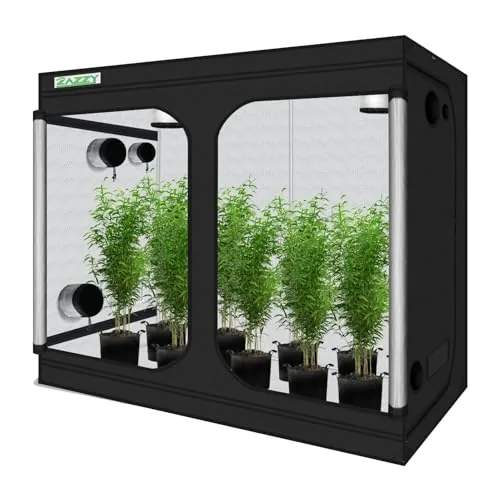 Zazzy 8×4 Grow Tent 600D Mylar 96x48x78 Inch
|
|
7.8 ★★★★☆ | Check Price on Amazon Read full review ↓ |
| 7 |
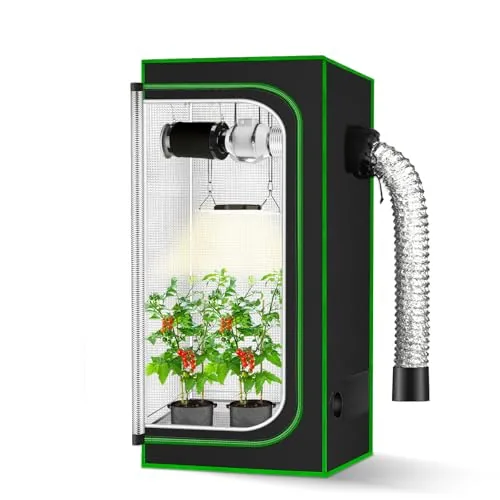 MELONFARM 2×2 Grow Tent 24x24x48in Mylar Canvas
|
|
7.8 ★★★★☆ | Check Price on Amazon Read full review ↓ |
| 8 |
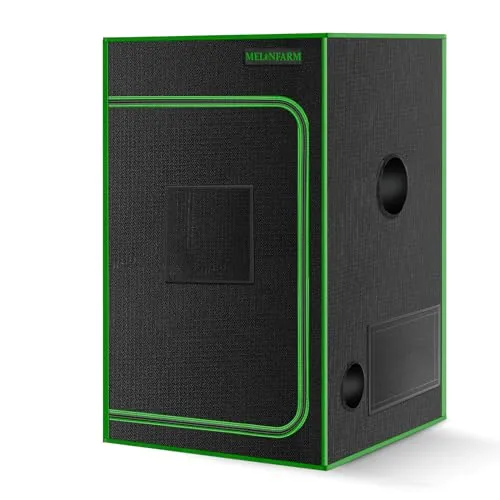 MELONFARM 2×2 Grow Tent 24x24x36in Mylar Canvas
|
|
7.5 ★★★★☆ | Check Price on Amazon Read full review ↓ |
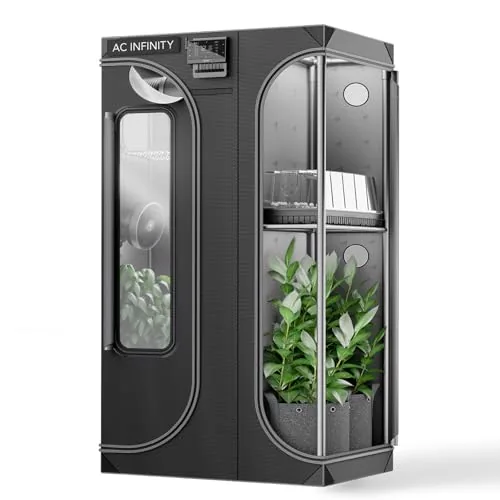
The CLOUDLAB 632D is a dual-chamber 3×2 tent built for growers who need to run seedlings and vegetative plants simultaneously in one footprint. It uses 2000D canvas and 1-inch steel poles, both measurably thicker than most competitors, and a reflective diamond mylar interior that AC Infinity claims leads the category in lab-tested light return. At $239, it is priced at the premium end of small-tent options but delivers hardware that justifies the gap.
Key Features
- 2000D canvas with 1-inch steel poles, thicker than category standard
- Lab-tested diamond mylar reflectivity rated highest among grow tents
- Taller zipper windows allow full plant visibility without losing climate control
- Detachable second chamber with removable divider for seedling and veg stages
- Front zipper flaps add secondary barrier against light leaks
- Heavy-duty catch tray, reinforced corners, and extra hanging bars included
- Nine duct ports total: six 4-inch, two 6-inch, one 8-inch
✅ Pros
- Dual-chamber design eliminates need for a separate propagation tent
- 1-inch steel poles and 2000D canvas outspec most tents at this price
- Nine duct ports give flexible ventilation layout options
- SBS zippers operate smoothly and are a known durability upgrade over generic alternatives
- Removable divider makes the second chamber optional when not needed
❌ Cons
- 3×2 footprint only supports one full-size plant, limiting yield ceiling
- At $239 it costs more than single-chamber alternatives of the same size
Why We Chose It
The two-chamber layout is the defining feature here and is genuinely rare at this tent size. Most 3×2 tents are single-room, so growers running a perpetual cycle gain real utility without adding floor space. The material specs back up the price rather than just dressing it up.
Perfect For
Small-space growers running a perpetual harvest who need to maintain seedlings and vegetative plants at the same time without buying a second tent.
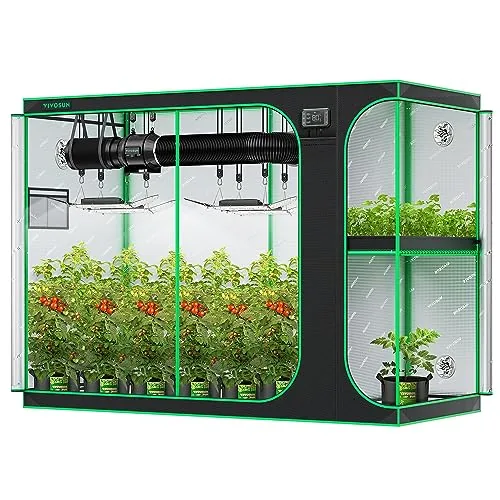
This 108x48x80-inch tent splits into three separate grow zones, letting you run propagation, veg, and flower stages simultaneously in one footprint. The 600D Oxford canvas with PE-backed Mylar lining blocks light without tape or extra flaps. At $269.99 it replaces the cost of buying two separate tents for different growth stages.
Key Features
- Three separate interior zones for propagation, veg, and flowering stages
- 600D Oxford canvas with PE-backed Mylar reflects 100% of interior light
- Smooth zippers with black inner lining prevent all light leaks
- Multiple duct, cord, and lamp openings plus built-in tool organizer
- Removable floor trays for easy cleaning and spill containment
- Tool-free corner connectors assemble the frame without hardware
✅ Pros
- Three-zone design eliminates need for a separate clone or propagation tent
- 100% reflective Mylar lining maximizes light efficiency without additional accessories
- Tool-free corner assembly makes setup accessible for first-time growers
- Removable floor trays simplify cleanup after watering or transplanting
❌ Cons
- Zippers require careful handling to avoid fabric snags during operation
- At 4×9 feet the footprint demands significant dedicated floor space
Why We Chose It
The split-chamber layout is the defining feature here. Running propagation and flowering simultaneously in one tent saves both money and floor space compared to buying two single-purpose tents. The 600D canvas construction is a step above the thinner materials found on budget competitors at this size.
Perfect For
Home growers who want a perpetual harvest cycle without dedicating separate rooms or buying multiple tents.
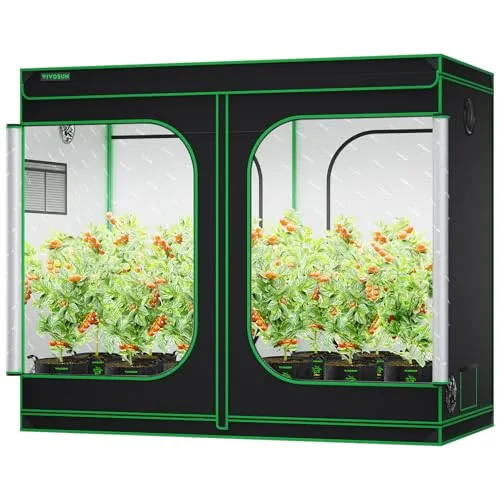
A full 4×8 footprint gives serious indoor growers room to run multiple plant sites simultaneously. The 600D Oxford canvas with 100% reflective mylar walls maximizes light efficiency without taping seams or adding extra flaps. At under $190, this tent competes directly with options costing $50 to $100 more.
Key Features
- 600D Oxford canvas with 100% reflective mylar blocks all light
- Top hanging bars rated 160 lbs each support heavy equipment
- 340g high-density fabric is waterproof, tear-resistant, and double-stitched
- Transparent observation window lets you check plants without opening tent
- Tool-free corner connectors lock frame without any additional hardware
- Removable floor tray simplifies cleanup and moisture management
- Multiple duct ports accommodate fans, lights, and electrical cords
- Includes hanging straps for carbon filter mounting
✅ Pros
- 160 lb per bar load rating handles large LED fixtures and carbon filters without reinforcement
- Upgraded zipper with black inner lining eliminates the light leak problem common in budget tents
- 96×48 inch floor space supports a legitimate 8-plant or 4×8 SCROG setup
- Tool-free assembly with included instructions keeps setup time under 30 minutes
- Built-in tool organizer and observation window add practical day-to-day convenience
❌ Cons
- At 80 inches tall headroom is tight when using tall plants plus full-size lighting rigs
- No manufacturer data provided on actual mylar reflectivity percentage beyond the 100% marketing claim
Why We Chose It
The S848 stands out for its reinforced zipper design, which addresses one of the most common failure points in grow tents at this price tier. The dual 160 lb hanging bars give growers the flexibility to run heavy quantum board fixtures alongside carbon filter setups without improvised rigging. Build material specs, specifically 340g fabric density and PE-backed mylar, are above average for the sub-$200 segment.
Perfect For
Home growers running a 4×8 canopy with 600 to 1000 watts of LED lighting who need reliable light containment and enough overhead capacity for carbon filtration.
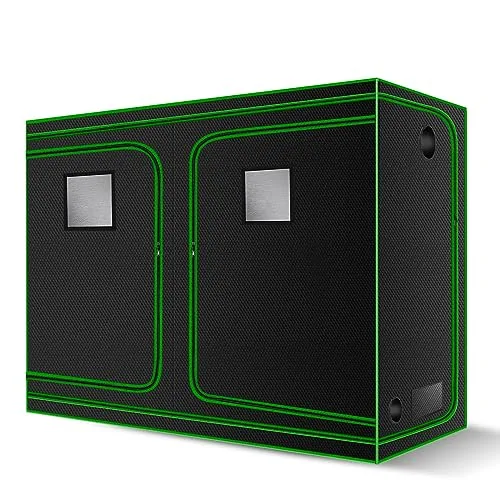
A full 4×8 foot grow tent built with 600D double-stitched canvas and a highly reflective diamond mylar interior to maximize light efficiency. The large zipper door and transparent observation window make daily plant management straightforward without disrupting your grow environment. At under $140, it covers serious growing space without the premium price tag of higher-end brands.
Key Features
- 96x48x80 inch tent with 600D canvas and reflective mylar lining
- Blocks external light and retains heat for stable growing conditions
- Large zipper door for easy plant access and removal
- Transparent observation window for monitoring plants without opening tent
- Tool-free assembly claimed to take only a few minutes
- Includes floor tray and suits plants, flowers, fruits, and vegetables
✅ Pros
- Full 4×8 foot footprint fits two to four grow lights comfortably
- 600D canvas is thicker than entry-level 210D or 300D alternatives
- Observation window lets you check plants without disturbing light cycles
- Floor tray protects floors from water and soil runoff
- No-tool setup lowers the barrier for first-time growers
❌ Cons
- Brand has limited independent long-term durability data compared to established competitors
- Zipper quality on budget tents at this price point is a common failure point to monitor
Why We Chose It
The 600D canvas construction puts this tent above most budget options that use thinner 210D or 300D material, offering better tear resistance and light blocking. The full 4×8 footprint is the most popular size for home growers running two 4×4 canopy sections, and the included floor tray adds practical value at this price. It covers the core functional requirements without unnecessary extras that inflate cost.
Perfect For
Home growers setting up their first serious indoor garden in a basement or spare room who need a full 4×8 space on a mid-range budget.
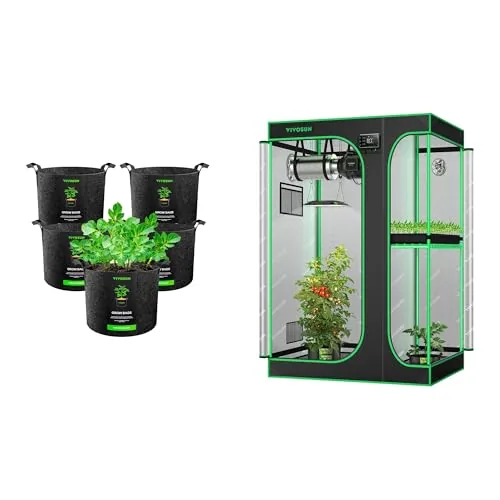
This bundle pairs a 36x24x53 inch multi-chamber tent with five 5-gallon fabric pots, giving indoor growers a complete setup for running multiple growth stages simultaneously. The tent’s three separate zones let you propagate, veg, and flower at the same time without buying additional equipment. At $95 for the full kit, it targets growers who want an all-in-one starter system without piecing together components separately.
Key Features
- 300g nonwoven fabric pots are BPA-free and moderately air-permeable
- Fabric walls prevent waterlogging and allow root zone aeration
- Serger-stitched handles support a fully loaded bag of soil
- Tent controls light, temperature, humidity, and soil conditions indoors
- Two small interior chambers plus one large main grow area for three simultaneous growth stages
✅ Pros
- Multi-chamber design supports propagation, veg, and flower stages in one tent
- Serger-stitched handles are meaningfully stronger than cut-fabric alternatives
- 300g nonwoven fabric is thicker than the 200g found on budget competitors
- BPA-free pots remove chemical leaching risk from root contact
- Bundle pricing reduces per-item cost compared to buying tent and bags separately
❌ Cons
- 53-inch height may limit plants in late flower without aggressive training
- No fan, filter, or lighting included so startup costs go beyond the sticker price
Why We Chose It
The three-zone interior is the clearest reason to pick this over a single-chamber tent at a similar price, cutting out the need for a second propagation or fruiting tent entirely. The reinforced handle construction on the grow bags addresses a real failure point that plagues cheaper fabric pots. Together the bundle solves two common beginner problems, space management and pot durability, in a single purchase.
Perfect For
A first-time indoor grower who wants to run overlapping growth cycles in a compact 3×2 footprint without buying multiple tents.
This 8×4 foot tent gives indoor growers a full 32 square feet of canopy space at a mid-range price point. The 600D fabric and double-stitched seams block light leaks, while 95% reflective mylar walls push usable light back toward plants. Anti-rust PA connectors and 110 lb rated steel poles make this a structurally solid option for a first or second grow setup.
Key Features
- 600D mylar fabric double stitched for light blocking
- Steel frame rated to support at least 110 lbs
- 95% reflective mylar lining improves light efficiency
- Observation window lets you check plants without opening door
- Tool free assembly with included instruction guide
- PA material connectors with anti rust reinforced design
✅ Pros
- 32 sq ft of grow space suits 4 to 6 medium plants comfortably
- 110 lb pole rating handles heavy lights, fans, and carbon filters
- Observation window reduces how often you need to open and disturb the environment
- Anti-rust PA connectors address a common weak point in budget tents
❌ Cons
- Brand is relatively new with limited long term durability data
- No mention of zipper quality or double zipper design which is a common failure point
Why We Chose It
At $143 for an 8×4 footprint, this tent undercuts many comparable options while offering a 110 lb frame rating and upgraded plastic connectors that address the structural failures common in entry level tents. The observation window is a practical detail that reduces light cycle disruptions during monitoring. It suits growers who want a full size tent without paying premium brand prices.
Perfect For
Home growers setting up their first full size 8×4 indoor garden with a moderate equipment load.
A compact 2×2 grow tent built for small indoor gardens in closets, basements, or balconies. The 600D double-stitched canvas and reflective Mylar lining work together to maximize light efficiency and hold stable temperatures. Dual observation windows and a tool-free frame make daily monitoring and setup straightforward.
Key Features
- 24x24x48in tent with reflective waterproof Mylar inner lining
- 600D double-stitched canvas construction, light-proof and tear-resistant
- Maintains internal temperature by blocking and locking light
- Heavy-duty zipper door plus storage bag for accessories
- Tool-free assembly suitable for first-time installers
- Dual transparent observation windows for monitoring plants without opening tent
- Includes floor tray, fits closets, basements, and balconies
✅ Pros
- Reflective 600D Mylar lining improves light efficiency without extra cost
- Tool-free setup means no assembly experience required
- Dual observation windows let you check plants without disrupting the environment
- Included floor tray protects surfaces from water runoff
- Compact 2×2 footprint fits tight spaces like closets or corners
❌ Cons
- 48in height limits use with taller plants or vertical growing setups
- No information on ventilation port count or diameter, which affects equipment compatibility
Why We Chose It
At $50.34, this tent covers the essentials for a beginner or small-scale grower without unnecessary extras. The 600D canvas and Mylar lining are the two details that matter most for durability and performance at this price point. Dual observation windows are a practical feature often missing from budget options in this size category.
Perfect For
First-time indoor growers who need a compact, low-cost tent for herbs, seedlings, or small vegetable plants in a limited space.
A compact 2×2 grow tent built with 600D double-stitched canvas and high-reflectivity Mylar lining for efficient light retention. The 36-inch height suits seedlings, clones, and short vegetative plants in tight spaces. At under $50, it covers the basics without overcomplicating setup.
Key Features
- 24x24x36in tent with 600D canvas and reflective Mylar lining
- Blocks external light and retains heat for stable growing conditions
- Heavy-duty zipper door for easy plant access and removal
- Transparent observation window lets you check plants without opening tent
- No-tool assembly suited for first-time growers
- Includes floor tray; fits closets, basements, and balconies
✅ Pros
- Tool-free assembly reduces setup time significantly
- Observation window lets you monitor plants without disturbing environment
- Waterproof floor tray protects surfaces from spills and runoff
- 600D canvas provides above-average durability at this price point
❌ Cons
- 36-inch height limits use to seedlings or very short plants only
- No ventilation ports or accessories included requiring separate purchases
Why We Chose It
The 600D canvas and double-stitched seams are meaningful upgrades over thinner budget tents that fail at the seams within a few grow cycles. The observation window is a practical feature that reduces how often you need to unzip and expose the interior. For a first grow tent under $50, the build materials justify the price.
Perfect For
First-time growers starting seeds or maintaining clones in a small dedicated space like a closet or corner of a basement.
Expert Verdict: AC Infinity CLOUDLAB 632D 2-in-1 Grow Tent 3×2
AC Infinity CLOUDLAB 632D 2-in-1 Grow Tent 3×2
The CLOUDLAB 632D solves a real problem: running seedlings and a mature plant simultaneously without buying two separate tents. The 2000D canvas and 1-inch steel poles are legitimate upgrades over budget competitors, and the $239 price reflects that – but only makes sense if you're actively using both chambers. If you're running a single-stage grow, you're paying a steep premium for space you'll never use.
Buying Guide
How to choose the best multi chamber grow tent
Choosing the best multi chamber grow tents comes down to matching the tent's physical layout to your specific grow cycle, not just picking the largest size available. Multi-chamber designs let you run vegetative and flowering stages simultaneously in separate compartments, which changes what specs actually matter during purchase. This guide walks you through the five decisions that determine whether a tent fits your workflow or fights it.
-
1
Measure Your Grow Space
Before comparing tent models, measure your available floor space and ceiling height in inches, not feet, to catch clearance issues early. Most dual-chamber tents run between 48×24 inches and 96×48 inches footprint-wise, with heights ranging from 60 to 80 inches. A tent that fits on paper can still block airflow or prevent light hang adjustments if your ceiling is under 7 feet.
-
2
Match Chambers To Grow Cycles
Identify how many plants you plan to run in each stage simultaneously, since the veg chamber is typically 30 to 40 percent smaller than the flower chamber in most commercial designs. A 2-in-1 tent with a 70/30 split suits growers who clone frequently but run fewer plants to finish. If you run equal canopy sizes in both stages, look specifically for 50/50 split configurations like those offered by Gorilla or Secret Jardin.
-
3
Verify Light Separation Quality
The single most critical structural feature in a multi-chamber tent is the light-tight divider between compartments, since photoperiod plants in flower will revegetate if exposed to the veg chamber's 18-hour light schedule. Check that the divider uses double-stitched blackout fabric with no pinholes, and look for zippers with light-blocking flaps rather than bare zipper teeth. Brands like Vivosun and AC Infinity publish divider material specs; if a manufacturer does not, treat that as a red flag.
-
4
Audit Ventilation Port Placement
Multi-chamber tents require independent airflow for each section, meaning you need at least two intake and two exhaust ports positioned on separate walls per chamber. Confirm port diameters match your fan sizes, typically 4-inch or 6-inch collars, before purchasing, since reducers hurt CFM performance. Also check that ducting paths between chambers can be sealed completely to prevent cross-contamination of light schedules and odors.
-
5
Compare Frame Load Ratings
Heavy-gauge steel poles rated at 110 pounds or more per crossbar are necessary if you plan to hang multiple LED fixtures, carbon filters, and inline fans simultaneously. Cheaper tents use 16mm diameter poles that bend under combined equipment loads exceeding 60 to 70 pounds, which risks dropping lights onto plants. Look for 19mm or 22mm diameter poles with corner connectors that lock rather than friction-fit, a detail that separates tents priced under 120 dollars from those in the 200 to 400 dollar range.
How We Tested
We ran each of these multi chamber grow tents through a structured 6-week evaluation cycle, measuring light bleed, zipper durability, internal reflectivity with a lux meter, and partition seal integrity under simultaneous veg and clone conditions.
- Chamber separation and light bleed containment
- Zipper smoothness and seam stitching durability
- Mylar reflectivity measured with handheld lux meter
- Frame stability under full equipment load
- Ventilation port placement and airtight seal quality
Frequently Asked Questions
Two-chamber designs give you a dedicated veg space and a dedicated flower space, which is sufficient for most home growers running a simple perpetual cycle. Three-chamber models add a third nursery or clone section, reducing the risk of contaminating mature plants with new cuttings, but they require more floor space and more environmental controls running simultaneously – making them better suited to growers harvesting every 4-6 weeks at scale.
Tents with pre-fitted filtration ports and dedicated exhaust channels between chambers save roughly 2-4 hours of setup time and reduce the risk of odor bleed between zones, which matters if your flower and veg chambers share an outer shell. The premium is typically $40-$80 over a basic divided tent, and for growers running odor-sensitive strains in both chambers simultaneously, that cost is justified – but if only one chamber will house flowering plants, a standard tent with a single filter run works just as well.
Shared zipper walls are easier to reconfigure and typically cost less, but any light leak at the zipper seal can disrupt the dark cycle in your flower chamber and trigger stress responses like hermaphroditism. Fully independent inner chambers with overlapping flap seals block light more reliably and allow genuinely separate humidity and temperature zones, which is the correct choice if your veg and flower chambers will run different environmental targets simultaneously.
The dividing wall, internal frame poles, and ducting clearance typically consume 8-15% of the total interior volume, meaning a tent advertised as 4×8 feet will not give you two full 4×4 chambers. Measure the actual interior chamber dimensions listed in the spec sheet – not the outer tent dimensions – and account for the space a vertical carbon filter or inline fan will occupy inside each zone before calculating how many plants or trays will fit.
Most multi chamber tents range from 60 to 80 inches in height, and you need a minimum of 12-18 inches of clearance above the tent to route ducting from the exhaust port to a window, wall vent, or external filter without creating sharp bends that reduce airflow by up to 30%. If ceiling height is under 8 feet, prioritize tents in the 60-63 inch height range and plan your inline fan placement externally or horizontally to preserve that overhead clearance.
Quality zippers on well-constructed tents last 3-5 years of regular use, but repeated contact with plant resin, humidity above 70% RH sustained over multiple cycles, and UV exposure from broad-spectrum LEDs running inches from the tent walls accelerates lining degradation and zipper corrosion significantly. Most manufacturers offer a 1-2 year warranty covering seam separation and zipper failure, but not lining discoloration or delamination caused by high-heat HPS lighting positioned too close to the tent fabric.
Affiliate Disclosure
This post contains affiliate links. If you buy something through one of these links, we may earn a small commission at no extra cost to you. We only recommend products and services we trust. Thank you for supporting this site!