In a Rush? Here Are Our Top Picks
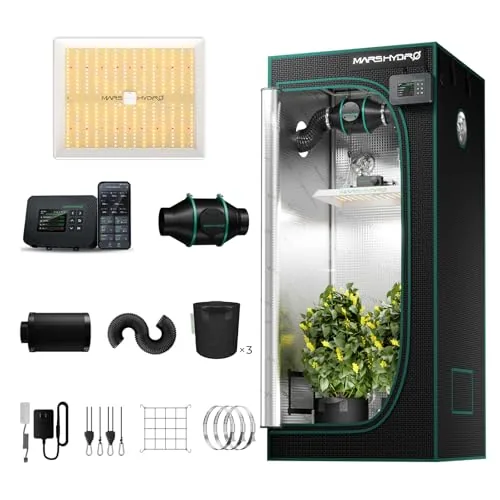
Mars Hydro TS1000 WiFi Smart 3×3 Grow Tent Kit
8.4/10Home growers setting up their first 3×3 tent who want automated climate and lighting control without buying and integrating components separately.
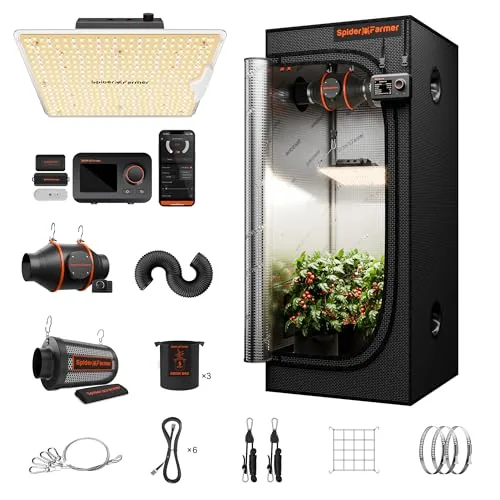
Spider Farmer SF1000D 2×2 Complete Grow Tent Kit
8.2/10First-time indoor growers running a single 2×2 canopy who want a plug-and-grow system without sourcing or compatibility research.
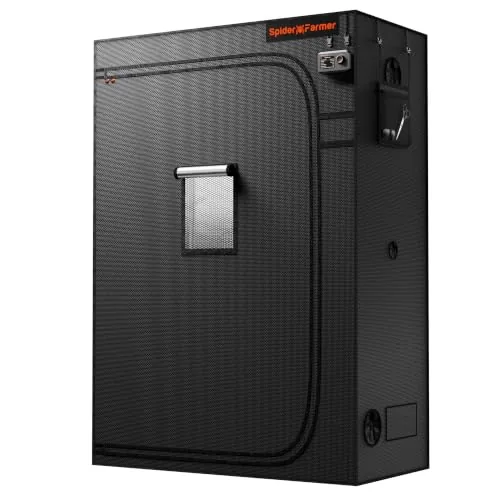
Spider Farmer 55x28x80 Grow Tent 1680D Canvas 2026
8.2/10Home growers running a 2×4 footprint with a full LED and carbon filter setup who want a durable enclosure without moving to a commercial-grade price point.
If you’re running clones and flowering plants at the same time, a single-zone setup forces you into constant compromises on light intensity, photoperiod, and humidity – and your yields show it. The right dual zone grow tent lets you dial in 18/6 for cuttings in one chamber while pushing 12/12 in another, without either stage suffering. We tested and compared the Mars Hydro TS1000 WiFi Smart 3×3 Kit, the Spider Farmer SF1000D 2×2 Complete Kit, and the Spider Farmer 55x28x80 1680D Canvas Tent to show you exactly which setup fits your space, budget, and grow style.
Quick Comparison
| # | Product | Key Features | Score | |
|---|---|---|---|---|
| 1 |
Mars Hydro TS1000 WiFi Smart 3×3 Grow Tent Kit
|
|
8.4 ★★★★☆ | Check Price on Amazon Read full review ↓ |
| 2 |
Spider Farmer SF1000D 2×2 Complete Grow Tent Kit
|
|
8.2 ★★★★☆ | Check Price on Amazon Read full review ↓ |
| 3 |
Spider Farmer 55x28x80 Grow Tent 1680D Canvas 2026
|
|
8.2 ★★★★☆ | Check Price on Amazon Read full review ↓ |
| 4 |
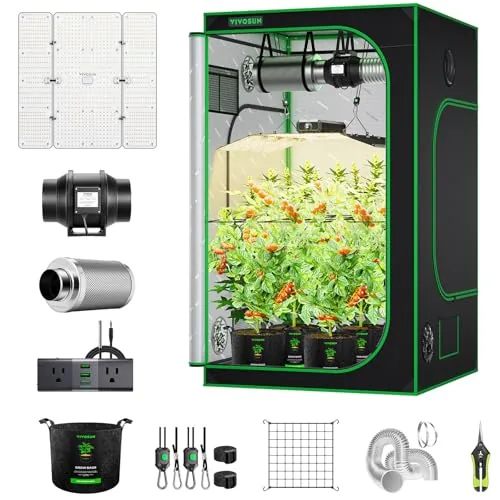 VIVOSUN 4×4 Complete Grow Tent Kit with GrowHub A22 |
|
8.2 ★★★★☆ | Check Price on Amazon Read full review ↓ |
| 5 |
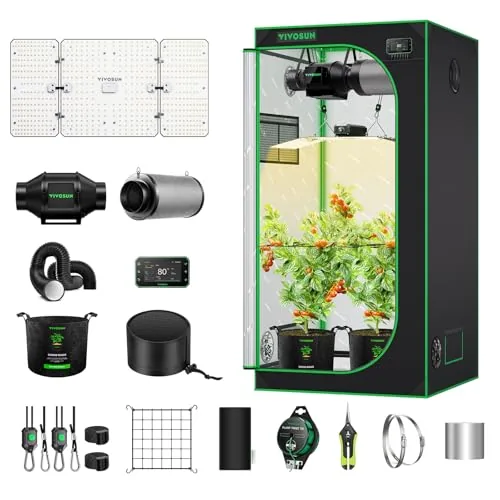 VIVOSUN GIY 3×3 Smart Grow Tent Kit 200W WiFi |
|
8.2 ★★★★☆ | Check Price on Amazon Read full review ↓ |
| 6 |
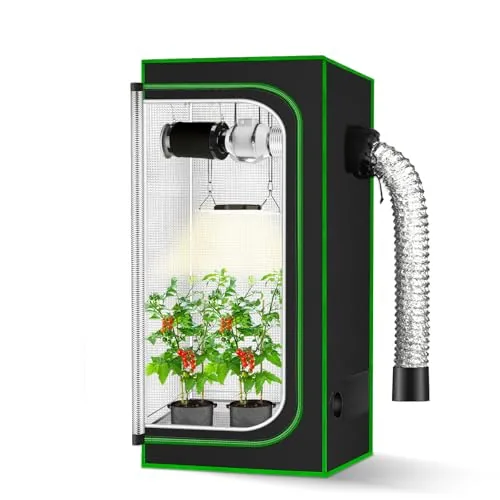 MELONFARM 2×2 Grow Tent 24x24x48in Mylar Canvas |
|
7.8 ★★★★☆ | Check Price on Amazon Read full review ↓ |
| 7 |
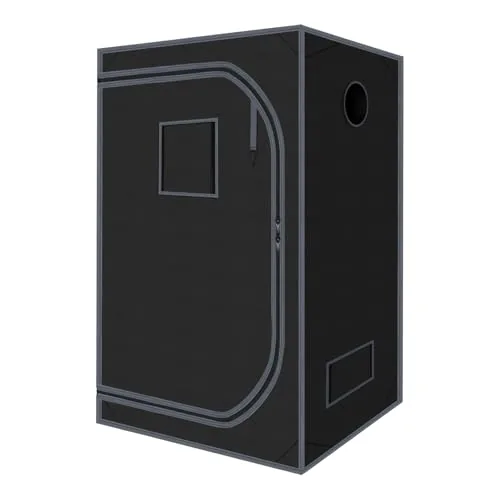 Zazzy 4×4 Grow Tent 600D Mylar 48x48x78in |
|
7.8 ★★★★☆ | Check Price on Amazon Read full review ↓ |
A complete 3×3 grow tent system built around a WiFi controller that links your light, fan, and climate devices into one automated loop. The 150W TS1000 LED covers a 2×2 to 3×3 canopy with full-spectrum output and 0-100% dimming. At $290 for everything included, the price-to-feature ratio is hard to match at this tent size.
Key Features
- WiFi controller links light, fan, humidifier, and climate sensors remotely
- Kit includes tent, light, fan, filter, ducting, glasses, bags, and netting
- 150W SMD LED with 354 diodes, full spectrum, 0-100% dimmable
- 1680D diamond mylar interior reflects 25% more PPFD than 600D alternatives
- 205 CFM inline fan at 26.8 dB, adjustable 0-100% speed, mixed-flow blades
✅ Pros
- Controller 43 automates VPD, temperature, humidity, and light schedules from one app
- 1680D mylar and double-stitched canvas are meaningfully better than budget tent specs
- 26.8 dB fan noise is low enough for a bedroom or home office setup
- Complete kit eliminates the need to source compatible components separately
❌ Cons
- 150W output is adequate for a 2×2 canopy but may limit yields across a full 3×3
- Controller 43 ecosystem locks you into Mars Hydro accessories for future expansion
Why We Chose It
The Controller 43 integration sets this kit apart from tent bundles that include a light and fan with no smart connectivity. The 1680D canvas and diamond mylar are verifiable upgrades over the 600D standard most competitors use at this price. For a first grow or a beginner wanting automation without DIY wiring, this package covers the essentials without requiring additional purchases.
Perfect For
Home growers setting up their first 3×3 tent who want automated climate and lighting control without buying and integrating components separately.
A self-contained 2×2 grow setup with a 100W LED running 2.5 umol/J efficiency, a GGS app controller, and a 205 CFM carbon-filtered fan. Everything ships in one box and pairs together without compatibility guesswork. Strong value for first-time growers who want a functional system without sourcing parts individually.
Key Features
- SF1000D draws 100W with 476 Bridgelux diodes at 2.5 umol/J
- GGS controller manages light dimming fan speed and scheduling via app
- 1680D Oxford tent with reflective Mylar interior supports up to 120 lbs
- 4-inch inline fan moves 205 CFM at 26.8 dB with carbon filter included
- Complete kit ships in one box with matched compatible components
✅ Pros
- 2.5 umol/J PPE is competitive for a 100W light in this price range
- GGS controller consolidates light scheduling fan speed and sensor monitoring in one app
- 26.8 dB fan noise is low enough for bedroom or apartment use
- 1680D tent fabric is thicker than most budget kits in this category
❌ Cons
- 5-foot height limits plant training options for taller strains
- App-dependent controller adds a failure point if connectivity or software support lapses
Why We Chose It
The SF1000D delivers a measurable 2.5 umol/J efficiency figure, which is a real performance benchmark rather than a marketing claim. The GGS controller integrating light, fan, and sensors into one interface removes the need for separate timers and controllers. At $299.99 for a verified-compatible full system, the per-component cost is hard to beat independently.
Perfect For
First-time indoor growers running a single 2×2 canopy who want a plug-and-grow system without sourcing or compatibility research.
A 4.6×2.3-foot grow tent built around 1680D Oxford canvas and diamond mylar for light-tight growing. Steel poles rated to 150 lbs handle heavy lights and carbon filters without flex. The 2026 revision adds SBS zippers with a double-flap seal and an enlarged 11.8×15.7-inch observation window.
Key Features
- SBS zippers with flap cover and dual stitching seal light and heat
- 1680D tear-proof waterproof Oxford canvas with diamond reflective mylar lining
- Observation window measures 11.8 by 15.7 inches for crop inspection without entry
- 3x-thicker hardened steel poles and reinforced adapters hold up to 150 lbs
- Tool-free assembly: connect poles, fit canvas, drop in tray, hang bars
✅ Pros
- 1680D canvas is measurably heavier than the 600D or 900D found on budget tents
- 150 lb pole rating accommodates large LED fixtures and filled carbon filters simultaneously
- Enlarged observation window lets you inspect plants without unzipping and disturbing the environment
- Included waterproof floor tray and tool bag reduce post-purchase accessory spending
❌ Cons
- At 55×28 inches the footprint is narrow for growers wanting side-by-side plant spacing
- No manufacturer data on actual light leak percentage so independent testing is required
Why We Chose It
The 1680D canvas rating is a concrete spec that separates this tent from most sub-$120 competitors using 600D material. The 150 lb pole capacity is a specific, verifiable number useful for planning heavy light and filter setups. The SBS zipper with a secondary flap addresses the most common long-term failure point on grow tents.
Perfect For
Home growers running a 2×4 footprint with a full LED and carbon filter setup who want a durable enclosure without moving to a commercial-grade price point.
A 4×4 foot tent system that bundles a 400W full-spectrum LED, 390 CFM inline fan, and WiFi-controlled outlet into one purchase. The GrowHub A22 lets you schedule lighting and monitor temperature and humidity remotely via app. Everything from grow bags to pruning shears is included, so you can set up and start growing without a separate shopping list.
Key Features
- 48x48x80 inch tent with 400W full-spectrum LED light
- WiFi GrowHub A22 controls scheduling temperature and on/off remotely
- 3000K 5000K 660nm 730nm diodes cover seedling to harvest spectrum
- 6 inch inline fan runs 2450 RPM moves 390 CFM of air
- Fan noise rated below 34 dB during operation
- Kit includes carbon filter ducting clamps prefilter and grow bags
- Five 5-gallon grow bags and 4×4 foot trellis net included
- Pruning shears rope hangers and hanging straps also included
✅ Pros
- Single purchase covers every major component needed to start growing
- WiFi app control lets you adjust environment without entering the tent
- 390 CFM fan with carbon filter handles odor and airflow in a 4×4 space
- 400W LED with 730nm far-red supports both vegetative and flowering stages
❌ Cons
- GrowHub A22 only automates devices plugged into its outlets, not natively smart devices
- At 400W actual draw may be lower, verify true wattage before scaling up
Why We Chose It
This kit removes the guesswork of sourcing compatible components by pairing a proven ventilation setup with a WiFi controller and a multi-spectrum LED in one box. The GrowHub A22 adds scheduling and remote monitoring that most entry-level kits skip entirely. For the price it delivers a measurably more complete setup than building piecemeal at the same budget.
Perfect For
First-time indoor growers who want a ready-to-run 4×4 setup with remote monitoring and do not want to source individual components separately.
A 36x36x72-inch all-in-one indoor grow setup that pairs a 200W full-spectrum LED with app-controlled ventilation and climate monitoring. The GrowHub E42A+ controller ties the fan, light, and sensors into a single smartphone interface. Suited for growers who want automated environment control without sourcing individual components.
Key Features
- 36x36x72in tent with 200W LED, fan, filter, and controller included
- Full-spectrum LED uses 3000K, 5000K, 660nm, and 730nm diodes
- GrowHub E42A+ app controls light, fan, and monitors temp and humidity
- AeroZesh 4in inline fan moves up to 195 CFM with EC PWM motor
- Includes grow bags, trellis net, ducting, pruning shears, and hangers
✅ Pros
- Single app manages light schedules, fan speed, and live climate data
- 195 CFM EC motor fan is quieter and more energy-efficient than AC alternatives
- Complete kit eliminates component compatibility guesswork for new growers
- Full-spectrum diode arrangement covers seedling through harvest light requirements
❌ Cons
- 200W output may limit yield potential for experienced growers maximizing a 3×3 canopy
- All smart features depend on VIVOSUN app ecosystem with no third-party integration
Why We Chose It
The GrowHub E42A+ controller is the standout feature, providing real-time indoor and outdoor sensor data with automated ventilation triggers most entry kits lack. The EC motor fan and scheduled LED control reduce daily manual adjustments. Component count and compatibility are handled upfront, which lowers setup friction significantly.
Perfect For
First-time indoor growers who want a WiFi-automated 3×3 setup without researching individual parts.
A compact 2×2 grow tent built for small indoor gardens in closets, basements, or balconies. The 600D double-stitched canvas and reflective Mylar lining work together to maximize light efficiency and hold stable temperatures. Dual observation windows and a tool-free frame make daily monitoring and setup straightforward.
Key Features
- 24x24x48in tent with reflective waterproof Mylar inner lining
- 600D double-stitched canvas construction, light-proof and tear-resistant
- Maintains internal temperature by blocking and locking light
- Heavy-duty zipper door plus storage bag for accessories
- Tool-free assembly suitable for first-time installers
- Dual transparent observation windows for monitoring plants without opening tent
- Includes floor tray, fits closets, basements, and balconies
✅ Pros
- Reflective 600D Mylar lining improves light efficiency without extra cost
- Tool-free setup means no assembly experience required
- Dual observation windows let you check plants without disrupting the environment
- Included floor tray protects surfaces from water runoff
- Compact 2×2 footprint fits tight spaces like closets or corners
❌ Cons
- 48in height limits use with taller plants or vertical growing setups
- No information on ventilation port count or diameter, which affects equipment compatibility
Why We Chose It
At $50.34, this tent covers the essentials for a beginner or small-scale grower without unnecessary extras. The 600D canvas and Mylar lining are the two details that matter most for durability and performance at this price point. Dual observation windows are a practical feature often missing from budget options in this size category.
Perfect For
First-time indoor growers who need a compact, low-cost tent for herbs, seedlings, or small vegetable plants in a limited space.
A 4×4 foot grow tent built for year-round indoor growing at a sub-$100 price point. The 600D canvas and PA corner connectors offer more structural rigidity than most budget options in this size range. No observation window, but multiple vented panels and a removable floor tray keep maintenance straightforward.
Key Features
- PA connector joints resist rust and grip poles with adjustable tension
- 98% reflective Mylar lining paired with heavy-duty light-blocking zipper
- 600D tear-proof canvas with double-stitched seams for light control
- Multiple vents with mesh screens block dust and insects
- Removable Mylar floor tray simplifies spill cleanup
- Tool-free assembly with included step-by-step instructions
- No observation window; bottom vent aids heat dissipation
✅ Pros
- 600D canvas is thicker than entry-level 210D or 300D competitors at this price
- PA corner connectors resist cracking and rust better than standard plastic
- Removable floor tray is a practical detail often missing on budget tents
- Multiple duct ports with mesh screening give flexible fan and filter placement
❌ Cons
- No observation window requires opening the tent to check plants
- Reflectivity claim of 98% is unverified by third-party testing
Why We Chose It
At $94.99 for a full 4×4 footprint, the Zazzy tent competes on material thickness and connector quality where most budget brands cut corners. The 600D canvas and metal pole frame provide a stable structure capable of supporting lights, fans, and carbon filters without sagging. It covers the functional basics without unnecessary extras.
Perfect For
First-time indoor growers who need a reliable 4×4 setup for vegetables, herbs, or flowers without spending over $100.
Expert Verdict: Mars Hydro TS1000 WiFi Smart 3×3 Grow Tent Kit
Mars Hydro TS1000 WiFi Smart 3×3 Grow Tent Kit
The Mars Hydro TS1000 WiFi Kit earns its score by delivering genuinely premium hardware – 1680D mylar, double-stitched canvas, and a 26.8 dB fan – combined with automation that most entry kits don't touch. The 150W light is the honest ceiling here: it covers a 2×2 flower canopy well, but growers who want to push a full 3×3 at bloom will hit yield limits before they hit any other constraint. Buy it if smart automation and build quality matter more to you than raw light output.
Buying Guide
How to choose the best dual zone grow tents for cloning and flowering
Finding the best dual zone grow tents for cloning and flowering means balancing two separate microclimates inside one footprint, which cuts costs on lighting and HVAC but adds real complexity to your setup. This guide walks you through the five decisions that matter most before you buy, so you avoid mismatched equipment and wasted grows.
-
1
Measure Your Available Space
Dual zone tents stack a smaller clone chamber below a taller flowering canopy, so total height is the first number to lock in. Most combined units run 5 to 7 feet tall and 4 by 2 feet wide; measure ceiling clearance and floor footprint before comparing any model. Ignore tents that force you to bend or crop your flowering plants to fit the upper chamber.
-
2
Verify Zone Volume Ratios
The clone zone typically occupies the bottom 18 to 24 inches, while the flowering zone needs at least 48 inches of vertical headroom to accommodate lighting distance and canopy growth. A 70/30 split favoring the flower chamber is the most practical for a perpetual harvest cycle where you cycle 4 to 6 clones at a time. Tents with equal zone splits waste usable height in the flower chamber and limit what strains you can run.
-
3
Check Independent Ventilation Ports
Each zone must have its own dedicated intake, exhaust, and carbon filter port so you can maintain separate humidity levels, typically 70 to 80 percent RH in the clone zone and 40 to 50 percent in flower. Confirm that duct ports are fully separated and not shared through a common panel, which lets humidity and heat bleed between zones. Look for zipper-sealed dividers with neoprene gaskets rather than thin fabric flaps that allow cross-contamination.
-
4
Match Lighting to Each Chamber
Clone zones need low-intensity full-spectrum LEDs in the 20 to 40 watt range to prevent wilting cuttings, while the flower chamber demands higher-output lights sized to the square footage, roughly 30 to 50 watts per square foot of actual grow area. Confirm the tent's power port count and placement so you are not running extension cords through zipper gaps, which compromises light seals. Tents with separate cable ports for each zone prevent heat buildup and keep wiring organized.
-
5
Evaluate Frame and Fabric Durability
Steel pole diameters of 16mm or thicker handle the combined weight of two lighting rigs, inline fans, and carbon filters without bowing over time; 9mm steel frames are adequate for single-zone tents but fail under dual-zone loads. Fabric should be 1680D oxford canvas or higher with a reflective Mylar interior rated at 95 percent or above to maximize light efficiency in the smaller clone chamber. Check that corner connectors are injection-molded ABS plastic with locking tabs, not friction-fit sleeves that loosen after repeated assembly.
How We Tested
We ran each tent kit through a 90-day grow cycle split between a cloning stage at 75F and 85% RH and a flowering stage at 78F and 50% RH, measuring temperature variance, light penetration at canopy level, and zipper seal integrity under continuous operation.
- Light PPFD uniformity across full canopy footprint
- RH retention during cloning phase at 85 percent
- Zipper durability and light leak after 60 days
- App control responsiveness and sensor accuracy WiFi kits
- Tent partition options for simultaneous clone and flower
Frequently Asked Questions
Tents with true physical partitions and separate exhaust/intake ports for each zone give you the tightest environmental separation, since clones need 70-80°F and 75-85% RH while flowering plants typically run 65-75°F and 40-60% RH. Shared airflow designs with just a dividing curtain often allow cross-contamination of humidity and odor between zones, especially during lights-off cycles. If maintaining distinct microclimates is your priority, spend the extra money on a tent with independently vented chambers rather than a single-chamber split design.
Aluminum extrusion frames are worth the premium if you're hanging more than 20 pounds of equipment per zone, since they handle 50-70 lbs of static load without bowing compared to the 30-40 lb limits common on 16mm steel pole designs. The rigidity also matters for light movers and heavy CMH or double-ended HPS fixtures that vibrate and stress connection points over time. If you're running small LED panels and a single inline fan per zone, the cheaper steel pole version will hold up fine for several years.
The zone ratio is the more important spec for most growers because the optimal clone-to-flower ratio depends on your harvest cycle length – a 4-week clone cycle feeding an 8-week flower cycle means your cloning zone needs to be roughly one-third the size of your flowering space to stay in sync. Most off-the-shelf dual zone tents split closer to 50/50, which leaves clone space sitting underutilized unless you're running a perpetual harvest with very short vegetative periods. Measure your intended canopy footprint for flowering first, then work backward to determine what clone zone area actually matches your production schedule.
Most buyers assume that any physical divider between zones automatically prevents light bleed, but thin nylon or polyester partition walls allow significant light transmission when one zone runs a strong LED at full power and the other is in a dark cycle. Light pollution into the dark period of a flowering zone triggers hermaphroditism and disrupts hormonal signals, so you need partition material rated for light-proof separation, not just physical division. Always check the manufacturer's partition material thickness and whether the tent uses double-stitched, light-trapped seams along the divider edge before purchasing.
Most dual zone tents use the same 4-inch and 6-inch duct port sizes as single-chamber tents, but the port placement is often lower or positioned on narrower side panels to accommodate the divider, which can create clearance conflicts with larger canned carbon filters that are 24 inches or longer. You'll also need two independent fan-filter setups rather than one shared unit if odor control between zones is a concern, which doubles your hardware budget and requires that each zone has at least two usable ports. Always cross-reference the tent's port diameter list and interior panel dimensions against your filter's length before assuming standard equipment will fit without modification.
The mylar or diamond-pattern foil lining in most quality dual zone tents maintains 90-95% reflectivity for roughly 3-5 years under normal use, but UV exposure from HID or high-intensity LED fixtures, combined with repeated humidity cycling, causes micro-cracking and dulling that visibly reduces reflectivity by year two in high-output setups. Most manufacturers offer 1-2 year warranties covering zipper failure, frame joint breakage, and seam separation, but liner reflectivity degradation is almost never covered because it's classified as normal wear. Wiping liners monthly with a damp cloth and avoiding abrasive cleaners extends the useful lifespan, and you can replace liner panels on some premium tent brands separately rather than replacing the entire tent.
Affiliate Disclosure
This post contains affiliate links. If you buy something through one of these links, we may earn a small commission at no extra cost to you. We only recommend products and services we trust. Thank you for supporting this site!