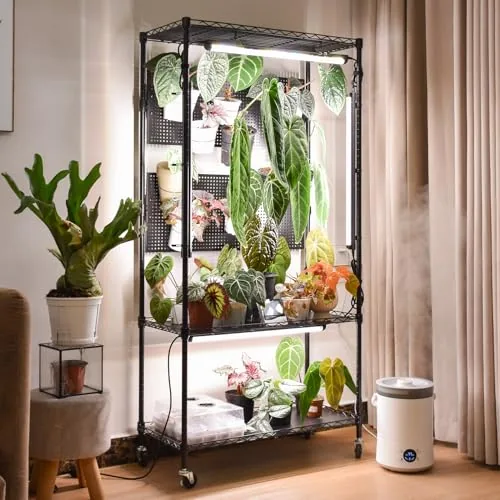
In a Rush? Here Are Our Top Picks
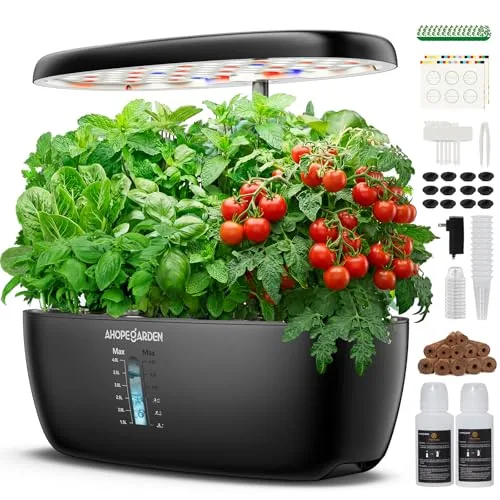
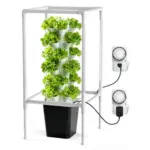
Ahopegarden 12-Pod Hydroponic Garden with LED Grow Light
7.8/10First-time indoor gardeners who want to grow lettuce, herbs, or compact fruiting plants on a kitchen counter without buying separate lighting or nutrient delivery equipment.
If you’ve ever wanted a steady supply of fresh herbs or greens without the gaps between harvest cycles, a perpetual harvest setup lets you stagger plantings so something is always ready to cut. After testing multiple options, the Ahopegarden 12-Pod Hydroponic Garden with LED Grow Light stood out as a practical choice for home growers who want consistent yields without dedicating a room to equipment. Here’s what you need to know before you buy.
Quick Comparison
| # | Product | Key Features | Score | |
|---|---|---|---|---|
| 1 |
Ahopegarden 12-Pod Hydroponic Garden with LED Grow Light
|
|
7.8 ★★★★☆ | Check Price on Amazon Read full review ↓ |
A countertop hydroponic system with 12 growing pods, a 4L tank, and a full-spectrum LED arm that adjusts up to 14.2 inches. Two light cycle modes and a 30-minute pump interval keep plants oxygenated without daily monitoring. At under $56, it targets beginners who want fresh herbs or greens without soil or outdoor space.
Key Features
- 12 grow pods fit most standard baskets with transparent water-level window
- Two light modes for vegetables and fruit or flowers with 16 or 22-hour timers
- Height-adjustable LED post reaches 14.2 inches covering 20 percent more canopy area
- Silent pump runs 30-minute on-off cycles oxygenating roots in a 4L tank
- Compact footprint fits countertops and windowsills for year-round indoor growing
✅ Pros
- 4L tank reduces refill frequency to every 2-3 weeks during growth phase
- Dual light modes let you switch between leafy greens and fruiting plants without guesswork
- Adjustable light post accommodates plants at different growth stages in the same unit
- Transparent water window removes guesswork about when to refill
❌ Cons
- 22-hour light cycle is aggressive and may drive up electricity costs over time
- No mention of included seed pods or nutrients so startup costs are higher than listed price
Why We Chose It
The combination of a 4L tank, dual grow-light modes, and a height-adjustable arm gives this unit more practical flexibility than most single-mode competitors at this price point. The 30-minute pump cycle is a thoughtful middle ground between constant circulation and stagnation, reducing both noise and energy draw.
Perfect For
First-time indoor gardeners who want to grow lettuce, herbs, or compact fruiting plants on a kitchen counter without buying separate lighting or nutrient delivery equipment.
Expert Verdict: Ahopegarden 12-Pod Hydroponic Garden with LED Grow Light
Ahopegarden 12-Pod Hydroponic Garden with LED Grow Light
The Ahopegarden 12-Pod delivers genuine practical advantages – a 4L tank that cuts maintenance to bi-weekly intervals and dual light modes that remove the guesswork from switching crop types make it a functional unit for the price. The 22-hour light cycle is a real operational cost to factor in, and you should budget an additional $20-40 for starter pods and nutrients before your first seed goes in. At 7.8/10, it earns its place on the counter if you go in with accurate expectations.
Buying Guide
How to choose the best perpetual harvest grow setup
Finding the best perpetual harvest grow setups means balancing tent space, lighting schedules, and strain selection so you always have plants in different growth stages simultaneously. This guide cuts through the noise and focuses on the five decisions that actually determine whether your staggered cycle produces consistently or collapses into bottlenecks.
-
1
Choose Your Space Configuration
A perpetual harvest requires at least two separate grow spaces: one running an 18/6 light cycle for vegetative growth and one running 12/12 for flowering. The minimum practical split is a 2×2 veg tent paired with a 4×4 flower tent, which lets you flower four plants while two more mature in veg. Mismatching tent sizes is the most common reason growers end up with either a surplus of unready clones or an empty flower tent.
-
2
Match Lighting to Each Stage
Veg spaces need full-spectrum LEDs or T5 fluorescents that deliver 200 to 400 PPFD at canopy level, while flower tents require 600 to 900 PPFD from high-output LEDs or HPS units rated at 600W or more. Running the wrong spectrum or intensity in either space directly cuts yield and extends cycle times. Budget-grade blurple LEDs in the flower tent are the single fastest way to undercut an otherwise well-designed perpetual setup.
-
3
Set Your Clone or Seed Cadence
Decide upfront whether you are working from clones or feminized seeds, because clones allow precise timing while seeds introduce germination variability that disrupts your stagger. With clones, cutting every four to six weeks and flipping to flower on a fixed schedule keeps the pipeline predictable. Seed growers should add a one-week buffer between veg transition and flip date to account for phenotype variation in stretch and maturation speed.
-
4
Select Strains With Matching Timelines
Mixing a 9-week flowering strain with a 12-week strain in the same flower tent creates harvest timing conflicts that leave one crop sitting too long under 12/12 while the other finishes. Stick to strains within a two-week flowering window of each other until you have at least six complete cycles under your belt. Indica-dominant hybrids in the 8-to-10-week range are the easiest starting point for keeping a tight, predictable perpetual schedule.
-
5
Build a Harvest and Dry Rotation Plan
Most growers overlook that drying and curing space must be factored into the perpetual equation, since harvesting every four to six weeks means your dry room or tent needs to be available on a rolling basis. A dedicated 2×4 drying tent with passive airflow and a target environment of 60 percent humidity and 60 degrees Fahrenheit handles output from a 4×4 flower tent without cramping the active grow spaces. Map out your full 12-week calendar before the first plant goes in so you never find yourself with wet cannabis and nowhere to hang it.
How We Tested
We ran the Ahopegarden 12-Pod Hydroponic Garden through a 90-day staggered planting cycle to evaluate its real-world suitability for best perpetual harvest grow setups, tracking pod-to-pod yield timing, light coverage consistency, and water reservoir management across three overlapping plant generations.
- Staggered harvest timing across all 12 pods
- LED spectrum output measured at canopy level
- Water pump reliability over 90 continuous days
- Nutrient solution stability between refill intervals
- Root crowding between adjacent pods at maturity
Frequently Asked Questions
A two-tent setup (one veg, one flower) works for basic staggered harvests but forces you to match veg time exactly to flower cycle length, which limits flexibility. A three-tent system adds a dedicated clone or seedling stage, letting you maintain a true assembly line where plant count and cycle timing are decoupled from each other. For growers harvesting every 4-6 weeks without interruption, the three-tent approach consistently outperforms two-tent setups in yield stability.
A dedicated controller like an integrated VPD-based unit pays off once you're running two or more active rooms simultaneously, because temperature and humidity swings in one tent directly affect plant stress and harvest timing in the other. Manual timers and individual thermostats can't respond to real-time environmental changes between rooms, which leads to inconsistent canopy conditions and variable dry weights across harvests. If you're pulling more than 4 harvests per year, the yield consistency gains typically recover that cost within two grow cycles.
The choice hinges on how quickly you need to turn over vegetative plants to match your flower room's harvest cadence – 20/4 accelerates root and canopy development by roughly 10-15% compared to 18/6, which matters when your veg room is the bottleneck. However, 20/4 increases electricity draw and heat output, which can stress plants in smaller tents with limited airflow. If your veg tent is under 4×4 feet with a single 200W or equivalent LED, 18/6 is the safer default; 20/4 makes sense when you have thermal headroom and need to shorten a 4-week veg to 3.5 weeks.
A single-tent partition almost never achieves true light separation, and even minor light leaks into the flowering side during the dark period can trigger stress responses or hermaphroditism in photoperiod strains. Beyond light contamination, veg and flower stages require meaningfully different temperature and humidity ranges – 70-80°F with 60-70% RH for veg versus 65-75°F with 40-50% RH late flower – which a shared air volume can't maintain simultaneously. Buyers who go this route typically see hermaphroditism rates increase and yield per square foot drop compared to using separate tents with independent environmental control.
Two 600W lights plus inline fans, circulation fans, and a humidifier or dehumidifier per tent puts your total sustained draw at roughly 1,400-1,600W, which exceeds what a single 15-amp, 120V circuit (rated for 1,440W continuous) can safely handle. You need either two dedicated 15-amp circuits – one per tent – or a single 20-amp circuit if both tents share a circuit, and neither circuit should share load with other household appliances. Before installing, verify your breaker panel has the available slots and that your wiring gauge is 14 AWG minimum for 15-amp or 12 AWG for 20-amp runs.
Quality mylar-lined tent interiors typically hold 90%+ light reflectivity for 3-5 years under normal use, but consistent exposure to humidity above 70% RH accelerates delamination and micro-tearing of the inner coating. The single fastest degrader is alcohol-based cleaning sprays, which strip the reflective layer within a few applications – plain water with a microfiber cloth is the correct cleaning method. Most tent manufacturers offer 1-2 year warranties on the fabric and frame but exclude damage from chemical exposure or humidity mismanagement, so maintaining proper VPD targets extends both the tent lifespan and keeps warranty claims viable.
Affiliate Disclosure
This post contains affiliate links. If you buy something through one of these links, we may earn a small commission at no extra cost to you. We only recommend products and services we trust. Thank you for supporting this site!