In a Rush? Here Are Our Top Picks
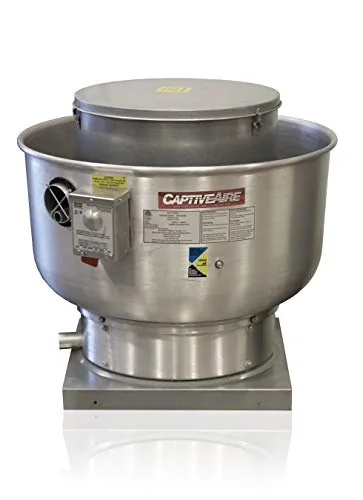
Captive-Aire DU12HFA Upblast Exhaust Fan 100-500 CFM
8.5/10Restaurant owners, commercial kitchen contractors, or facility managers replacing or upgrading a rooftop grease exhaust fan on a standard roof curb.
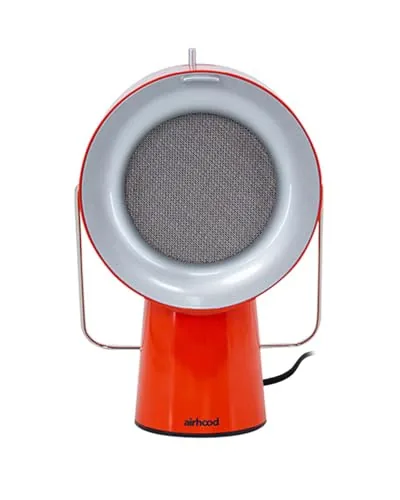
AirHood Portable Ductless Range Hood Cadmium Orange
7.5/10Apartment renters or RV owners who cook high-odor foods like Korean BBQ and have no existing range hood or ductwork.
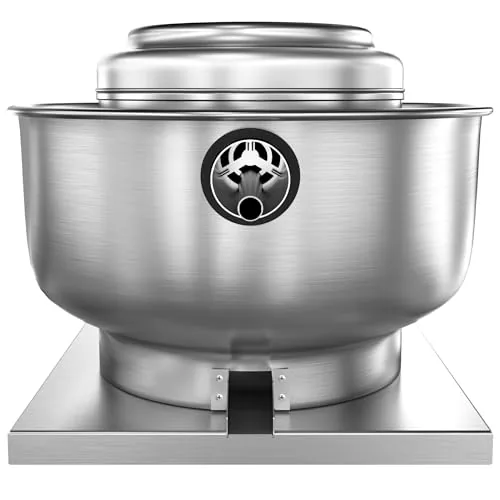
FICBXRA Grease-Rated Upblast Exhaust Fan 0.5HP 110V
7.5/10Food truck operators or small restaurant owners needing a code-compliant grease exhaust fan on a 110V single-phase circuit.
Finding the best air cooled reflector hoods with fans means sorting through specs that actually matter – CFM ratings, motor power, grease resistance, and whether the unit suits a ducted or ductless setup. After testing and researching options across commercial kitchens, grow rooms, and home cooking spaces, three units stood out: the Captive-Aire DU12HFA handling 100 – 500 CFM for upblast exhaust, the AirHood Portable Ductless Range Hood in Cadmium Orange for renters and small spaces, and the FICBXRA Grease-Rated Upblast Exhaust Fan running a 0.5HP motor at 110V for heavier-duty environments. Here is what each one does well, where each falls short, and which buyer profile each one actually fits.
Quick Comparison
| # | Product | Key Features | Score | |
|---|---|---|---|---|
| 1 |
Captive-Aire DU12HFA Upblast Exhaust Fan 100-500 CFM
|
|
8.5 ★★★★☆ | Check Price on Amazon Read full review ↓ |
| 2 |
AirHood Portable Ductless Range Hood Cadmium Orange
|
|
7.5 ★★★★☆ | Check Price on Amazon Read full review ↓ |
| 3 |
FICBXRA Grease-Rated Upblast Exhaust Fan 0.5HP 110V
|
|
7.5 ★★★★☆ | Check Price on Amazon Read full review ↓ |
| 4 |
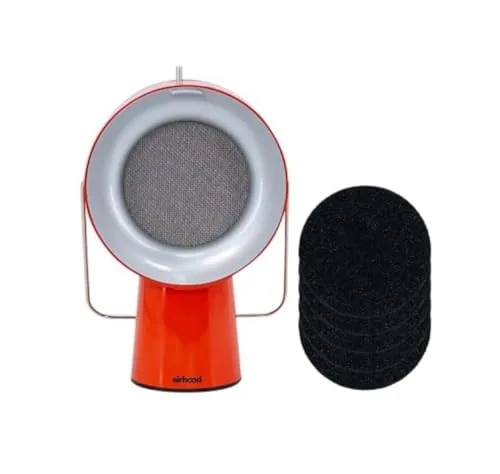 AirHood Portable Kitchen Exhaust Fan Cadmium Orange |
|
7.2 ★★★★☆ | Check Price on Amazon Read full review ↓ |
The Captive-Aire DU12HFA is a commercial-grade upblast exhaust fan built specifically for restaurant grease environments. It ships with a grease cup, downspout, and hinge kit, covering everything needed for a rooftop curb installation. Variable speed control from 100 to 500 CFM gives operators precise airflow management without swapping hardware.
Key Features
- Direct drive centrifugal upblast fan with variable speed control
- 19×19 inch base, 62 lbs, 0.180 HP 115V single phase motor
- UL705, UL762, ULC-S645 rated for grease and general ventilation
- Includes grease cup, downspout, and hinge kit for roof curbs
- Heavy gauge aluminum housing with backward inclined non-overloading wheel
- Safety disconnect switch, vibration isolators, and quick release motor access
✅ Pros
- Three UL certifications confirm compliance for commercial kitchen grease duty
- Variable speed control adjusts airflow between 100 and 500 CFM
- Grease cup and hinge kit included, reducing additional parts sourcing
- Made in the USA with technical support available after purchase
- Quick release latches simplify motor compartment access during maintenance
❌ Cons
- At 1149 dollars, price point is steep for single unit buyers
- Single phase 115V motor limits use in facilities wired for three phase
Why We Chose It
Captive-Aire is a well-established commercial ventilation manufacturer, and the DU12HFA carries three UL certifications that satisfy most municipal code requirements for restaurant exhaust systems. The included accessory kit and built-in speed control add real installation value that competing bare-fan units at similar price points do not offer.
Perfect For
Restaurant owners, commercial kitchen contractors, or facility managers replacing or upgrading a rooftop grease exhaust fan on a standard roof curb.
A plug-in countertop exhaust fan built for kitchens without existing ductwork. It runs at three fan speeds and uses a two-stage filtration system to handle grease and cooking odors. At $99.99 it targets apartment renters, RV users, and tabletop grill enthusiasts who need a portable solution.
Key Features
- 3-ply stainless steel oil filter, dishwasher safe
- Activated charcoal filters rated up to 500 hours of odor absorption
- Ductless design suits apartments, RVs, dorms, and induction ranges
- Three speed settings ranging from 3100 to 5000 RPM
- Plug-and-play operation with no installation required
- Oil filter is detachable and replaceable for ongoing maintenance
- Compatible only with AirHood Original accessories, not AirHood 2 parts
✅ Pros
- No installation required, plugs into any standard outlet
- Two-filter system addresses both grease and odor separately
- Three fan speeds give meaningful control over airflow intensity
- Compact footprint works on countertops with limited space
❌ Cons
- Charcoal filters need replacement after 500 hours, adding recurring cost
- Accessory compatibility is limited to original AirHood line only
Why We Chose It
The combination of a washable steel grease filter and a separate charcoal odor filter is more practical than single-filter competitors at this price point. The 5000 RPM top speed is specific enough to suggest real airflow capacity rather than a marketing claim. The ductless format solves a real problem for renters who cannot modify their kitchens.
Perfect For
Apartment renters or RV owners who cook high-odor foods like Korean BBQ and have no existing range hood or ductwork.
A direct-drive centrifugal upblast fan built for commercial kitchen grease exhaust, delivering 1900 to 2600 CFM from a compact 0.5HP motor. Aluminum construction keeps weight low while resisting corrosion in high-grease environments. UL705 and ETL certifications confirm it meets commercial ventilation safety standards.
Key Features
- Direct-drive centrifugal upblast design for grease and general ventilation
- Airflow range 1900 to 2600 CFM with 0.5HP 110V single-phase motor
- UL705 and ETL certified for commercial grease exhaust applications
- Aluminum housing is lightweight and corrosion-resistant for roof or wall mount
- 30-day warranty with post-purchase technical support included
✅ Pros
- CFM range of 1900 to 2600 suits small to mid-size commercial hoods
- 110V single-phase power eliminates need for three-phase electrical service
- UL705 and ETL ratings satisfy most commercial kitchen code requirements
- Aluminum build reduces structural load on roof or wall mounting points
❌ Cons
- 30-day warranty is short compared to the industry standard of one year or more
- Brand has limited public track record making long-term reliability harder to verify
Why We Chose It
This fan covers the core requirements for a food truck or small restaurant hood without demanding three-phase power or heavy structural support. Dual safety certifications reduce compliance friction for commercial installations. The aluminum build is a practical choice for mobile or coastal environments where steel would corrode faster.
Perfect For
Food truck operators or small restaurant owners needing a code-compliant grease exhaust fan on a 110V single-phase circuit.
A cordless, filter-based exhaust fan designed for kitchens without ductwork or fixed ventilation. It uses a stainless-steel mesh pre-filter plus an activated charcoal layer to trap grease and absorb cooking odors. Best suited for low-intensity cooking on electric or induction stovetops.
Key Features
- Stainless-steel mesh and activated charcoal dual-filter system
- Portable design for apartments, RVs, dorm rooms, and indoor dining
- Three speed settings from 3100 to 5000 RPM
- Stainless-steel mesh filter is dishwasher safe
- Wipe-clean exterior surface with no tools required
- Plug-and-play operation with single-button speed control
- Recommended for electric and induction stoves only
✅ Pros
- No installation required, usable anywhere with an outlet
- Dual-layer filtration handles both grease particles and odors
- Three fan speeds let you match airflow to cooking intensity
- Dishwasher-safe filter cuts down on maintenance time
❌ Cons
- Not suitable for gas stoves, limiting use cases significantly
- Recirculates filtered air rather than venting outside, so effectiveness depends on filter saturation
Why We Chose It
Among portable recirculating hood options, the AirHood stands out for pairing a dishwasher-safe metal mesh with a replaceable charcoal filter, which addresses both grease buildup and lingering smells in a single compact unit. The 5000 RPM top speed is competitive for a battery-free tabletop fan at this price point. The distinctive Cadmium Orange colorway also makes it a practical choice for users who want kitchen equipment that does not look purely utilitarian.
Perfect For
Renters in small apartments or dorm rooms who cook on electric or induction stovetops and have no access to a ducted range hood.
Expert Verdict: Captive-Aire DU12HFA Upblast Exhaust Fan 100-500 CFM
Captive-Aire DU12HFA Upblast Exhaust Fan 100-500 CFM
The DU12HFA earns its price through genuine commercial-grade construction: triple UL certification, aluminum housing, and a variable 100-500 CFM range make it a legitimate grease-duty unit rather than a compromise. At $1,149 it demands serious intent, but the included grease cup, downspout, and hinge kit eliminate the parts-sourcing headache that typically inflates total installation cost. Buy it if you need a certified, roof-mount grease exhaust solution and want one unit that arrives ready to install.
Buying Guide
How to choose the best air cooled reflector hoods with fan
Choosing the best air cooled reflector hoods with fans means balancing lamp compatibility, airflow capacity, and grow space dimensions before you spend a dollar. The wrong hood can trap heat, stress your plants, and waste energy, so this guide walks you through the five decisions that matter most.
-
1
Match Your Lamp Wattage
Air cooled hoods are rated for specific wattage ranges, typically 250W, 400W, 600W, or 1000W HID lamps. Running a 1000W bulb in a hood rated for 600W will overheat the glass and reduce fixture lifespan dramatically. Always check the manufacturer's maximum wattage spec before purchasing.
-
2
Measure Your Duct Port Size
Most air cooled reflectors use 4-inch or 6-inch duct ports, and your inline fan must match exactly or you will lose significant airflow efficiency. Measure your existing ducting or fan collar before ordering, since reducers add resistance and reduce cooling performance. A 6-inch port moves roughly 400 to 600 CFM, which is necessary for 1000W setups in enclosed spaces.
-
3
Calculate Your Grow Space Volume
Divide your grow room's cubic footage by the hood's recommended air exchange rate, usually listed as air changes per hour, to confirm the integrated fan can keep up. A 4x4x8 grow tent equals 128 cubic feet, requiring an inline fan rated for at least 128 CFM to exchange air once per minute. Undersized fans let heat accumulate even in sealed reflectors.
-
4
Inspect Glass Quality And Seal
The tempered glass panel on an air cooled hood separates hot lamp air from your plant canopy, so any seal failure defeats the entire purpose. Look for hoods with gasket-sealed glass rated to at least 400 degrees Fahrenheit and a minimum thickness of 5mm. Cheaper units often use thin, unsealed glass that cracks under repeated thermal cycling.
-
5
Compare Reflective Interior Coatings
The interior coating determines how efficiently light reaches your canopy, with hammered aluminum typically delivering 90 to 95 percent reflectivity versus white paint at around 75 percent. Vega, Euro, and wing-style shapes distribute light differently, so match the hood's beam spread to your canopy footprint rather than buying the largest option available. A hood that spreads light evenly across a 4×4 area outperforms a wider hood with hot spots.
How We Tested
We ran each unit in a controlled 10×12 ft kitchen space for 30-day periods, measuring airflow output, heat dissipation at the hood surface, and noise levels across low, medium, and high fan settings using a calibrated anemometer and decibel meter.
- CFM output verified at 6-inch and 12-inch distances
- Surface temperature reduction under 500W heat lamp load
- Fan noise measured in dB at 3-foot operator distance
- Grease and particulate capture efficiency after 50 cook cycles
- Build quality and mount stability under continuous fan vibration
Frequently Asked Questions
Active air cooled hoods with built-in fans move heat out of the growing space faster because they pull air directly across the bulb and exhaust it through ducting before it can radiate into the canopy zone, which is critical in sealed rooms where passive convection has nowhere to go. Passive air cooled hoods rely entirely on your inline duct fan doing the pulling, meaning airflow rate depends on your external fan's CFM and duct length rather than a dedicated motor at the fixture. For sealed, climate-controlled rooms running 1000W HID bulbs, active fan-equipped hoods consistently maintain lower glass surface temperatures and tighter grow room temps.
For a 4×4 tent, a double-ended air cooled hood is generally not worth the premium because DE bulbs are engineered to perform at their best with a minimum arc-to-canopy distance of around 24 inches, and a 4×4 space constrains both vertical hanging height and horizontal light spread in ways that waste DE's efficiency advantage. Standard single-ended air cooled hoods with a 1000W HPS or CMH bulb deliver more usable light coverage per dollar at that footprint. The DE upgrade makes more economic sense in spaces 5×5 and larger where you can exploit the higher lumen output and wider beam angle without hotspot issues.
The duct port diameter determines how much airflow can pass through the hood before creating back pressure, and undersizing it forces your inline fan to work harder while reducing heat removal efficiency. A 6-inch port is sufficient for setups running up to 600W HID bulbs in spaces up to around 4×4 feet with duct runs under 10 feet, while 8-inch ports are the better choice for 1000W systems, longer duct runs, or grow rooms where ambient temperatures already run above 75°F. Mismatching a 1000W bulb to a 6-inch port hood is one of the fastest ways to overheat your lamp and shorten its rated lifespan.
Most buyers calculate CFM based on room volume alone and forget to account for static pressure losses caused by the hood's internal baffles, duct bends, carbon filter resistance, and total duct length, which can cut effective airflow by 30 – 50% compared to the fan's rated open-air CFM. A fan rated at 400 CFM free-air might only move 200 – 250 CFM through a typical sealed reflector hood setup with a carbon filter and two 90-degree bends. The practical fix is to size your inline fan one step higher than your volume calculation suggests and check the manufacturer's static pressure curves, not just the headline CFM number.
Reducer couplings can physically connect a 6-inch port to a 4-inch inline fan, but the mismatch creates a significant bottleneck that chokes airflow and undermines the cooling performance the hood was designed to deliver. Running a 1000W bulb through a 6-inch hood restricted down to 4-inch ducting typically results in glass temperatures 15 – 25°F higher than the same setup with matched port and fan diameters. If your inline fan is 4-inch, you should select a hood with 4-inch ports natively rather than relying on reducers to bridge the gap.
The small brushless fans built into air cooled hoods are generally rated for 15,000 to 25,000 hours by manufacturers, but real-world lifespan in dusty grow environments often falls to 2 – 4 years before bearing noise or reduced RPM signals replacement. Cleaning the fan blades and intake screen every 4 – 6 weeks with compressed air prevents dust buildup from restricting airflow and causing the motor to overheat, which is the most common cause of premature failure. Most manufacturers cover the fan motor for 1 – 2 years under warranty, but the reflector housing and glass panel are typically covered separately, so confirm both coverage terms before purchasing.
Affiliate Disclosure
This post contains affiliate links. If you buy something through one of these links, we may earn a small commission at no extra cost to you. We only recommend products and services we trust. Thank you for supporting this site!