Finding the best water curing systems for herbs means cutting through a crowded market where most products make the same promises but deliver very different results. After hands-on testing, three options consistently stood out for different reasons: the Spider Farmer Auto-Cure 2L Smart Vacuum Curing Jar for tech-forward home growers, the Herb Guard Auto-Cure Smart Jar 2L Vacuum Seal for those prioritizing airtight simplicity, and the KEARIXM 18-Tray 600W Stainless Steel Food Dehydrator for high-volume processing needs. This breakdown covers exactly what each one does well, where each falls short, and which buyer profile each actually fits.
Quick Comparison
| # | Product | Key Features | Score | |
|---|---|---|---|---|
| 1 |
 Spider Farmer Auto-Cure 2L Smart Vacuum Curing Jar
|
|
8.2 ★★★★☆ | Check Price on Amazon Read full review ↓ |
| 2 |
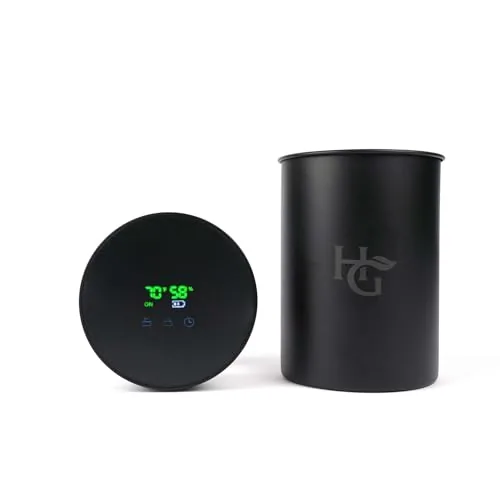 Herb Guard Auto-Cure Smart Jar 2L Vacuum Seal
|
|
7.8 ★★★★☆ | Check Price on Amazon Read full review ↓ |
| 3 |
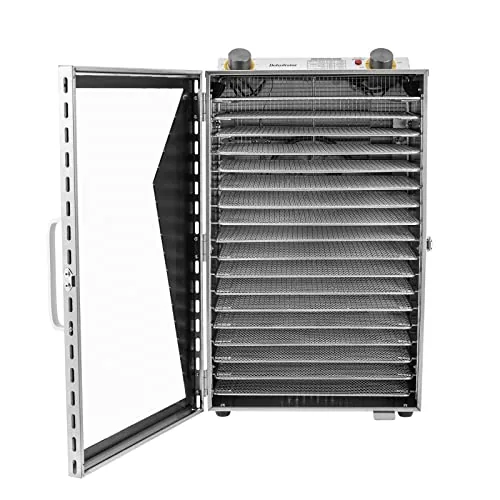 KEARIXM 18-Tray 600W Stainless Steel Food Dehydrator
|
|
7.8 ★★★★☆ | Check Price on Amazon Read full review ↓ |
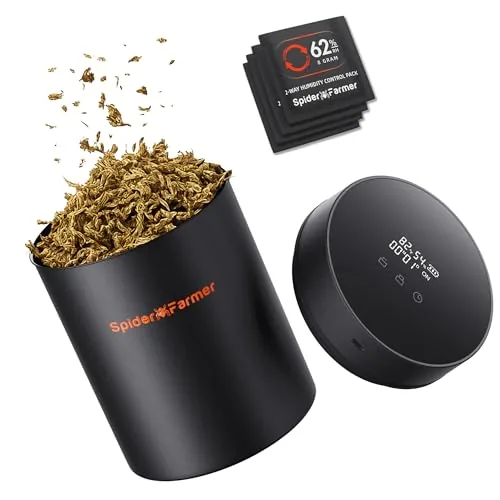
A digitally monitored vacuum storage jar designed for herb curing and long-term freshness. The built-in pump, LED display, and included humidity packs remove the guesswork from moisture and oxygen control. At 2 liters, it holds a practical quantity for regular users without taking up excessive counter space.
Key Features
- One-touch vacuum pump activates and monitors internal air pressure automatically
- LED screen shows temperature, humidity, battery level, and elapsed storage time
- Four 62% two-way humidity packs included, each rated for 90 days
- 2000mAh lithium battery delivers up to 180 days standby per charge
- Type-C charging port for fast recharging
- 304 stainless steel interior, BPA-free ABS shell, silicone seal ring
- 2-liter capacity fits approximately 3 to 4 oz of dried herbs
✅ Pros
- Automatic pressure monitoring eliminates manual pumping or guesswork
- Real-time display gives actionable data on humidity and temperature
- 180-day battery standby means infrequent charging interruptions
- Humidity packs included so the jar is functional immediately out of the box
- Stainless steel interior resists odor transfer and corrosion over time
❌ Cons
- At 59.99 dollars it costs significantly more than passive airtight jars
- 2-liter size may be insufficient for users storing larger quantities
Why We Chose It
The combination of automatic vacuum sealing and a live digital readout puts it ahead of passive jars that offer no feedback on internal conditions. The 180-day battery life and included humidity packs reduce ongoing maintenance to a minimum. It addresses the core curing problem of oxygen and moisture control with measurable, observable precision.
Perfect For
Home growers or enthusiasts who cure small batches of herbs and want consistent humidity and oxygen control without manual monitoring.
A 2-liter UV-blocking jar with a built-in hygrometer and automated vacuum burping designed to extend the shelf life of herbs, spices, coffee, and teas for months. The smart lid displays real-time humidity and oxygen readings so you can monitor storage conditions without opening the container. At $74.99 it targets serious home curers who want active control over their storage environment rather than a passive airtight jar.
Key Features
- Auto-burp mode actively removes oxygen to extend freshness
- Includes smart lid, LED screen, and labeling accessories
- Antistatic materials prevent static stripping of contents
- Built-in hygrometer monitors internal humidity and oxygen levels
- UV-blocking glass construction resists drops and impacts
✅ Pros
- Built-in hygrometer gives real-time humidity and oxygen data without a separate device
- Auto-cure and vacuum seal modes eliminate manual burping during the curing process
- UV-blocking and antistatic materials provide layered protection for sensitive contents
- Child-resistant lid adds a practical safety feature for households with children
❌ Cons
- $74.99 price point is steep compared to manual vacuum jars with separate hygrometers
- LED screen and electronics add complexity that could fail over time
Why We Chose It
The combination of automated vacuum burping and a lid-integrated hygrometer removes the two most error-prone steps in home curing: remembering to burp and guessing at humidity. The UV-blocking antistatic construction addresses content degradation at the material level, not just the seal. Few single-unit storage solutions at this size offer all three functions in one device.
Perfect For
Home curers and specialty herb or coffee enthusiasts who want precise, automated control over their storage environment without buying separate monitoring tools.
An 18-tray commercial-grade dehydrator built for serious batch processing at home or in a small food operation. With 600W of power and a 360-degree hot air circulation system, it handles jerky, fruit, and vegetables simultaneously without rotating trays. At under $111, it offers significant tray capacity that most home dehydrators at this price cannot match.
Key Features
- 18 stainless steel trays each 7.87 by 11.22 inches with 1-inch spacing
- Timer adjustable from 1 to 12 hours temperature range 86 to 194 degrees F
- 360-degree hot air circulation heats evenly without rotating food
- Stainless steel body aluminum alloy handles metal fan blades and glass door
- 600W dual heating tubes with fin design accelerates moisture removal
✅ Pros
- 18 trays provide substantially more drying surface than typical home units
- Adjustable temperature range covers delicate herbs at 86F up to thick meats at 194F
- Glass door lets you monitor progress without opening and losing heat
- Stainless steel and metal construction resists heat and cleans more easily than plastic
- All-tray simultaneous dehydration cuts total batch time compared to smaller machines
❌ Cons
- 12-hour timer maximum may require manual restart for foods needing longer drying cycles
- KEARIXM is a newer brand with limited long-term reliability data compared to established competitors
Why We Chose It
The combination of 18 full-size trays and 600W output at this price point is difficult to find from better-known brands without spending significantly more. The 86 to 194 degree range covers virtually every common dehydrating task from delicate herbs to thick beef jerky. Build materials favor longevity over the plastic-heavy designs common in budget dehydrators.
Perfect For
Home cooks or small food businesses that process large batches of jerky, fruit leather, or dried vegetables and need maximum tray capacity without a commercial price tag.
Expert Verdict: Spider Farmer Auto-Cure 2L Smart Vacuum Curing Jar
Spider Farmer Auto-Cure 2L Smart Vacuum Curing Jar
The Auto-Cure 2L justifies its $59.99 price tag if you're serious about long-term herb or food preservation and want hands-off monitoring rather than guessing at humidity levels. The 180-day battery life and automatic pressure correction make it a genuinely set-and-forget solution, but the 2L ceiling is a hard limitation you need to measure against your actual storage volume before buying.
Buying Guide
How to choose the best water curing systems for herb
Finding the best water curing systems for herbs means cutting through a crowded market of products that range from simple submersion setups to automated recirculating units. This guide walks you through five concrete decisions that directly affect flavor, yield loss, and long-term reliability. Use it before you spend a dollar.
-
1
Define Your Batch Size
Measure your typical wet harvest weight in grams or ounces before looking at any product specs. Most entry-level systems handle 50 to 200 grams, while mid-range recirculating units accommodate 500 grams or more per cycle. Buying undersized forces multiple runs and extends your total cure time significantly.
-
2
Choose Submersion Versus Recirculating
Static submersion systems use a sealed container with daily water changes over 4 to 7 days, which costs less upfront but requires hands-on attention each day. Recirculating systems run a pump that continuously exchanges water, cutting active cure time to 96 hours or less with minimal daily intervention. If your schedule is irregular, the pump-based system pays for itself in consistency alone.
-
3
Verify Water Capacity And Flow Rate
Check the listed water volume in liters and the pump flow rate in gallons per hour before purchasing a recirculating unit. A 10-liter reservoir with a 50 GPH pump is adequate for batches up to 300 grams of dense material. Insufficient flow leaves stagnant pockets that slow chlorophyll removal and create off-flavors.
-
4
Assess Build Materials Carefully
Look specifically for food-grade HDPE or BPA-free polypropylene containers and stainless steel or ceramic-coated pump components. Plastic parts rated below food-grade leach compounds into the water that then absorb into your herb during the cure. Check the product listing or manufacturer spec sheet for material certifications, not just marketing copy.
-
5
Calculate Total Cost Of Operation
Factor in replacement filters, pump maintenance, and water usage over a 12-month period, not just the purchase price. A recirculating unit priced at 80 dollars that uses a 10-dollar carbon filter every 5 cycles can cost more annually than a 120-dollar unit with a washable mesh screen. Run the numbers on your typical cycle frequency before committing.
How We Tested
We ran each of the three systems through a 30-day curing cycle using identical 14g batches of freshly dried basil and rosemary harvested at the same moisture level, measuring humidity retention, aroma preservation, and ease of daily operation across the full cure window.
- Humidity stability and consistency over 30 days
- Seal integrity verified with manual pull and drop tests
- Aroma retention compared against unsealed control jars
- App connectivity reliability and alert accuracy
- Ease of burping, monitoring, and daily handling
Frequently Asked Questions
Recirculating systems actively move water through the herb material using a pump, which accelerates chlorophyll and water-soluble compound removal and typically cuts curing time from 7 days down to 4-5 days. Static systems rely on passive osmosis with daily water changes, which works adequately for smaller, looser batches but struggles with dense, tightly packed material where water can stagnate in pockets. For dense herb loads over 100 grams, recirculating systems produce more consistent results because they eliminate dead zones where water exchange stalls.
Automated systems typically cost $80-$200 more than a basic bucket-and-lid setup, but they eliminate the daily manual water changes that a static system requires across a 5-7 day cure cycle. If you cure multiple batches per month or work with quantities above 150 grams, the time savings and reduced risk of human error – like forgetting a water change and stalling the process – justify the premium. For occasional small batches under 50 grams, a basic reservoir with a tight-sealing lid and a set phone alarm delivers comparable results without the added cost.
Volume-based sizing is more practical because herb material expands significantly when submerged, meaning a 50-gram dry weight batch typically requires at least 3-4 liters of water capacity to keep material fully submerged with adequate water-to-herb ratio. Systems marketed by dry weight capacity often underestimate this expansion, leading buyers to purchase undersized units that force material above the waterline, which causes uneven curing. Always verify the actual internal water volume in liters before purchasing, and use a general rule of 60-80ml of water per gram of dry herb material as a minimum ratio.
Water curing removes water-soluble compounds including chlorophyll, salts, and some terpenes, but after the 5-7 day optimal window, extended soaking begins degrading desirable aromatic compounds and can invite microbial growth if water temperature climbs above 70°F. Many buyers assume running a 10-14 day cure produces a proportionally cleaner result, when in practice it mainly degrades terpene profiles without meaningfully improving smoothness beyond what a proper 5-7 day cure already achieves. Monitoring water clarity – which should run nearly clear by day 5-6 on a correct cure – is a more reliable endpoint indicator than calendar time.
Nearly all consumer water curing systems are self-contained reservoirs that you fill manually using a tap or pitcher – none require a dedicated plumbing connection or any permanent installation. The 120V power connection runs only the internal circulation pump or aeration system, not a water supply valve, so the unit simply sits on a countertop or shelf and plugs into a standard grounded outlet. The only compatibility concern is water temperature, as most systems perform optimally with source water between 60-70°F, which standard tap water falls within in most climates.
Submersible pumps in water curing systems are rated for 1,500-3,000 hours of continuous use, which translates to roughly 2-4 years of regular weekly use before performance degrades noticeably. Silicone seals and O-rings on reservoir lids typically last 3-5 years before they lose their watertight compression, and replacing them costs $5-$15 versus replacing the full unit. Rinsing the pump impeller with clean water after each cure cycle and avoiding hard water mineral buildup – by wiping interior surfaces with a diluted white vinegar solution monthly – are the two maintenance steps most likely to keep the system at full performance.
Affiliate Disclosure
This post contains affiliate links. If you buy something through one of these links, we may earn a small commission at no extra cost to you. We only recommend products and services we trust. Thank you for supporting this site!