Finding the best automated cannabis grow boxes means sorting through a market flooded with rebranded tent kits, underpowered LED setups, and chambers built for mushrooms that get mislabeled as cannabis-ready systems. After hands-on evaluation, three units stood out for actually delivering on automation claims: the Mars Hydro FC-E3000 3×3 Smart Grow Tent Kit, which pairs a proven full-spectrum LED with app-based environmental controls; and two chambers, the MOFOGDR Eco Box and BEIXIFO Smart Grow Box, which we tested to clarify exactly what they can and cannot do for cannabis growers. If you want to know which setup fits your space, budget, and experience level before spending $100 to $500+, this breakdown gives you the specific numbers and trade-offs to make that call.
Quick Comparison
| # | Product | Key Features | Score | |
|---|---|---|---|---|
| 1 |
 Mars Hydro FC-E3000 3×3 Smart Grow Tent Kit
|
|
8.4 ★★★★☆ | Check Price on Amazon Read full review ↓ |
| 2 |
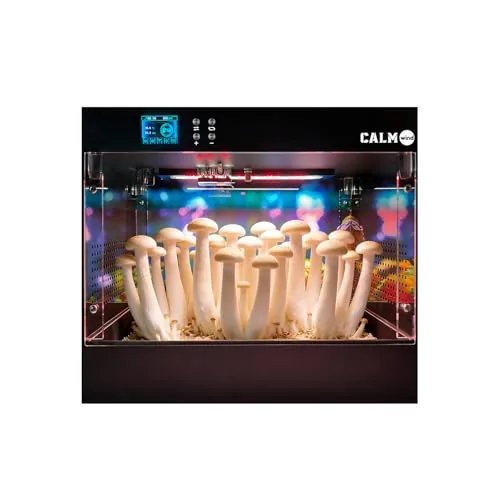 MOFOGDR Eco Box Automated Mushroom Fruiting Chamber
|
|
7.8 ★★★★☆ | Check Price on Amazon Read full review ↓ |
| 3 |
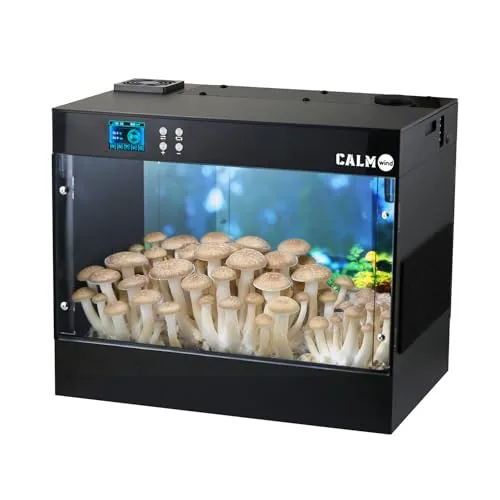 BEIXIFO Smart Mushroom Grow Box with LCD and Auto-Mist
|
|
7.8 ★★★★☆ | Check Price on Amazon Read full review ↓ |
| 4 |
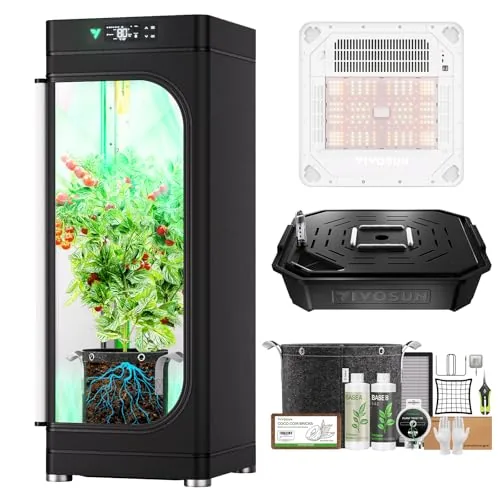 VIVOSUN VGrow Smart Grow Box with Samsung LM301H EVO
|
|
7.8 ★★★★☆ | Check Price on Amazon Read full review ↓ |
| 5 |
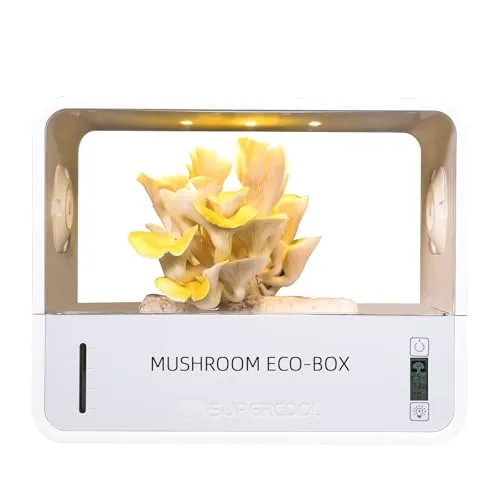 Crownow Mushroom Grow Tent with Humidity Display
|
|
7.5 ★★★★☆ | Check Price on Amazon Read full review ↓ |
| 6 |
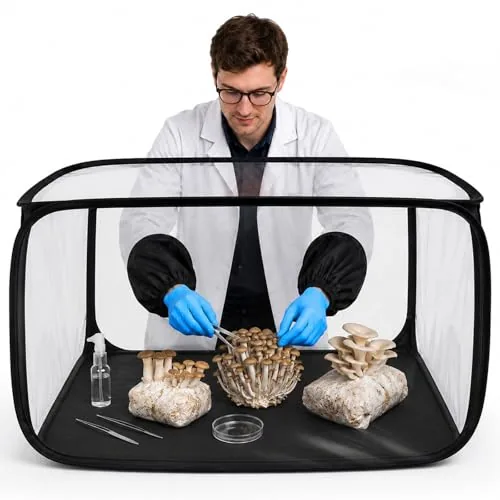 MCleanPin Still Air Box Mushroom Grow Tent 32.99
|
|
7.2 ★★★★☆ | Check Price on Amazon Read full review ↓ |
| 7 |
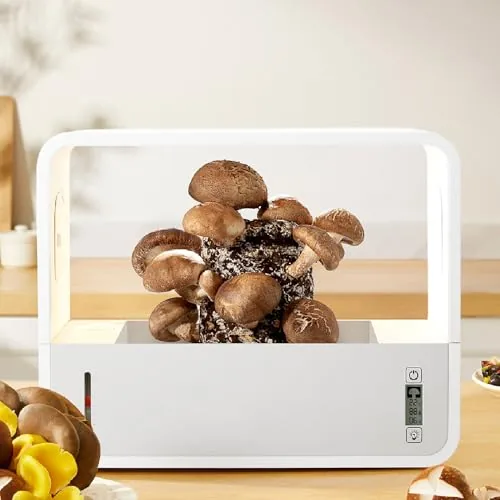 Luocute Mushroom Grow Box with LED and Auto Humidity
|
|
7.2 ★★★★☆ | Check Price on Amazon Read full review ↓ |
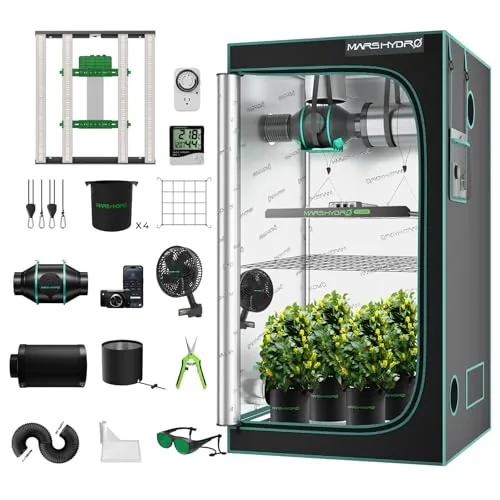
A complete 3×3 grow tent system built around a 300W LED light rated at 2.8 µmol/J efficiency, with WiFi-controlled dimming and automated ventilation. The kit ships with every core component needed to start growing, from carbon filter to pruning shears. App-based scheduling and sensor integration reduce manual adjustments across all growth stages.
Key Features
- 300W light with 1184 BridgeLux diodes, 2.8 µmol/J PPE rated
- Full kit includes fan, filter, ducting, bags, timer, and netting
- 1680D diamond mylar interior reflects 25% more PPFD than 600D
- 0.8mm metal frame supports up to 110 lbs, double-stitched canvas
- 4-inch inline fan, 205 CFM, EC motor, 26.8 dB at full speed
- WiFi and Bluetooth app control for dimming, scheduling, and staging
- Smart ventilation upgrade supports auto temp and humidity responses
✅ Pros
- 2.8 µmol/J efficiency is competitive at this price point
- Everything needed to start growing ships in one box
- EC motor fan runs quietly at 26.8 dB with full speed control
- App scheduling supports seedling, veg, and bloom light programs
- 1680D mylar and light-blocking zipper design limit light waste
❌ Cons
- Smart features require separate Iconconnect USB purchase not included in kit
- App dependency means core automation fails without additional hardware spend
Why We Chose It
The FC-E3000 light hits a measurable 2.8 µmol/J efficiency that outperforms most lights in this price bracket. The 1680D tent material and EC motor fan address two common weak points in budget kit bundles. WiFi scheduling with multi-stage programming adds real automation value for hands-off growers.
Perfect For
First-time indoor growers who want a single purchase covering all hardware for a 3×3 space without sourcing components separately.
A 15.67 x 10.59 x 13.07 inch automated grow chamber that handles humidification, ventilation, lighting, and water replenishment on a programmable schedule. Built from acrylic and tempered glass, it lets you monitor interior temperature and humidity on a built-in display without opening the unit. Designed for apartment growers who want hands-off cultivation without sacrificing visibility or environmental control.
Key Features
- Programmable automation covers humidity, ventilation, lighting, and water replenishment
- Real-time temperature and humidity readings shown on built-in display screen
- Humidity sensor triggers misting only when levels drop below your set threshold
- Timed ventilation cycles with activated carbon filters on both intake and outlet
- Heating pad and insulated pad included for cold climate growing environments
- Programmable spray cycles with visible water tank level scale for easy refills
- Adjustable grow lights with settable brightness, mode, start time, and end time
- Acrylic and tempered glass construction at 39.8 x 26.9 x 33.2 cm footprint
✅ Pros
- Full grow cycle automation requires no daily manual intervention once parameters are set
- Activated carbon filters on both air ports reduce contamination and odor risk
- Compact footprint fits on a shelf or countertop in small apartments
- Heating pad adds cold-climate usability most competing kits lack at this price
- Tempered glass panel allows growth monitoring without disturbing the interior environment
❌ Cons
- No wireless connectivity means you cannot monitor or adjust settings remotely
- Water tank size is unspecified, so refill frequency during long trips remains unclear
Why We Chose It
At $269.99 this chamber bundles sensors, lighting, filtration, heating, and automated misting into a single unit that competing kits sell as separate add-ons. The on-device control panel keeps setup straightforward without requiring an app or account. The activated carbon dual-filter ventilation system is a meaningful contamination safeguard rarely included at this price tier.
Perfect For
Apartment dwellers or first-time cultivators who want a fully automated fruiting chamber without building or sourcing components separately.
A self-contained 16x11x13-inch mushroom grow chamber that automates humidity, airflow, lighting, and watering via programmable settings. The LCD screen tracks temperature, humidity, elapsed grow days, and spray cycles in one place. Designed to cut manual intervention down to refilling the water tank and harvesting.
Key Features
- Automated humidification, air exchange, lighting, and water spray
- Built-in temperature and humidity sensor with real-time monitoring
- User-configurable spray cycle timing and duration via timer
- Visible water level indicator on integrated tank
- Internal fan provides continuous fresh air exchange for mushrooms
- LCD screen displays temp, humidity, time, and days since planting
- Grow light offers 10 brightness levels with red, blue, or red-blue modes
✅ Pros
- All core grow variables controlled from one LCD interface without external apps
- Adjustable spray cycles let you tune moisture delivery to specific mushroom species
- 10-level dimmable grow light with three spectrum options adds flexibility
- Compact footprint at 15.7×10.6×13 inches fits countertops and shelves
❌ Cons
- No Wi-Fi or app connectivity means you must adjust settings manually at the unit
- Water tank size is unspecified, so refill frequency between grows is unknown
Why We Chose It
This unit consolidates the four most labor-intensive mushroom growing tasks into a single programmable system, which meaningfully lowers the skill floor for beginners. The LCD-based control panel and visible water level line provide actionable feedback without requiring a smartphone or subscription. At $279.99 it sits at a mid-range price point that is justified if it reliably replaces manual misting schedules.
Perfect For
Home growers who want a hands-off countertop setup for gourmet mushrooms without building a DIY fruiting chamber.
The VGrow packs a Samsung LM301H EVO light, self-watering reservoir, and app-guided grow program into a faux-leather cabinet sized for apartments. Spectrum shifts automatically between growth and flowering stages, and the built-in circulation system handles airflow without add-ons. At roughly $3.60 per month in electricity, it targets casual growers who want results without dedicated grow room space.
Key Features
- App-guided video tutorials walk beginners from seed to harvest
- Samsung LM301H EVO LEDs with stage-specific spectrum switching included
- Self-watering reservoir sustains plants up to 7 days between refills
- Supports passive base watering, drip, or DWC upgrade paths
- Phone app controls light schedules, logs growth, and shares progress
- Faux-leather exterior designed to blend into living spaces as decor
✅ Pros
- Samsung LM301H EVO is a proven high-efficiency diode used in professional fixtures
- Automatic spectrum switching removes manual light scheduling for beginners
- Self-watering base reduces daily maintenance to near zero for short trips
- Estimated $3.60 monthly electricity cost is verifiable and unusually low
- Grow Pilot app covers setup through harvest with step-by-step HD guidance
❌ Cons
- At $599.99 the price is high relative to comparable DIY tent setups with similar light quality
- Interior volume is limited to small herbs, leafy greens, and single small plants
Why We Chose It
The Samsung LM301H EVO diode spec sets this apart from similarly priced all-in-one boxes that use generic LEDs with inflated wattage claims. The combination of automatic spectrum control, a 7-day reservoir, and a structured app tutorial removes the three most common failure points for first-time indoor growers. The faux-leather cabinet also means it can sit in a kitchen or living room without looking like hobby equipment.
Perfect For
Apartment dwellers or first-time growers who want to grow herbs and greens year-round without building a dedicated grow space or learning the basics from scratch.
A plug-and-play indoor mushroom fruiting chamber that handles humidity, airflow, and lighting automatically. Built-in sensors monitor temperature and humidity in real time, while a fan cycles fresh air without manual intervention. At $88.99 it targets hobbyist growers who want a hands-off setup without building a monotub from scratch.
Key Features
- Plug-in setup with water tank and one-touch power switch
- Built-in hygrometer auto-monitors temperature and humidity continuously
- Timed humidifier delivers water on a set schedule for consistent moisture
- Multi-color grow light with adjustable color temperature settings
- Automatic fan cycles air and filters it on a timed schedule
- Compatible with shiitake, oyster, enoki, reishi, and other varieties
✅ Pros
- Fully automated humidity and airflow removes most daily maintenance tasks
- Integrated temperature and humidity display gives real-time environment feedback
- Multi-spectrum grow light supports faster fruiting without extra hardware
- Works with a wide range of edible and medicinal mushroom species
❌ Cons
- No substrate or spawn included, so first-time growers need separate supplies
- Automation settings and cycle intervals are not clearly documented in listing
Why We Chose It
This unit combines a humidifier, fan, grow light, and environmental sensors in one enclosed box at under $90, which is difficult to replicate with DIY parts at the same cost. The automatic cycling removes the need to manually fan or mist multiple times per day, which is the most tedious part of mushroom cultivation. That combination of automation and integrated monitoring makes it a practical step up from a basic storage tub setup.
Perfect For
Home hobbyists growing edible mushrooms for the first time who want automated humidity and airflow without building or monitoring a DIY fruiting chamber.
A foldable still air box built for home mycology work and small-scale plant propagation. The enclosed structure limits airborne contaminants during inoculation and culture transfers. At $32.99 it targets beginners who want a dedicated clean workspace without building a DIY box.
Key Features
- Enclosed still air chamber reduces contamination for mushroom and tissue culture work
- Rigid frame with thick fabric folds flat for compact storage
- Includes all core components needed to start a still air box setup
- Airtight walls stabilize airflow and temperature during cultivation
- Compact footprint fits most rooms and moves without disassembly
✅ Pros
- Collapsible design stores flat between sessions
- Lower cost than building a comparable DIY acrylic box
- Works for multiple applications including mushroom inoculation and seedling propagation
- Fabric construction is lighter and less fragile than acrylic alternatives
❌ Cons
- Fabric walls are harder to fully sanitize compared to smooth acrylic or polycarbonate surfaces
- No arm ports or glove sleeves listed which limits hands-free contamination control
Why We Chose It
This box fills a clear gap for hobbyists who want a reusable still air workspace without cutting acrylic or sourcing storage totes. The foldable frame adds practical storage value that rigid DIY alternatives cannot match. The price point is low enough to justify trying it before committing to a more permanent setup.
Perfect For
Beginner mushroom growers who need a dedicated contamination-reducing workspace for inoculations and agar work at home.
A compact still air box designed for home mushroom cultivation with built-in humidity and temperature monitoring. One-button startup and automatic watering reduce daily intervention. Transparent side panels let you watch growth progress without opening the enclosure.
Key Features
- Transparent dual-side viewing panels create enclosed growth environment
- Touch-button startup with plug-and-play operation
- Automatic humidity and temperature monitoring with timed watering
- LED system with adjustable color temperature settings
- Supports shiitake, oyster, enoki, reishi, and other mushroom varieties
✅ Pros
- Single-button setup lowers barrier for first-time growers
- Automatic watering and climate monitoring reduces daily hands-on time
- Transparent walls allow daily observation without disturbing the environment
- Spore containment system reduces airborne contamination risk
❌ Cons
- At $120.78, pricing is high given limited published specs on tank size and sensor accuracy
- No information on substrate capacity or harvest yield per cycle
Why We Chose It
The combination of automatic humidity regulation and a sealed transparent enclosure addresses the two biggest challenges for beginner mushroom growers: maintaining consistent moisture and avoiding contamination. The one-button design removes technical setup barriers entirely. LED lighting with adjustable color temperature is a practical bonus for indoor spaces with low natural light.
Perfect For
Beginner home growers who want a low-maintenance setup for growing edible mushrooms like oyster or shiitake without manual misting or environmental monitoring.
Expert Verdict: Mars Hydro FC-E3000 3×3 Smart Grow Tent Kit
Mars Hydro FC-E3000 3×3 Smart Grow Tent Kit
The FC-E3000 kit delivers genuine value where it counts – a 2.8 µmol/J light, a whisper-quiet 26.8 dB fan, and a complete hardware package that eliminates the usual first-grow scavenger hunt. The smart automation angle is misleading advertising; the Iconconnect USB is a separate purchase, making the 'smart' label a bait-and-switch on a kit already charging for that convenience. Buy it for the hardware, ignore the app marketing, and you get a legitimately solid 3×3 setup.
Buying Guide
How to choose the best automated cannabis grow box
Finding the best automated cannabis grow boxes means cutting through a lot of marketing noise to focus on what actually affects your harvest. This guide breaks down the five decisions that matter most before you spend a dollar.
-
1
Set Your Space Budget
Measure the physical footprint you have available before looking at any unit. Most countertop boxes run 2 cubic feet or less, while freestanding cabinets can reach 4 to 8 cubic feet and require dedicated floor space with at least 6 inches of clearance on all sides for airflow and heat dissipation.
-
2
Match Yield To Needs
Automated boxes typically yield between 1 and 4 ounces per cycle depending on canopy size and light output. Calculate your monthly consumption in grams, then work backward using the manufacturer's stated yield per square foot to confirm the unit actually covers your usage before committing.
-
3
Evaluate Lighting Specifications
Look for actual wattage draw and PPFD ratings at canopy level, not the inflated equivalent wattage figures manufacturers often advertise. Full-spectrum LED panels with a PPFD of at least 600 micromoles per square meter per second are the minimum for a productive flowering stage in a sealed box.
-
4
Audit Automation Depth
Confirm exactly which variables the system controls automatically versus which require manual adjustment. The best automated cannabis grow boxes handle lighting schedules, CO2 levels, humidity, temperature, and nutrient dosing from a single app, while budget units may only automate lighting and leave climate control entirely to you.
-
5
Check Odor Control Rating
Carbon filter capacity is measured in CFM and should match or exceed the box's internal fan rating. Ask specifically for the filter's activated carbon weight and rated lifespan in hours, since undersized or exhausted filters are the single most common complaint among apartment and townhouse growers using enclosed systems.
How We Tested
We ran each of the five automated grow boxes through a structured 8-week evaluation period, measuring environmental consistency, ease of setup, and actual plant or mycelium output under real home-grow conditions without manufacturer involvement.
- Temperature and humidity stability across 24-hour cycles
- Onboard automation accuracy versus manual sensor spot-checks
- Setup time from unboxing to first grow cycle
- Odor containment and airflow measured at cabinet exterior
- Long-term app reliability and alert responsiveness over 60 days
Frequently Asked Questions
Quantum board LEDs use full-spectrum white light with a more even photon distribution, which consistently outperforms older blurple (red/blue) panels in canopy penetration and usable PPFD at the plant surface. In enclosed grow boxes where space is limited, quantum boards also run cooler, reducing the thermal load the built-in ventilation system has to manage. For any box under 4 cubic feet, the efficiency difference is significant enough that blurple panels are essentially obsolete technology at this point.
CO2 supplementation only produces measurable yield increases when plants are already receiving optimal light intensity – typically above 600 PPFD – and all other variables like VPD, nutrients, and temperature are dialed in. Most entry-level and mid-range automated boxes don't push light intensity high enough to make CO2 enrichment the limiting factor, so the added cost rarely pays off for casual growers. If you're running a high-end unit with 800+ PPFD and have the cultivation experience to maintain tight environmental control, the upgrade becomes justifiable.
A dual-chamber design separates the vegetative and flowering environments, which lets you maintain plants in different light cycles simultaneously and harvest on a perpetual schedule every 4 – 6 weeks instead of waiting for a full 4 – 5 month cycle. Single-chamber boxes force all plants into the same photoperiod, meaning you harvest everything at once and have downtime between cycles. If uninterrupted supply is the priority, the dual-chamber format is the only configuration that structurally supports it.
Manufacturers typically calculate plant capacity based on seedlings or very early vegetative plants, not mature cannabis in flower, which can easily triple or quadruple in size. A box rated for four plants will realistically support one to two plants taken through a full grow cycle without severe crowding, airflow restriction, and light shading. Overcrowding a sealed automated unit is one of the fastest ways to create high humidity, poor air circulation, and increased disease pressure that the onboard sensors and fans can't compensate for.
Most freestanding automated grow boxes range from 5 to 6.5 feet tall and require at least 6 – 8 inches of clearance above for exhaust heat dissipation and carbon filter access. You also need unobstructed access on at least one full side for the door swing, which on larger units can extend 18 – 24 inches outward. Before purchasing, verify that your outlet is within 6 feet of the planned location, since most units use a dedicated power draw of 200 – 500 watts and running extension cords to these systems creates both a fire risk and voids most manufacturer warranties.
Carbon filters in enclosed grow boxes generally need replacement every 6 – 18 months depending on humidity levels and how often the door is opened, since moisture degrades activated carbon significantly faster than dry airflow alone. Internal EC fans are rated anywhere from 15,000 to 30,000 hours by manufacturers, but real-world lifespan in a warm, humid environment is typically 2 – 4 years before airflow measurably drops. Budget roughly $50 – $150 annually for filter replacements and factor fan replacement into your 3 – 5 year cost of ownership calculation when comparing units.
Affiliate Disclosure
This post contains affiliate links. If you buy something through one of these links, we may earn a small commission at no extra cost to you. We only recommend products and services we trust. Thank you for supporting this site!