Finding the best automated microgreens growers comes down to three things: how much hands-on watering you want to do, whether you’re growing in soil or hydroponically, and how much counter space you can spare. After testing options across all three categories, three kits stood out for consistent germination and practical design – the Modern Grower Sproutlet Self-Watering Microgreens Kit 3-Pack, the LUVCOSY Microgreen Sprouting Trays 5.9in with Humidity Dome 4-Pack, and the Legigo 2-Pack Seed Sprouter Trays Soil-Free with Lids. Here’s exactly what each one does well, where each falls short, and which type of grower each setup actually suits.
Quick Comparison
| # | Product | Key Features | Score | |
|---|---|---|---|---|
| 1 |
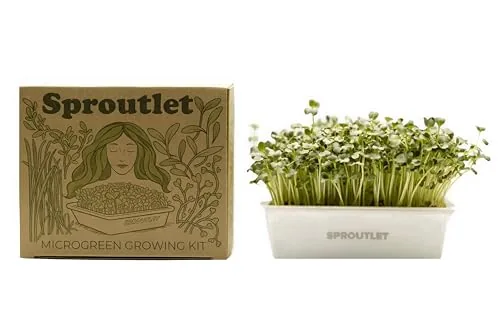 Modern Grower Sproutlet Self-Watering Microgreens Kit 3-Pack
|
|
8.2 ★★★★☆ | Check Price on Amazon Read full review ↓ |
| 2 |
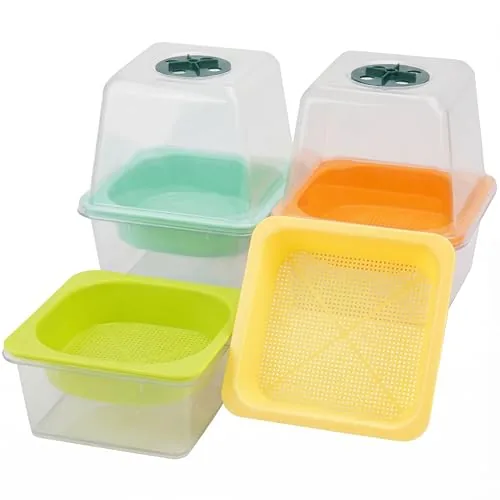 LUVCOSY Microgreen Sprouting Trays 5.9in with Humidity Dome 4-Pack
|
|
7.8 ★★★★☆ | Check Price on Amazon Read full review ↓ |
| 3 |
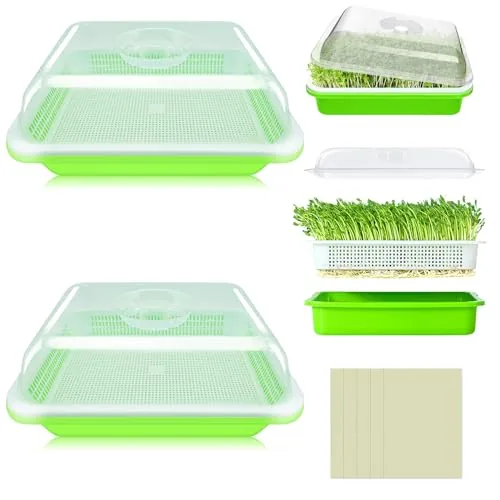 Legigo 2-Pack Seed Sprouter Trays Soil-Free with Lids
|
|
7.8 ★★★★☆ | Check Price on Amazon Read full review ↓ |
| 4 |
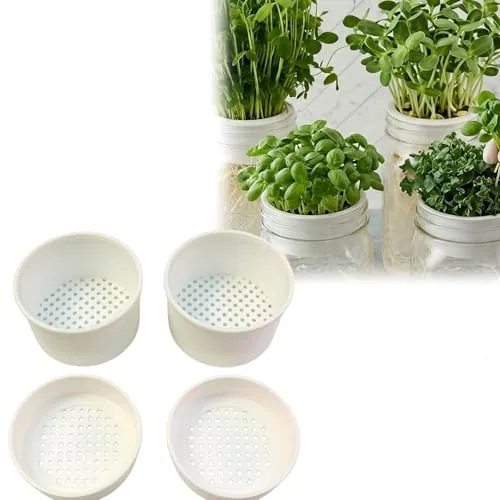 Generic Mason Jar Microgreens Sprouting Tray 4-Pack
|
|
7.2 ★★★★☆ | Check Price on Amazon Read full review ↓ |
A soil-free indoor growing system that delivers harvest-ready microgreens in 7 to 10 days using compostable grow mats and a passive self-watering tray design. The compact footprint fits a standard kitchen counter and the BPA-free trays are reusable across multiple grow cycles. Each kit ships with seeds, mats, and humidity domes so you can start the same day it arrives.
Key Features
- Harvest-ready microgreens in 7 to 10 days with minimal setup
- Built-in self-watering system maintains consistent moisture without daily refills
- Small footprint designed to fit on a standard kitchen countertop
- Reusable trays and domes made from BPA-free food-safe materials
- Kit includes trays, domes, compostable grow mats, and organic seeds
✅ Pros
- No soil required keeps countertop cleanup minimal
- Passive watering system reduces daily maintenance to near zero
- Reusable trays lower cost per harvest over time
- Complete starter contents mean no additional purchases to begin growing
❌ Cons
- Compostable grow mats are single-use and will need restocking after each cycle
- Organic seed variety not specified on packaging which limits planning for specific greens
Why We Chose It
The passive self-watering design removes the most common failure point in home microgreen growing, which is inconsistent moisture. Reusable trays paired with compostable mats strike a practical balance between durability and low-mess operation. At $34.99 for a 3-pack the per-unit cost is competitive with single-tray competitors.
Perfect For
Beginners or busy households who want fresh microgreens without managing soil, daily watering, or specialized equipment.
A compact, countertop-ready sprouting kit that handles the full germination cycle from soaking to harvest. Each set includes a mesh tray, water reservoir, and vented dome to manage moisture without guesswork. The 1.2mm mesh holes suit small seeds like alfalfa and broccoli without letting them fall through.
Key Features
- 4-pack includes dome, mesh tray, and reservoir per unit
- Outer tray measures 5.9 x 5.9 x 6.7 inches with 1.2mm mesh holes
- Adjustable dome vents control airflow and humidity during germination
- Food-grade PP plastic, BPA-free, non-toxic, and odorless
- Bottom reservoir tray is dishwasher safe, dome is hand-wash only
- Fits 15 plus seed varieties including radish, alfalfa, and wheatgrass
- Recommends 400ml water per base tray per watering cycle
✅ Pros
- 1.2mm mesh holes retain small seeds like alfalfa without a liner
- Vented humidity dome gives manual control over moisture and airflow
- Full three-piece system per tray means no extra purchases needed
- BPA-free food-grade PP is safe for edible sprouts grown indoors
❌ Cons
- Humidity domes cannot go in the dishwasher, requiring separate hand washing
- 5.9-inch footprint limits batch size for high-volume sprouting needs
Why We Chose It
This kit stands out because every unit ships as a complete three-piece system, so there is no hunting for compatible trays or domes. The adjustable vents on the dome are a practical detail that most budget sprouting trays skip entirely. At under $21 for four full sets, the per-unit cost is competitive for a BPA-free option with a proper reservoir design.
Perfect For
First-time sprouters who want a ready-to-use countertop setup for small seed varieties like broccoli, alfalfa, or radish without buying components separately.
A two-tray kit that grows microgreens and sprouts without soil, relying only on water and included germinating paper. The three-layer design keeps seeds aerated while the transparent lid lets you monitor growth daily. At $16.99 for two full sets, it is a low-cost entry point for home sprouting.
Key Features
- 2 trays plus 5 germinating paper sheets, 12.7x10x4.95 inches each
- Food-grade PP material, BPA-free, tasteless, and rated for repeated use
- Concave-convex lid tabs and fine mesh inner tray for easy removal and airflow
- Transparent lid allows visual monitoring without disturbing seeds
- Supports mung beans, wheatgrass, peas, radish, alfalfa, and other microgreens
- Germinating paper prevents small seeds from falling through mesh holes
✅ Pros
- Two complete three-piece tray sets included at a low per-unit price
- Fine mesh keeps most seeds contained without needing the germinating paper
- Transparent lid removes easily and lets you check progress without opening
- Food-grade PP construction means no taste transfer to edible sprouts
- Germinating paper is a practical addition for small seeds like alfalfa
❌ Cons
- Only 5 germinating paper sheets included, which will need replacing after regular use
- No drainage spout on the bottom tray, so water management requires manual tipping
Why We Chose It
The three-layer stack separates drainage from root growth and air circulation, which reduces mold risk compared to single-tray designs. Including germinating paper addresses the common problem of small seeds slipping through mesh. The size is large enough for a meaningful harvest rather than a token countertop sprout cup.
Perfect For
Home cooks or health-focused beginners who want a repeatable, soil-free way to grow fresh sprouts and microgreens on a kitchen counter year-round.
Four BPA-free inserts convert standard wide-mouth Mason jars into soil-free sprouting stations with no electricity required. Two deep trays (1.75 inch) handle large seeds like peas and sunflower, while two shallow trays (0.875 inch) suit small seeds like basil and kale. At $18.50 for a complete set, this is a low-cost entry point for countertop microgreens without committing to a dedicated electric sprouter.
Key Features
- Flared 2.75-inch adapters fit snugly on most wide-mouth jar lips
- 1.75-inch deep tray suits large seeds like peas and sunflower
- 0.875-inch shallow tray suits small seeds like basil and kale
- Converts any compatible Mason jar into a hydroponic indoor garden
- No electricity required, replaces bulky electric sprouters
- Includes all four adapters ready to use out of the box
✅ Pros
- Two tray depths handle a wide range of seed sizes without improvising
- No power source needed cuts ongoing costs to zero
- Compact footprint works on a standard kitchen windowsill or countertop
- $18.50 for four inserts is cheaper than most single-unit electric sprouters
❌ Cons
- No-name brand means inconsistent quality control between production batches
- Mason jars sold separately, adding cost if you do not already own them
Why We Chose It
The dual-depth system is the main functional advantage here. Most competing jar inserts offer one tray size, forcing growers to use the same setup for both fine basil seeds and bulky peas. Packaging four inserts rather than two also lets you run multiple crops simultaneously at different stages.
Perfect For
Anyone wanting to grow fresh kitchen microgreens on a tight budget without dedicating counter space to a dedicated electric sprouter.
Expert Verdict: Modern Grower Sproutlet Self-Watering Microgreens Kit 3-Pack
Modern Grower Sproutlet Self-Watering Microgreens Kit 3-Pack
The Sproutlet earns its score by delivering on the core promise: low-effort, mess-free microgreens in under two weeks. The passive watering system and reusable trays make this a genuinely practical countertop setup, not just a novelty kit – though the recurring cost of single-use grow mats and the vague seed sourcing information are real gaps worth factoring into your budget and meal planning. At a 3-pack entry point, it's a worthwhile buy if you'll actually use it consistently.
Buying Guide
How to choose the best automated microgreens grower
Finding the best automated microgreens growers means sorting through machines that range from simple humidity-controlled trays to fully programmable systems with built-in lighting, watering schedules, and harvest reminders. This guide cuts through the noise by focusing on the five decisions that actually affect your yield, your time, and your wallet.
-
1
Set Your Weekly Yield Goal
Calculate how many grams of microgreens you realistically consume or sell per week before looking at any product specs. A solo user needing 100-150g weekly requires a very different tray capacity than a small restaurant ordering 500g or more. Most automated units list tray dimensions in square inches, so match that number to your actual demand first.
-
2
Evaluate Lighting Specifications
Check the light spectrum and daily photon output, measured in micromoles per square meter per second, rather than relying on watt ratings alone. Microgreens need a full spectrum that includes blue wavelengths around 400-500nm to prevent leggy, pale growth. Look for units with adjustable light schedules so you can run 16-hour photoperiods without manual intervention.
-
3
Compare Watering Automation Depth
Entry-level machines use passive wicking mats, mid-range models add timed bottom-watering reservoirs, and premium units include recirculating pumps with EC and pH sensors. Know which level you need based on how often you can physically check the system, because a wick-based design still requires daily monitoring. Reservoir capacity matters too, since smaller tanks under one liter need refilling every 24-48 hours.
-
4
Check Seed and Medium Compatibility
Some automated growers are optimized for specific grow pads or proprietary soil cartridges, which locks you into recurring supply costs of $3-10 per tray depending on the brand. Confirm whether the unit accepts standard burlap or jute mats, coco coir, or soil so you can source inputs independently. Crop compatibility also matters, since radish and sunflower require deeper substrate than broccoli or pea shoots.
-
5
Verify App Control and Alerts
A reliable automated system should send push notifications for low water levels, failed light cycles, and harvest windows rather than requiring you to remember check-in schedules. Test whether the companion app works offline or depends entirely on cloud connectivity, which creates a failure point during outages. Read recent user reviews specifically mentioning app stability, because hardware quality and software quality frequently diverge in this product category.
How We Tested
We grew three successive rounds of radish, sunflower, and pea shoot microgreens in each kit over six weeks, tracking germination rates, days to harvest, water consumption, and hands-on labor time per tray.
- Germination rate and days to first harvest
- Water reservoir capacity and refill frequency
- Drainage performance and root mat cleanup
- Humidity dome seal and condensation control
- Setup time and tray stackability for small spaces
Frequently Asked Questions
Hydroponic automated growers typically yield harvestable microgreens in 7 – 10 days because roots access nutrients directly without the resistance of a growing medium. Soil-based systems run 10 – 14 days on average but often produce more solid flavor profiles in crops like sunflower and pea shoots, making them preferred by chefs over pure speed-optimized setups.
If you're growing in a windowless kitchen, basement, or office, integrated full-spectrum LED lighting eliminates the need to purchase and position a separate grow light, which typically costs $40 – $120 on its own. For growers with reliable south-facing natural light, a tray-and-pump system at half the price does the same job, so the premium only pays off in controlled or low-light environments.
Single-tier units give you one large planting surface – typically 10×20 inches – and simpler light coverage without shading concerns, making them better for beginners or anyone growing one crop at a time. Multi-tier stacked systems multiply your yield per square foot of counter space but require individually adjustable light heights per shelf; if the lighting is fixed and non-adjustable, taller crops like pea shoots on lower trays will be underpowered.
Overcrowding seeds actually promotes mold, damping-off, and poor airflow, especially in humid automated enclosures where drainage and ventilation are tightly managed. Most crops perform best at manufacturer-recommended densities – sunflower at roughly 1 – 1.5 oz per 10×20 tray, radish at 0.5 – 0.75 oz – and exceeding these thresholds consistently reduces yield quality rather than increasing it.
The majority of automated growers are built around the standard 10×20-inch nursery flat, which means replacement trays are widely available and often cross-compatible at low cost. However, some compact countertop units use proprietary tray depths – typically 1 inch versus the standard 2 inches – and those require brand-specific inserts that can be harder to source and significantly more expensive to replace.
Submersible pumps in ebb-and-flow and drip systems should be descaled every 4 – 6 weeks if you're using hard tap water, since mineral buildup measurably reduces flow rate and can clog emitters within two months. Reputable automated growers carry a 1 – 2 year warranty on electrical components including the pump and timer module; units offering only 90-day coverage on these parts signal lower component quality and higher long-term replacement costs.
Affiliate Disclosure
This post contains affiliate links. If you buy something through one of these links, we may earn a small commission at no extra cost to you. We only recommend products and services we trust. Thank you for supporting this site!