Finding the best heaters for grow tents comes down to three things: consistent temperature control, humidity awareness, and the ability to run safely in an enclosed space without creating hot spots or fire risk. After testing the AC Infinity ThermoForge T3, ThermoForge T7, and ThermoForge S7, we found clear differences in how each one handles real growing conditions – particularly in smaller tents during cold months when ambient temps drop below 50°F. Whether you’re running a 2×4 seedling setup or a larger 4×8 flowering space, one of these three will likely fit your needs, so here’s exactly what separates them.
Quick Comparison
| # | Product | Key Features | Score | |
|---|---|---|---|---|
| 1 |
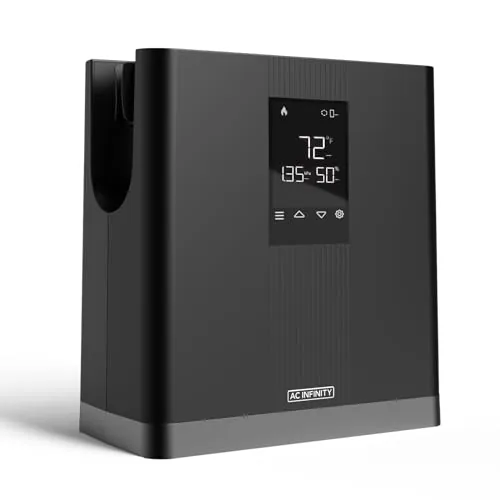 AC Infinity ThermoForge T3 VPD Grow Tent Heater
|
|
8.5 ★★★★☆ | Check Price on Amazon Read full review ↓ |
| 2 |
 AC Infinity THERMOFORGE T7 1000W VPD Smart Heater
|
|
8.5 ★★★★☆ | Check Price on Amazon Read full review ↓ |
| 3 |
 AC Infinity THERMOFORGE S7 1000W PTC Grow Heater
|
|
8.5 ★★★★☆ | Check Price on Amazon Read full review ↓ |
| 4 |
 AC Infinity TERRAFORM 8 All-in-One Grow Climate Control
|
|
8.5 ★★★★☆ | Check Price on Amazon Read full review ↓ |
| 5 |
 VIVOSUN AeroFlux 700W Smart Grow Tent Heater w/ VPD
|
|
8.2 ★★★★☆ | Check Price on Amazon Read full review ↓ |
| 6 |
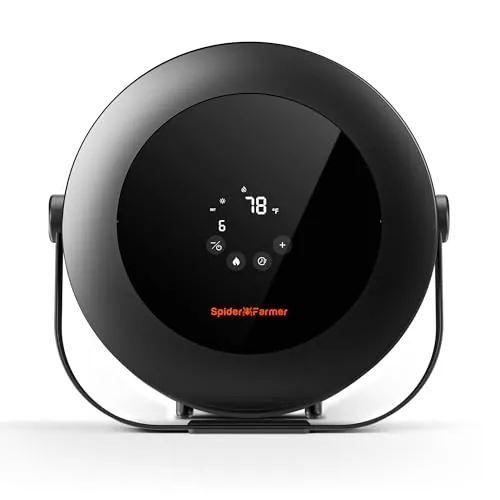 Spider Farmer 530W Grow Tent Heater with Smart Temp Control
|
|
8.2 ★★★★☆ | Check Price on Amazon Read full review ↓ |
| 7 |
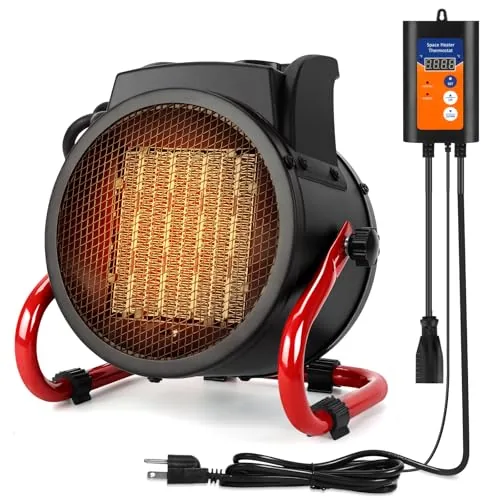 Rui Cheng 1500W Greenhouse Heater with Digital Thermostat
|
|
8.2 ★★★★☆ | Check Price on Amazon Read full review ↓ |
| 8 |
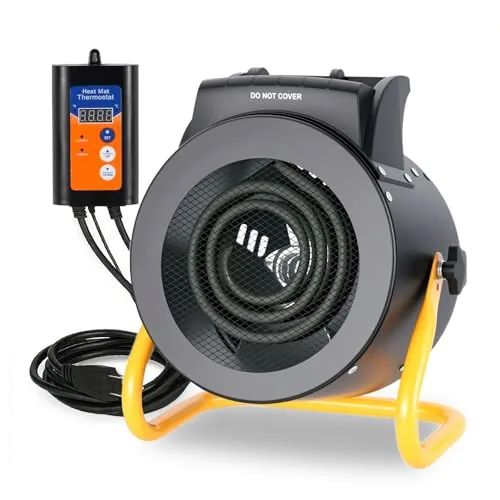 LHUKSGF Greenhouse Heater 1500W with Digital Thermostat
|
|
7.8 ★★★★☆ | Check Price on Amazon Read full review ↓ |
| 9 |
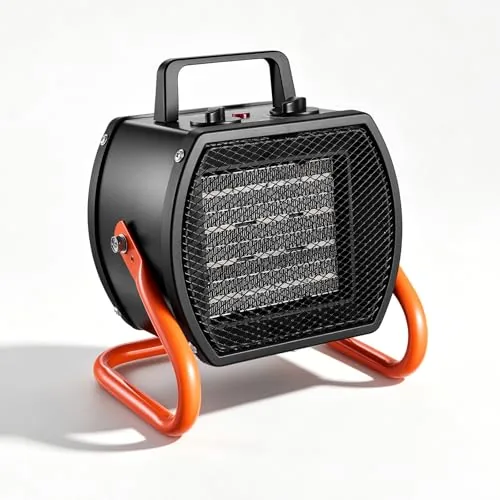 VEVOR 1500W PTC Greenhouse Heater with Fan Mode
|
|
7.8 ★★★★☆ | Check Price on Amazon Read full review ↓ |
The ThermoForge T3 is purpose-built for indoor growing, pairing a VPD-aware controller with 10-level PTC heating so you can dial in temperature with real precision. A 4-foot flexible extension hose lets you direct warm air exactly where plants need it rather than heating a room uniformly. At $129 it sits above basic space heaters but well below professional HVAC solutions for small grow spaces.
Key Features
- VPD and temperature triggers programmable via onboard corded sensor probe
- PTC plate technology with PWM control delivers 10 distinct heat output levels
- Flexible 4 ft extension hose focuses heat to specific grow space zones
- Integrates with UIS controllers for true 0 to 100 percent output control
- First dedicated grow tent heater with precision smart environmental controls
✅ Pros
- 10-step PWM heat control is far more granular than on/off smart outlet workarounds
- VPD-linked triggering removes guesswork from temperature and humidity management
- Extension hose solves the common problem of uneven heat distribution in tents
- UIS ecosystem integration enables automated climate loops without third-party relays
❌ Cons
- At $129 it costs significantly more than a basic space heater requiring manual oversight
- Full output control requires owning additional UIS controller hardware
Why We Chose It
Most grow tent heaters are repurposed household units bolted onto smart plugs, giving only binary on/off control. The T3 uses PTC plates with PWM modulation to hold stable temperatures across 10 increments, which reduces overshoot that stresses plants. The included extension hose and native VPD controller make this the only heater built specifically around plant science rather than room comfort.
Perfect For
Indoor cannabis or vegetable growers running tents under 5×5 feet who need stable overnight temperatures without manual intervention.
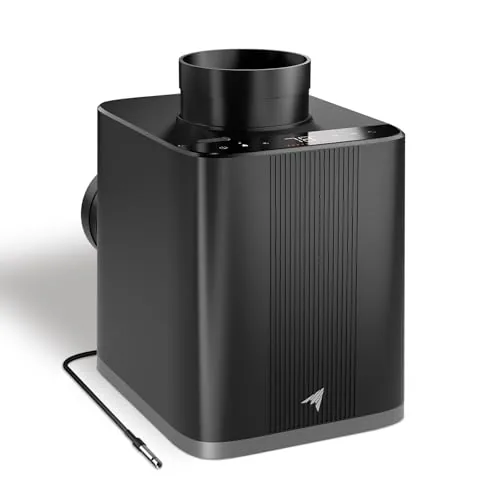
A 1000W PTC heater built specifically for grow tents and greenhouses, with VPD-based AI control that adjusts heat output across 10 discrete levels rather than simple on/off cycling. Dual duct ports let you push heated air directly into your space or run a closed-loop setup depending on your insulation situation. WiFi connectivity via UIS controllers adds remote monitoring, automation triggers, and historical data logging.
Key Features
- 1000W PTC heater with adaptive AI and VPD temperature control
- PWM-controlled PTC plates deliver 10 discrete heat output levels
- Fresh air intake mode balances temperature and CO2 simultaneously
- Dual duct ports support direct feed or closed-loop heating configurations
- Compatible with UIS controllers for WiFi app, alerts, and grow guides
✅ Pros
- VPD-based control targets vapor pressure deficit, not just air temperature
- 10 true power levels prevent temperature overshoot common in single-stage heaters
- Dual duct design adapts to sealed or vented grow setups without extra hardware
- UIS ecosystem integration enables scheduled automations and remote monitoring
❌ Cons
- Ducting sold separately, adding cost for users who need a complete setup
- At $129, WiFi features require purchasing a UIS controller to unlock
Why We Chose It
The THERMOFORGE T7 stands out because it targets VPD rather than raw air temperature, which directly affects how plants transpire and uptake nutrients. The 10-level PWM heating prevents the temperature swings that single-stage heaters cause, and the dual-duct ports add real installation flexibility without requiring separate hardware.
Perfect For
Indoor growers running tents or small greenhouses who need precise climate control across vegetative and flowering stages without manual thermostat adjustments.
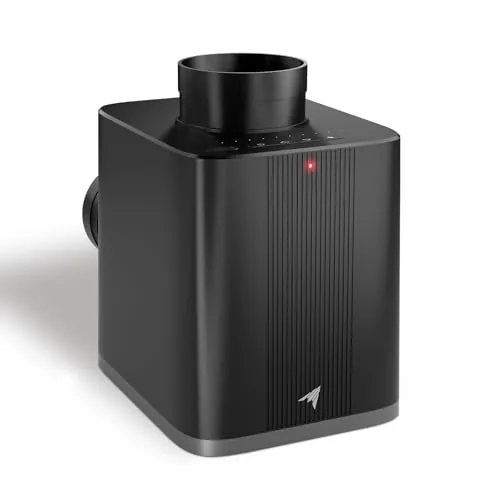
The THERMOFORGE S7 delivers 1000W of PTC heat across 10 precise levels, making it one of the more controllable grow-space heaters at this price. Its dual-duct design lets you push heated air directly into a tent or run a closed-loop setup depending on your layout. ETL certification and built-in overheat protection add a layer of safety that cheaper grow heaters skip entirely.
Key Features
- 1000W PTC heater with 10 adjustable heat levels via PWM control
- Individual PTC plates allow fresh air intake for balanced climate management
- Dual ports support direct ducting or closed-loop heating configurations
- ETL-certified with tip-over alarm, overheat protection, and auto-restart
- Compatible with UIS controllers for WiFi automation and data tracking
✅ Pros
- 10 discrete heat levels give real precision, not just low, medium, high
- Dual duct ports offer flexible install options for tents and rooms
- UIS controller integration enables app-based scheduling and environmental alerts
- ETL certification and multiple safety shutoffs reduce fire and overheating risk
❌ Cons
- Ducting accessories sold separately, adding cost to a complete setup
- WiFi features require a separate UIS controller purchase to unlock
Why We Chose It
Most grow-space heaters offer basic thermostat control with no smart integration. The THERMOFORGE S7 stands out because its PTC plate design with PWM control delivers genuinely graduated heat output, and the UIS ecosystem connection makes automated climate management practical without buying a separate smart hub. The closed-loop duct option is a real differentiator for sealed grow rooms where heat retention matters.
Perfect For
Indoor growers running tents or sealed rooms in cold climates who want automated heat control without piecing together separate smart home devices.
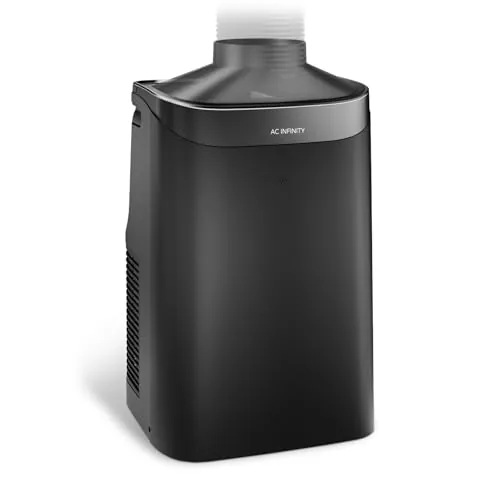
The TERRAFORM 8 handles cooling, heating, and dehumidification through a single duct connection, making it one of the most space-efficient climate solutions for grow tents. At 12,000 BTU it has enough muscle for serious indoor grows, and the VPD auto-switching removes the guesswork from dialing in your environment. It is a strong pick if you want one device to replace three separate units.
Key Features
- Single duct outputs cool, heat, or air exchange automatically
- AI auto-switches between cooling, heating, and fan mode
- Set target temperature or VPD for hands-off climate regulation
- Self-evaporative system reduces manual water draining frequency
- Compatible with Controller AI+ for WiFi app and data tracking
✅ Pros
- Replaces separate AC, heater, and dehumidifier with one unit
- VPD-based auto-switching reduces manual adjustments significantly
- Self-evaporative design cuts drain maintenance frequency
- WiFi app integration enables remote monitoring and scheduling
- 12,000 BTU output suits mid-to-large grow tents and rooms
❌ Cons
- Drying mode requires manual two-duct reconfiguration each time
- 599 dollar price point is a significant upfront investment
Why We Chose It
The single-duct all-in-one design solves a real problem for growers juggling multiple climate devices in tight tent spaces. VPD-based automation is a meaningful step above basic thermostat control, directly targeting plant transpiration efficiency rather than just air temperature. The self-evaporative system and app connectivity add practical day-to-day convenience that justifies the premium over budget alternatives.
Perfect For
Indoor cannabis or vegetable growers running mid-to-large tents who want centralized climate control without stacking multiple separate units.
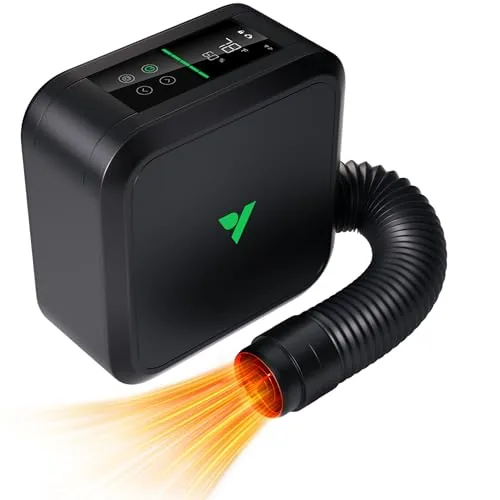
A 700W PTC heater designed specifically for grow tents, with app-based VPD monitoring and day/night scheduling built in. It targets growers who want automated climate control without a separate thermostat controller. The extension hose lets you direct heat precisely where plants need it most.
Key Features
- 700W PTC heating, 40% more output than standard models
- Real-time VPD and temperature tracking with auto heat adjustment
- Five adjustable heat levels via PWM precision control
- App control with custom min temp, target VPD, and day/night recipes
- V0 flame-retardant housing, tip-over protection, and overheat shutoff
✅ Pros
- VPD tracking removes guesswork from humidity and temperature balance
- App-based scheduling handles day/night temperature swings automatically
- Extension hose allows targeted airflow in tents with limited floor space
- Compact footprint preserves usable canopy area inside the tent
❌ Cons
- At 700W it may be underpowered for tents larger than 4×4 feet
- App dependency means a learning curve for non-technical growers
Why We Chose It
Most grow tent heaters offer a simple thermostat and nothing else. This unit integrates VPD monitoring and programmable day/night modes, which directly addresses the two most common climate mistakes growers make: ignoring vapor pressure deficit and running a single flat temperature around the clock.
Perfect For
Indoor growers running small to mid-size tents in cold climates who want automated VPD-based climate control without buying a separate controller.
A 530W PTC heater built specifically for grow tents, with a 160cm flexible hose that directs heat without blasting plants directly. It runs four distinct temperature modes covering day, night, and all-day schedules, and a 3-degree dead zone prevents the unit from cycling on and off every few minutes. At $89.99, it fills a real gap for growers who need precision climate control without buying a full HVAC setup.
Key Features
- Temperature dead zone prevents rapid on/off cycling for stable heat
- 530W PTC heating with 10 adjustable power and fan speed levels
- Built-in sensor auto-adjusts heating based on real-time tent conditions
- Four operating modes: normal, all-day, daytime, and night temperature control
- 24-hour countdown timer with 160cm flexible extension hose included
- Panel auto-dims after 30 seconds to preserve dark growing periods
- Hardware over-temp protection and flame-retardant materials for safety
✅ Pros
- 160cm hose is the longest in class, keeping airflow indirect and plant-safe
- Dead zone temperature regulation reduces compressor-style cycling noise and wear
- Four scheduling modes handle seasonal shifts without manual daily adjustments
- 10-level PWM control lets you dial in exact heat output for tent size
❌ Cons
- 530W ceiling may fall short for tents larger than 4×4 in extreme cold
- Dead zone defaults to plus or minus 3 degrees, which some growers may find too wide
Why We Chose It
The adjustable dead zone combined with dedicated day and night modes sets this apart from basic thermostat heaters that just toggle at a fixed setpoint. The auto-dimming panel is a thoughtful detail that most competitors overlook, making it genuinely grow-room ready rather than a repurposed space heater. The 160cm hose length gives real placement flexibility inside a tent.
Perfect For
Indoor growers running 2×2 to 4×4 tents who need automated temperature scheduling across day and night cycles during winter months.
A 1500W heater built specifically for greenhouses and grow tents, with a digital thermostat adjustable between 40F and 108F. IPX4 waterproofing makes it practical in humid environments where most space heaters would fail. Three power modes let you dial back energy use during milder nights.
Key Features
- Digital thermostat adjustable from 40F to 108F for precise control
- 1500W output heats spaces up to 215 square feet
- Three power modes: 1500W, 750W, and 20W standby
- Overheat protection and IPX4 splash-resistant housing
- Stainless steel body with anti-corrosion treatment
- Portable with carry handle and stable flat base
- No assembly required, standard plug-in operation
✅ Pros
- IPX4 waterproofing is a real differentiator for greenhouse and damp-space use
- 40F to 108F thermostat range covers both cold-snap protection and warm germination needs
- 750W mid-mode reduces electricity draw on mild nights without cutting heat entirely
- Compact footprint fits between grow rows or under benches without blocking airflow
❌ Cons
- 215 sq ft heating claim likely applies only in mild ambient conditions, not deep winter
- No app or timer control limits automation options for unattended greenhouses
Why We Chose It
The IPX4 moisture rating and purpose-built thermostat range set this apart from generic space heaters repurposed for garden use. The low 20W standby mode keeps the fan running for air circulation without burning full power overnight. At under $85 it fills a gap between cheap unregulated heaters and expensive climate control systems.
Perfect For
Hobby greenhouse growers and seed-starting gardeners who need reliable frost protection and precise temperature hold without a commercial HVAC budget.
A compact 1500W electric heater purpose-built for greenhouses and grow tents, covering up to 150 square feet with programmable temperature control between 40 and 108 degrees Fahrenheit. The IPX4 waterproof rating makes it genuinely usable in humid growing environments where most space heaters would fail. At $59.99, it competes directly with pricier greenhouse-specific options from established brands.
Key Features
- Heats up to 150 sq ft at 5118 BTU output
- Digital thermostat cycles between 40 and 108 degrees Fahrenheit automatically
- Dual wattage modes 750W low or 1500W high
- IPX4 water-resistant housing with overheat and tip-over shutoff
- Fits greenhouses grow tents workshops and reptile enclosures
✅ Pros
- IPX4 rating handles the humidity of active grow tents and greenhouses
- Dual wattage modes let you cut power draw in half during mild weather
- 40 to 108 degree thermostat range covers frost protection and tropical plant needs
- Tip-over shutoff adds real safety margin in crowded grow tent setups
❌ Cons
- LHUKSGF is an unknown brand with limited long-term reliability data
- 150 square foot coverage limit means it will not scale to larger greenhouse structures
Why We Chose It
The IPX4 waterproof rating combined with a wide thermostat range sets this apart from standard space heaters pressed into greenhouse duty. Dual wattage modes give practical control over electricity costs across seasons. For the price, the safety features including tip-over shutoff and overheat protection are more complete than expected.
Perfect For
Hobbyist growers running a small backyard greenhouse or a 4×8 grow tent who need reliable frost protection without spending over $100.
A 1500W PTC heater built for small greenhouses, grow tents, and flower rooms at a budget price point. It runs in heating or fan-only mode year-round and tilts 40 degrees to direct airflow where plants need it most. Cold-rolled steel construction and an overheat shutoff add durability and safety for unattended use.
Key Features
- 1500W PTC element heats small spaces quickly and evenly
- Switches between heating mode and fan-only circulation mode
- Two temperature settings for low or high heat output
- Manual 40-degree tilt adjustment directs airflow to target areas
- Overheat shutoff cuts power automatically if unit runs too hot
- Cold-rolled steel housing resists warping and cracking over time
- Portable handle and grippy base allow easy repositioning anytime
✅ Pros
- Under $30 price makes it accessible for budget growers
- Fan-only mode extends usefulness through warm summer months
- 40-degree tilt angle lets you aim heat at plant canopy level
- Overheat protection reduces risk during unattended overnight operation
- Lightweight with carry handle for moving between tent and office
❌ Cons
- No thermostat or timer means manual monitoring is required
- 1500W output limits effective coverage to very small spaces only
Why We Chose It
At $29.90, this heater covers the core needs of a small grow tent or flower room without unnecessary complexity. The combination of PTC heating, fan-only mode, and overheat shutoff gives it year-round utility that most single-mode budget heaters lack. The adjustable tilt angle is a practical detail that lets growers direct warmth toward plant level rather than wasting heat at ceiling height.
Perfect For
Hobbyist growers running a small grow tent or greenhouse under 50 square feet who need a low-cost supplemental heat source with basic safety features.
Expert Verdict: AC Infinity ThermoForge T3 VPD Grow Tent Heater
AC Infinity ThermoForge T3 VPD Grow Tent Heater
The ThermoForge T3 is the first heater built specifically for controlled environment growing rather than retrofitted from general-purpose hardware, and the 10-step PWM control paired with VPD-linked triggering justifies the $129 price tag for anyone running a serious indoor grow where temperature swings cost yields. The UIS controller dependency is a real limitation worth knowing upfront, but growers already in the AC Infinity ecosystem will find this slots in without friction.
Buying Guide
How to choose the best heaters for grow tent
Finding the best heaters for grow tents comes down to matching wattage, safety features, and thermostat precision to your specific tent size and plant stage. A wrong choice means dead seedlings from cold snaps or burned foliage from uncontrolled heat spikes. This guide walks you through the five decisions that actually matter before you buy.
-
1
Calculate Your Tent's BTU Needs
Measure your tent's cubic footage by multiplying length by width by height in feet, then plan for roughly 10 BTUs per cubic foot as a baseline. A 4x4x6.5 foot tent equals about 104 cubic feet, meaning you need a heater outputting at least 1,000 BTUs or roughly 300 watts. Undersizing by even 20 percent causes temperature crashes during lights-off periods, which stunts root development.
-
2
Choose the Right Heater Type
Ceramic space heaters with built-in fans distribute heat evenly without creating the localized hot zones that oil-filled radiators and infrared panel heaters tend to produce in enclosed tent environments. Oil-filled radiators work well for tents larger than 5×5 feet where ambient temperature stability matters more than airflow. Avoid propane or kerosene options entirely since combustion gases will kill plants and create fire risk in a contained fabric structure.
-
3
Verify Thermostat Accuracy
Look for heaters with digital thermostats accurate to plus or minus 1 degree Fahrenheit, because analog dial thermostats typically swing 5 to 10 degrees in either direction. Inkbird or Ranco external temperature controllers paired with a basic ceramic heater give you tighter precision than most built-in thermostats on budget units. Set your target temperature based on plant stage: 70 to 75 degrees Fahrenheit for seedlings, 65 to 70 degrees during flowering lights-off cycles.
-
4
Check Safety Certifications
Only buy heaters carrying ETL or UL certification, which confirms the unit passed third-party electrical safety testing relevant to continuous-use environments like grow tents. Look specifically for tip-over auto-shutoff and overheat protection, since tents get bumped during maintenance and fabric walls can contact heating elements if airflow fails. Avoid uncertified units imported without documentation, as grow tent fires from electrical faults are a documented and preventable risk.
-
5
Plan Your Placement and Airflow
Position the heater near the tent's floor-level intake vent so rising warm air circulates through the canopy rather than pooling at the top away from roots. Keep at least 12 inches of clearance between the heater and any plant material, tent walls, or grow bags to prevent localized heat stress and fire risk. Route the power cord outside the tent through a designated port rather than pinching it under a zipper, which damages insulation over time and creates a shock or fire hazard.
How We Tested
We ran each heater inside a sealed 4×4 grow tent over 30-day cycles, logging temperature and humidity data every 15 minutes using a calibrated Govee thermohygrometer array while cycling through seedling, veg, and flower VPD targets.
- Heating speed from 60°F to target temp
- VPD accuracy against a reference sensor
- Noise output measured at canopy level
- Power draw consistency under continuous load
- App responsiveness and automation reliability
Frequently Asked Questions
Ceramic heaters heat up within seconds and are better for small tents under 4×4 ft where you need rapid temperature correction, but they cycle on and off more frequently, which can create hot spots near the unit. Oil-filled radiators take 10-15 minutes to reach operating temperature but radiate heat more evenly across the space and run silently, making them a stronger choice for larger tents or situations where consistent ambient temperature matters more than fast response. If your tent is under 32 square feet, ceramic typically wins on practicality; for anything larger, the oil-filled radiator's even heat distribution justifies the slower warm-up.
Yes, for grow tents specifically, the built-in thermostat pays for itself quickly because plants are sensitive to temperature swings beyond 5°F, and manually adjusting a basic heater every few hours is not practical during a 12-hour dark cycle. A thermostat-equipped unit will cycle off automatically when your target temperature is reached, which also reduces electricity consumption by 15-25% compared to a heater running continuously. If your grow runs through winter or you're heating overnight, the thermostat option is not a luxury – it's a functional requirement.
The rough rule is 10 watts per cubic foot of tent space as a starting baseline, so a 4x4x6.5 ft tent (about 104 cubic feet) needs roughly 1000W to maintain temperature in a cold room, which means a 1500W unit on a lower setting gives you headroom while a 750W unit will struggle below 50°F ambient. The more important variable is your grow room's ambient temperature during lights-off: if your unheated space drops below 45°F in winter, go with 1500W without question. If your baseline room temperature stays above 55°F, a 750W heater is sufficient and runs at lower operating cost.
Standard household heaters are not rated for high-humidity environments, and grow tents can reach 70-80% relative humidity during active vegetative growth, which accelerates corrosion on unprotected heating elements and increases the risk of electrical failure or fire over time. You should specifically look for heaters with at least an IPX2 splash-resistance rating or those explicitly marketed for greenhouse or basement use, which have sealed elements and humidity-tolerant components. Running a standard bedroom space heater in a tent for one season may work, but the internal components will degrade faster and the failure risk compounds with each use.
Most 2×4 tents (24 inches wide) can physically fit a compact ceramic tower heater with a footprint of 7×7 inches or smaller, but placement matters more than physical fit: the heater should sit at floor level in a corner angled away from plant canopy to allow convective circulation without directing hot air directly onto leaves. Avoid placing any heater directly under an inline fan intake, as drawing hot air into your exhaust system will throw off your VPD calculations and spike your exit temperature. A mini flat-panel heater mounted to the tent's interior frame using hook-and-loop straps is the cleanest option for 2×4 spaces because it takes up zero floor real estate.
A quality ceramic or oil-filled heater used seasonally (5-6 months per year) in a grow tent environment typically lasts 3-5 years before element degradation or thermostat drift becomes noticeable, though units exposed to consistently high humidity may show performance issues after 2 years if they lack sealed components. The main maintenance task is cleaning the intake grille every 4-6 weeks: grow tents accumulate pollen, plant debris, and dust that clog heater vents and force the motor to work harder, which shortens element lifespan and creates a fire hazard. Most manufacturers offer a 1-year warranty on heating elements, but few cover corrosion damage from humidity, so keep your receipt and document the unit's operating environment if you anticipate a claim.
Affiliate Disclosure
This post contains affiliate links. If you buy something through one of these links, we may earn a small commission at no extra cost to you. We only recommend products and services we trust. Thank you for supporting this site!