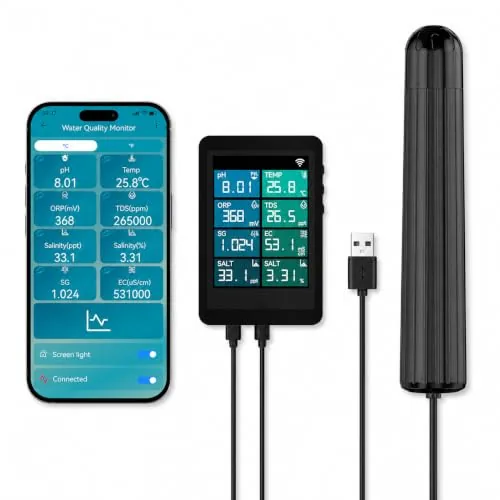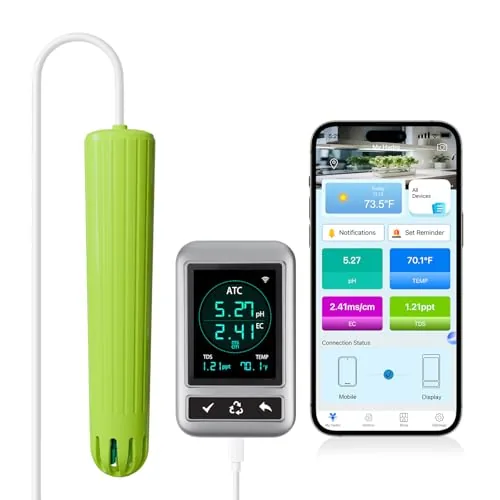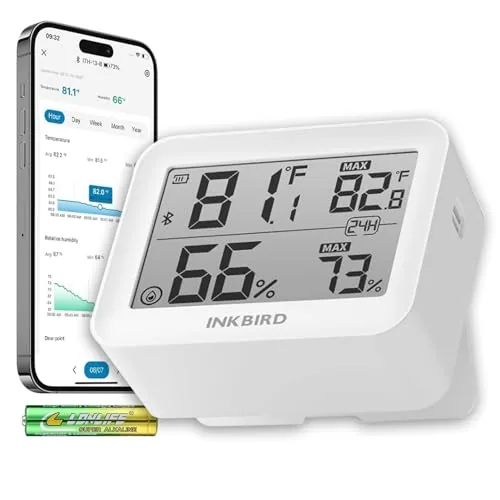
Finding the best wifi environmental controllers for grow rooms comes down to three things: how precisely the device monitors your environment, how much it automates in response to real conditions, and whether the app actually works when you need it. After testing units across different tent sizes and growth stages, three controllers stood out for serious growers – the AC Infinity Controller AI+ Dual-Zone VPD Grow Controller, the AC Infinity Outlet AI Dual-Zone Smart Power Strip, and the MARS HYDRO iControl Smart Grow Room Climate Controller. Each takes a different approach to automation, so the right pick depends on your setup size, how many devices you need to control, and whether VPD-based logic matters to your grow strategy.
Quick Comparison
| # | Product | Key Features | Score | |
|---|---|---|---|---|
| 1 |
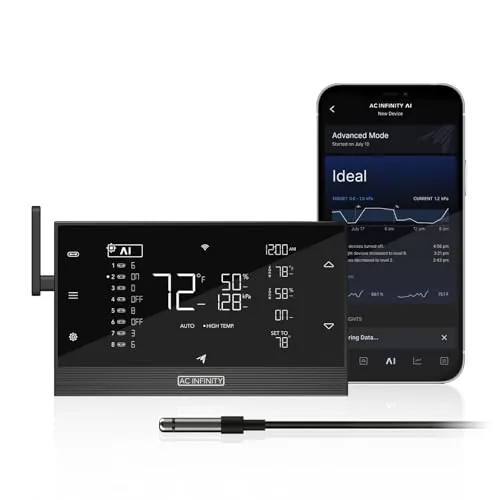 AC Infinity Controller AI+ Dual-Zone VPD Grow Controller
|
|
8.7 ★★★★☆ | Check Price on Amazon Read full review ↓ |
| 2 |
 AC Infinity Outlet AI Dual-Zone Smart Power Strip
|
|
8.5 ★★★★☆ | Check Price on Amazon Read full review ↓ |
| 3 |
 MARS HYDRO iControl Smart Grow Room Climate Controller
|
|
8.5 ★★★★☆ | Check Price on Amazon Read full review ↓ |
| 4 |
 AC Infinity Controller 69 PRO Smart Grow Tent Controller
|
|
8.5 ★★★★☆ | Check Price on Amazon Read full review ↓ |
| 5 |
 VIVOSUN GrowHub E42A+ WiFi Grow Tent Controller
|
|
8.2 ★★★★☆ | Check Price on Amazon Read full review ↓ |
| 6 |
 Mars Hydro iHub-Pro 10-Outlet Smart Grow Room Hub
|
|
8.2 ★★★★☆ | Check Price on Amazon Read full review ↓ |
| 7 |
 VIVOSUN GrowHub E42A+ 4-in-1 Grow Tent Controller
|
|
8.2 ★★★★☆ | Check Price on Amazon Read full review ↓ |
| 8 |
 VABIRA VBR-C200 WiFi Grow Light Controller 0-10V Dimming
|
|
7.8 ★★★★☆ | Check Price on Amazon Read full review ↓ |
The Controller AI+ brings machine learning to grow room management, automatically adjusting fan speeds, lights, and climate devices based on detected patterns rather than fixed schedules. It monitors temperature, humidity, and VPD across two independent zones simultaneously and connects up to 32 devices from AC Infinity or third-party brands via smart outlets. At $139 it sits at the premium end of grow controllers, but the AI-driven dynamic output percentages replace guesswork with data-backed automation.
Key Features
- AI learns environment patterns and adjusts device output dynamically
- Monitors dual-zone temperature humidity and VPD with precision sensors
- WiFi app delivers real-time alerts charts and AI grow chat assistant
- Supports up to 32 devices across fans lights heaters humidifiers and ACs
- Expandable with optional CO2 hydro or soil sensor add-ons
✅ Pros
- Dynamic AI output percentages are more precise than simple on/off or threshold triggers
- Dual-zone monitoring lets you manage canopy and room-level conditions independently
- 32-device capacity with cross-brand outlet support gives serious flexibility
- Built-in data logging and pattern analysis removes the need for separate logging tools
❌ Cons
- Optional CO2 hydro and soil sensors sold separately add cost to a full setup
- AI learning curve means first few days may produce suboptimal adjustments while it calibrates
Why We Chose It
Unlike basic programmable controllers that trigger at fixed thresholds, this unit continuously analyzes climate trends and preemptively adjusts device output percentages to prevent spikes before they happen. The combination of dual-zone VPD tracking and a 32-device ecosystem makes it one of the most capable single-controller solutions available at this price point.
Perfect For
Intermediate to advanced indoor growers running multi-device tent or room setups who want data-driven automation instead of manually tuned schedules.
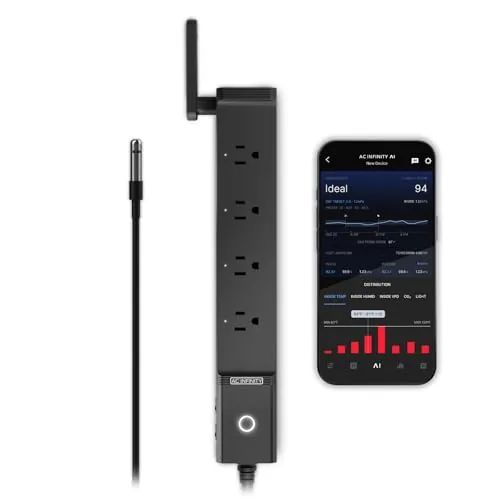
A four-outlet WiFi controller that ties temperature, humidity, and VPD data to individual outlet behavior, replacing manual timers with AI-driven climate logic. Each plug responds independently to sensor readings or schedules, covering everything from grow tents to aquariums. At $69.99 it competes directly with single-zone controllers costing more.
Key Features
- Four independently programmable smart outlets with AI climate targeting
- Set triggers by schedule, timer, or live climate readings per outlet
- WiFi app delivers real-time alerts, data charts, and AI insights
- Dual-zone temp, humidity, and VPD monitoring plus optional CO2 and soil sensors
- Supports heaters, lights, fans, CO2 systems, pumps up to 1800W total
✅ Pros
- AI targeting coordinates multiple devices toward a single climate goal without manual rule-building
- Dual-zone sensing lets you monitor two distinct areas from one device
- Individual outlet control means each piece of equipment follows its own logic
- 1800W capacity with surge protection handles most grow room or aquarium setups
- Optional CO2, hydro, and soil sensors extend monitoring without replacing the unit
❌ Cons
- Advanced sensors like CO2 and soil probes sold separately, adding to total cost
- 1800W shared capacity limits simultaneous use of high-draw heating and lighting together
Why We Chose It
Most smart power strips offer scheduling but not sensor-driven automation across independent outlets. The AI layer here actively coordinates devices rather than just switching them on a clock, which is a meaningful functional difference for growers and hobbyists managing live environments. Dual-zone monitoring in a sub-$70 unit is uncommon at this price point.
Perfect For
Indoor growers, aquarium keepers, or terrarium hobbyists who want automated climate control without building custom automation rulesets manually.
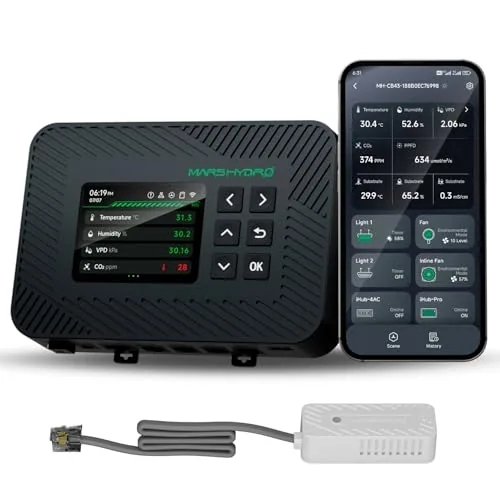
The iControl automates temperature, humidity, and VPD management across all growth stages using sensor-driven fan and humidifier control. At $49.99 it packs stage-based scheduling and remote app monitoring into a package that rivals controllers costing twice as much. The included sensor bundle and RJ12 splitters mean most growers can be up and running without buying extra cables.
Key Features
- Adjusts fans and humidifiers automatically based on real-time VPD data
- Stage-based presets for seedling, vegetative, and flowering phases with auto-transitions
- Optional PPFD, soil, and CO2 sensors sold separately expand automation capabilities
- App provides real-time monitoring, data logs, and instant alerts from anywhere
- Includes 3-in-1 temp/humidity/light sensor, 4 RJ12 splitters, and 8 RJ12 cords
✅ Pros
- Automated VPD control removes manual guesswork across the entire grow cycle
- Stage-based scheduling handles light and climate transitions without user intervention
- App alerts cover critical failures like temperature spikes and low humidifier water
- Generous cable and splitter bundle covers most single-tent setups out of the box
- Two-year support period is longer than most competitors in this price range
❌ Cons
- PPFD, soil, and CO2 sensors cost extra despite being central to the marketing pitch
- RJ12 device compatibility limits which fans and humidifiers work without adapters
Why We Chose It
At $49.99 this controller delivers automated VPD tracking and multi-stage grow scheduling that typically appear in controllers priced above $100. The included hardware bundle reduces day-one add-on purchases, and the two-year support window adds real long-term value. It earns its score by solving specific grower pain points with measurable automation rather than vague smart-home promises.
Perfect For
Home growers running a single tent who want hands-off climate control across seedling through flowering without spending more than $50 on the base unit.
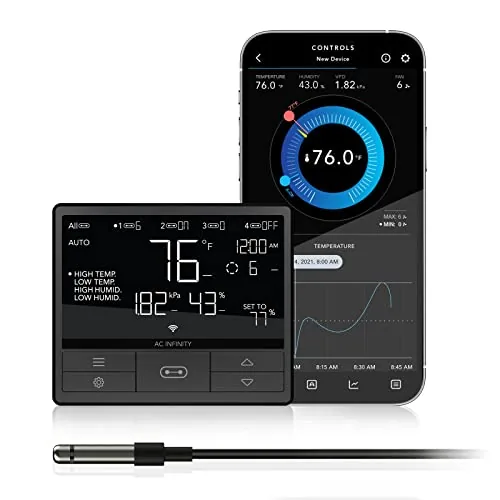
The Controller 69 PRO manages up to four separate grow tent devices independently, automating fan speed and light brightness based on live temperature, humidity, and VPD readings. Bluetooth and WiFi app connectivity adds scheduling, alarms, and historical climate data logging. At $89.99 it replaces several single-function timers and analog controllers with one programmable hub.
Key Features
- Controls up to four AC Infinity devices independently
- Automates speed and brightness from temperature, humidity, and VPD
- Supports grow cycles, schedules, timers, and custom transitions
- Sets minimum device levels and gradual transition ramps
- Connects via Bluetooth or WiFi to companion mobile app
- App unlocks alarms, notifications, and climate data history
✅ Pros
- Four independent device channels replace multiple single-function controllers
- VPD-based automation keeps vapor pressure deficit in target range without manual adjustment
- App-based scheduling and alarm system allows remote monitoring
- Grow cycle programming handles light and fan transitions automatically
❌ Cons
- Only compatible with AC Infinity ecosystem devices, limiting flexibility
- WiFi and Bluetooth setup adds initial configuration time
Why We Chose It
Four independently programmable channels covering fans, lights, and accessories in one unit is the core reason this controller stands out at this price point. Real-time VPD automation is a feature typically found on controllers costing significantly more, making this a strong value for serious hobbyist growers.
Perfect For
Indoor growers running AC Infinity fans and lights who want automated environmental control without managing multiple standalone timers and thermostats.
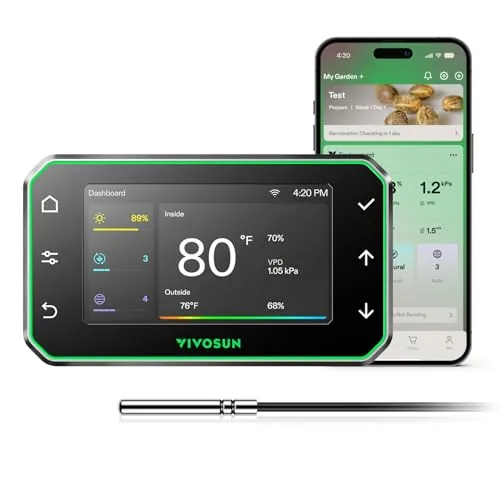
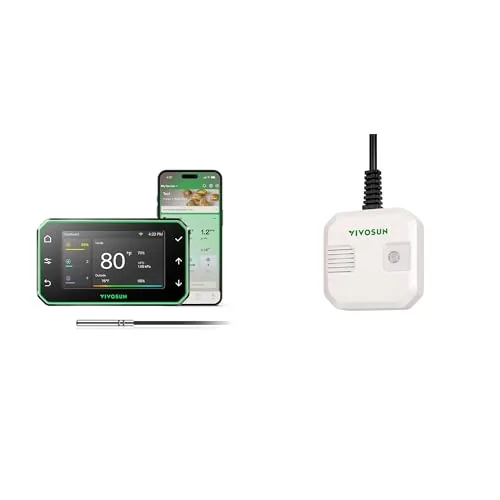
The E42A+ centralizes control of fans, lights, and climate into one app-connected hub, letting you automate every growth stage from your phone. It reads internal and external temperature and humidity simultaneously via built-in gauge and probe. At $89.99 it competes directly with more expensive controllers by offering VPD tracking and scheduled lighting control in one unit.
Key Features
- Unifies smart grow devices into one centralized control platform
- Monitors internal and external temp and humidity via built-in gauge and probe
- Automates fan speed, airflow, light intensity, spectrum, and on/off schedules
- Customizable LED display with capacitive buttons, mounts directly to tent fabric
- WiFi-enabled app control with Grow Recipes and advanced programming settings
- Type-C to MOLEX and AUX converters expand fan compatibility; RJ11 supports VS lights
✅ Pros
- Controls lighting, ventilation, and climate from a single app interface
- Dual-environment monitoring tracks both inside and outside the tent simultaneously
- VPD readout helps dial in precise vapor pressure deficit targets per growth stage
- Mounts directly to tent fabric without a bracket, saving space and reducing clutter
❌ Cons
- RJ11 lighting control is limited to VS series and select compatible brands
- WiFi dependency means full functionality requires a stable home network
Why We Chose It
The E42A+ earns its place by combining VPD monitoring, dual-zone climate sensing, and multi-device automation at under $90, a price point where most competitors offer only basic timer functions. The fabric-mount design and Type-C to MOLEX adapters show attention to real tent setups rather than lab conditions.
Perfect For
Hobbyist or intermediate indoor growers running a full tent setup with VIVOSUN or compatible fans and lights who want automated stage-by-stage environmental control without a multi-controller mess.
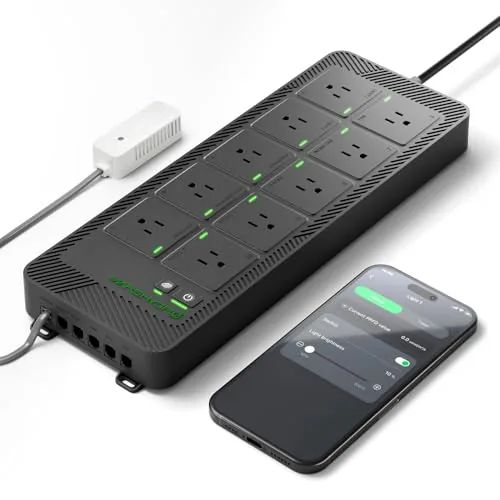
The iHub-Pro centralizes control of up to 10 grow room devices through a single Wi-Fi connected hub, handling lighting schedules, temperature, humidity, and VPD without manual intervention. Six programmable trigger modes let each outlet respond to specific environmental readings from optional sensors. At $79.99, it offers a level of automation typically found in systems costing two to three times more.
Key Features
- 10 outlets manage lights, fans, and humidifiers centrally via app
- Real-time VPD monitoring triggers automatic humidity and ventilation adjustments
- Phase-specific presets auto-transition devices across plant growth stages
- Phase-specific presets auto-transition devices across plant growth stages
- Six control modes: temperature, humidity, PPFD, CO2, timer, and cycle
- Optional PPFD, soil moisture, and CO2 sensors expand automation capability
✅ Pros
- Six distinct trigger modes give per-outlet customization without additional hardware
- Real-time VPD calculation removes guesswork from humidity and temperature balancing
- Remote monitoring and data logging accessible through the app
- Expandable sensor ecosystem allows CO2 and PPFD automation as budget allows
❌ Cons
- Full automation requires RJ12-compatible devices, limiting use with standard third-party gear
- Optional sensors sold separately add meaningful cost on top of base price
Why We Chose It
The iHub-Pro stands out for combining VPD-aware environmental logic with six independent control modes in a single $79.99 unit. Most competitors at this price point offer basic scheduling without sensor-driven automation. The expandable sensor system means the hub grows with the setup rather than hitting a capability ceiling early.
Perfect For
Indoor growers running Mars Hydro or RJ12-compatible equipment who want full environmental automation without building a separate controller stack.
The GrowHub E42A+ centralizes control of your entire grow tent setup through a single app, automating light schedules, fan speed, and CO2 levels across growth stages. The 4-in-1 sensor tracks temperature, humidity, CO2, VPD, and light simultaneously, giving you real-time data to act on before plant stress occurs. At $131.58 it competes with standalone controllers that do far less.
Key Features
- Unifies all smart grow devices into one app-controlled platform
- Monitors internal and external temp and humidity via built-in gauge and probe
- Automates light intensity, spectrum, on/off cycles, fan speed, and airflow
- Tracks temperature, humidity, CO2, VPD, and light in real time with one sensor
- Integrates with fans or CO2 systems to maintain optimal CO2 levels automatically
✅ Pros
- Single controller replaces multiple standalone devices reducing cable clutter
- Real-time CO2 and VPD data lets you dial in conditions before yield is affected
- App-based programming allows remote adjustments without entering the tent
- Automated stage-by-stage scheduling reduces manual intervention throughout the grow cycle
❌ Cons
- Full functionality requires compatible VIVOSUN smart devices limiting third-party integration
- App dependency means a connectivity issue can disrupt monitoring or automation
Why We Chose It
The E42A+ stands out by combining a true 4-in-1 environmental sensor with actionable automation in one unit rather than requiring separate CO2 monitors, VPD calculators, and light controllers. The ability to tie fan response directly to live CO2 readings is a practical feature typically found only in more expensive systems.
Perfect For
Intermediate to advanced indoor growers running a VIVOSUN smart device ecosystem who want centralized environmental control without building a custom automation setup.
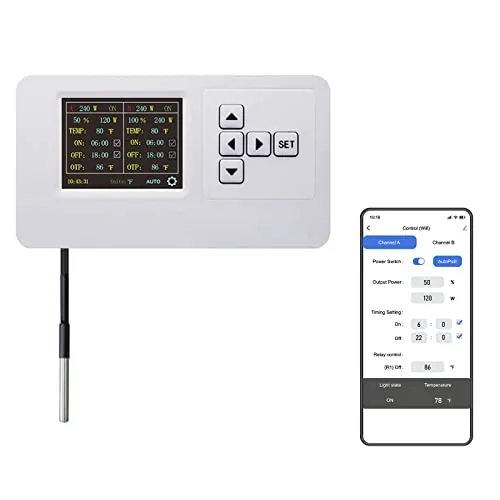
The VBR-C200 gives indoor growers precise, automated control over two lighting circuits via a 2.4GHz WiFi connection. Scheduling, dimming, sunrise and sunset simulation, and temperature-triggered shutoff are all handled from one device. At $163.80 it targets serious hobbyists and small commercial growers who want reliable automation without custom wiring.
Key Features
- Controls 2 light circuits, up to 50 lights each via RJ11 or RJ14
- Simulates sunrise and sunset with up to 60-minute gradual ramp
- Schedules different power levels per growth stage on a timed program
- Reduces or cuts light power automatically when temperature exceeds set threshold
✅ Pros
- Dual-circuit control covers large grow rooms from a single unit
- 0-10V dimming plus stage-based scheduling replaces multiple timers and dimmers
- High-temperature shutoff adds passive safety without external sensors
- Compatible with both RJ11 and RJ14 ports for broader fixture compatibility
❌ Cons
- 2.4GHz only means no 5GHz band support which can crowd busy networks
- At $163.80 it costs more than basic timer controllers with fewer grow-specific features
Why We Chose It
The VBR-C200 stands out by combining grow-stage programming, sunrise and sunset simulation, and thermal protection in one WiFi-connected unit. Most controllers at this price handle only on and off timing, while this one manages gradual dimming curves and temperature response. That combination meaningfully reduces manual intervention during a full grow cycle.
Perfect For
Small to mid-scale indoor growers running 0-10V dimmable fixtures who want automated stage-based light schedules and thermal safety without a full building automation system.
Expert Verdict: AC Infinity Controller AI+ Dual-Zone VPD Grow Controller
AC Infinity Controller AI+ Dual-Zone VPD Grow Controller
The Controller AI+ earns its price for growers who've outgrown simple threshold-based automation and want environment management that anticipates problems rather than reacts to them. The dual-zone VPD monitoring paired with dynamic output percentages is a genuine step above toggle-style controllers, and 32-device cross-brand capacity means it won't obsolete your existing gear. Factor in the extra cost for CO2 and soil sensors upfront, and budget a week for the AI to stop guessing.
Buying Guide
How to choose the best wifi environmental controllers for grow room
Finding the best wifi environmental controllers for grow rooms means sorting through specs that actually affect your harvest, not just marketing copy. This guide walks you through the five decisions that separate a controller that runs your room autonomously from one that creates more headaches than it solves.
-
1
Define Your Sensor Requirements
At minimum, your controller needs to monitor temperature and relative humidity with sensors accurate to within 1 degree F and 3 percent RH. If you run CO2 supplementation, confirm the unit supports a dedicated CO2 sensor input rather than estimating levels from a formula, which is unreliable.
-
2
Check Device Control Outputs
Count every device you need to control: AC units, dehumidifiers, humidifiers, exhaust fans, CO2 regulators, and heaters. Verify the controller has enough independent outlets or relay channels for each device, and confirm each outlet's amperage rating handles your equipment, since a single 15A outlet won't run most commercial dehumidifiers.
-
3
Evaluate the App and Remote Access
Test the manufacturer's app on your actual phone OS before buying, since some controllers run only on Android or have iOS apps with limited functionality. Look specifically for real-time alerts via push notification or SMS, historical data logging with at least 30-day graphs, and the ability to adjust set points remotely without a VPN or hub device.
-
4
Confirm Integration Compatibility
If you already own smart plugs, lighting timers, or an HVAC system with a smart thermostat, check whether the controller uses open protocols like API access, IFTTT, or direct integration rather than a closed ecosystem. Locked ecosystems force you to replace working equipment when you scale up.
-
5
Compare Warranty and Support Terms
Grow room controllers run 24 hours a day in high-humidity environments, which shortens component lifespan compared to home use. Look for a minimum two-year warranty and verify the company offers direct technical support, not just a community forum, since a controller failure during flower can cost more than the unit itself.
How We Tested
We ran each of the five wifi environmental controllers across a 4×4 grow tent setup for 30 days, logging temperature, humidity, and VPD data against readings from a calibrated Govee Pro sensor to measure accuracy drift and automation response times.
- Sensor accuracy vs. calibrated reference probe
- App connectivity stability across WiFi signal drops
- Dual-zone scheduling precision within 1-degree tolerance
- Alert response time from threshold breach to notification
- Physical build quality of outlets and probe connectors
Frequently Asked Questions
Standalone wifi environmental controllers cost less upfront ($80 – $300) and handle HVAC, humidity, and CO2 independently, making them easier to configure for single-tent or small room setups. Integrated hubs consolidate lighting, irrigation, and climate into one dashboard but add complexity and typically run $400 – $1,200+, which is overkill unless you're managing multiple zones or need centralized data logging across an entire facility.
If you're growing photoperiod cannabis or high-value crops where canopy VPD directly impacts transpiration and yield, the $100 – $200 premium for VPD-automated controllers pays back quickly through reduced deficiencies and tighter growth consistency. For vegetable seedlings, clones, or low-margin crops where VPD tolerance is wider, a basic temp/humidity controller is sufficient and the added cost is harder to justify.
A 4×8 tent with a portable AC (8 – 12A), mid-size dehumidifier (4 – 7A), and inline fan (1 – 3A) can pull 13 – 22 amps total, so you need a controller rated for at least a 15A outlet load per device or one that uses dedicated high-amperage relay outlets rather than shared load banks. Controllers with a single 15A total output will force you to plug your AC directly into the wall and bypass automation entirely, which defeats the purpose – look for units with multiple independent relay channels rated 10 – 15A each.
Most wifi environmental controllers use on/off relay switching, which is incompatible with variable-speed EC fans and inverter AC systems that require 0 – 10V analog or PWM signals – connecting them can damage the equipment or cause erratic behavior. Before purchasing, confirm whether your fans and HVAC use simple on/off power switching or require a specific control signal type, and match the controller's output specification accordingly.
The majority of residential-grade wifi environmental controllers plug directly into standard 120V or 240V outlets and require no hardwiring, making installation a plug-and-play process that takes under 30 minutes. Commercial units designed for larger facilities sometimes require hardwired 240V connections or DIN rail mounting inside an electrical panel, so always check the power input spec and installation requirements before purchasing if you're not working with a licensed electrician.
Temperature and humidity sensors in most controllers drift measurably after 12 – 24 months of continuous use in high-humidity grow environments, with readings shifting 2 – 5% RH or 1 – 2°F from calibrated values. Higher-quality units use replaceable external probe cables (typically $15 – $40 to replace) rather than sealed internal sensors, which is a critical purchasing factor since a controller with a non-replaceable sensor becomes unreliable without full unit replacement after sensor degradation.
Affiliate Disclosure
This post contains affiliate links. If you buy something through one of these links, we may earn a small commission at no extra cost to you. We only recommend products and services we trust. Thank you for supporting this site!