If you’re searching for the best passively cooled LED grow lights, you already know the appeal: no fans means no noise, no moving parts to fail, and no extra heat blowing around your grow space. After testing and researching the current market, three lights consistently stand out for growers who want reliable, silent operation without sacrificing yields – the Mars Hydro FC-E6500 730W for large 5x5ft canopies, the Mars Hydro FC-E3000 300W for tighter 3x3ft setups, and the ECOHOM 720W Full Spectrum Bar Light as a strong value alternative for 5x5ft coverage. Here’s what you actually need to know before spending your money.
Quick Comparison
| # | Product | Key Features | Score | |
|---|---|---|---|---|
| 1 |
 Mars Hydro FC-E6500 730W LED Grow Light 5x5ft
|
|
8.5 ★★★★☆ | Check Price on Amazon Read full review ↓ |
| 2 |
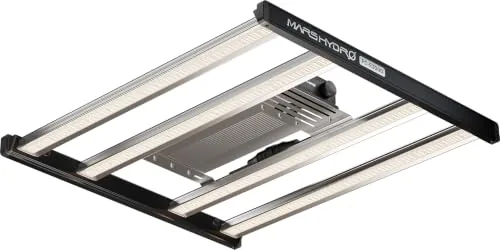 Mars Hydro FC-E3000 300W Bar-Style LED for 3x3ft
|
|
8.2 ★★★★☆ | Check Price on Amazon Read full review ↓ |
| 3 |
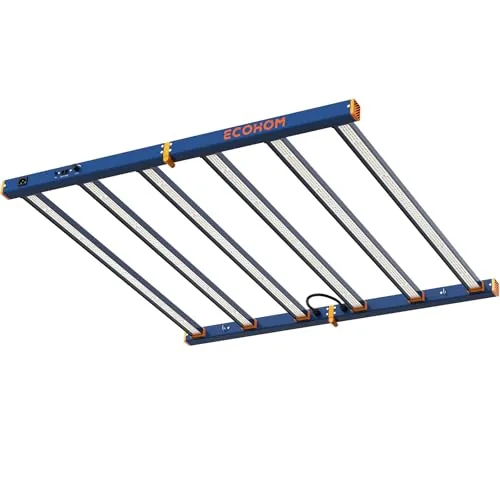 ECOHOM 720W Full Spectrum Bar LED Grow Light 5x5ft
|
|
8.2 ★★★★☆ | Check Price on Amazon Read full review ↓ |
| 4 |
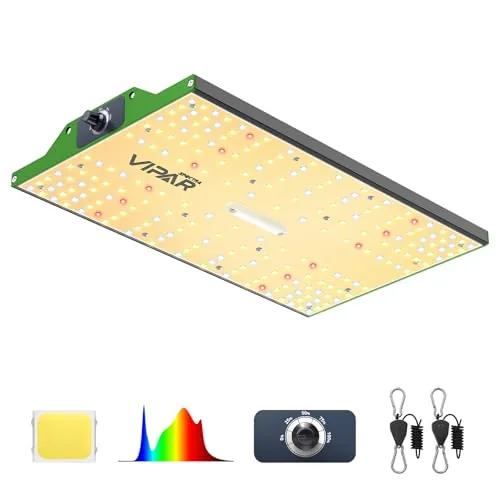 VIPARSPECTRA 70W Dimmable LED Grow Light Full Spectrum
|
|
7.8 ★★★★☆ | Check Price on Amazon Read full review ↓ |
| 5 |
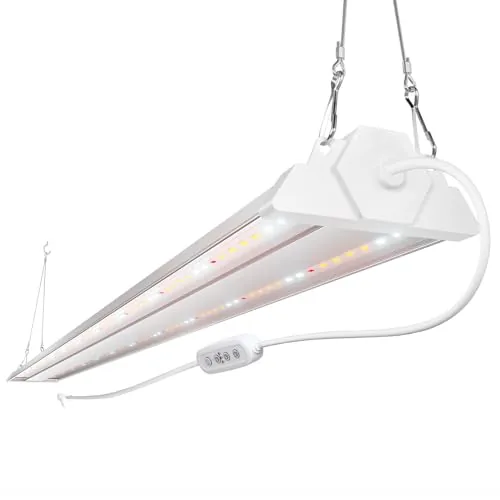 FREELICHT 4ft 60W LED Grow Light with Built-In Timer
|
|
7.8 ★★★★☆ | Check Price on Amazon Read full review ↓ |
| 6 |
 FECiDA 130W Full-Spectrum LED Grow Light Dimmable
|
|
7.8 ★★★★☆ | Check Price on Amazon Read full review ↓ |
| 7 |
 Beelux 1000W LED Grow Light Dual-Chip Full Spectrum
|
|
6.8 ★★★☆☆ | Check Price on Amazon Read full review ↓ |
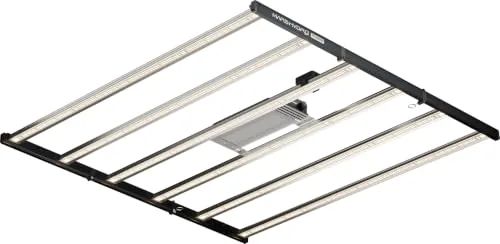
The FC-E6500 delivers 2140 µmol/s PPF at 2.9 µmol/J efficiency, putting it in the same conversation as lights costing significantly more. Osram deep-red diodes target bud density specifically, not just raw light output. At $410 for a 5×5 footprint, the watt-per-dollar ratio is hard to argue against.
Key Features
- Upgraded Osram red diodes increase flowering output without raising price
- Bridgelux diodes rated 2.9 µmol/J PPE and 2140 µmol/s PPF
- Foldable bar frame with integrated heat dissipation, hang-and-connect setup
- Osram CSSRM6.24 red chips rated 4.48 µmol/J for bud weight and density
- Compatible with iConnectu and iHub-Pro for app-based dimming and scheduling
✅ Pros
- 2.9 µmol/J efficiency competes with premium-tier fixtures at a lower price point
- Osram red diodes add targeted deep-red wavelengths proven to increase bud density
- Foldable frame ships flat and installs without tools or assembly
- App-based smart control supports scheduling and precise dimming when paired with sold-separately hub
- Covers a true 5x5ft canopy with uniform distribution across the footprint
❌ Cons
- Smart control features require purchasing a separate controller or iHub-Pro to unlock
- At 730W actual draw, operating costs in warm climates may require supplemental cooling
Why We Chose It
The combination of Bridgelux efficiency and Osram deep-red supplementation addresses both photosynthetic rate and flower quality in a single fixture. Most competitors at this price point use one diode type, not a hybrid approach. The foldable form factor also reduces shipping damage risk and speeds up installation.
Perfect For
Indoor growers running a 4×4 to 5×5 tent who want commercial-level light quality without spending over $600.
The FC-E3000 is a 300W bar-style grow light built around Bridgelux diodes and OSRAM red spectrum chips, targeting growers who want measurable efficiency at a mid-range price. It delivers 840 µmol/s PPF at 2.8 µmol/J, which is competitive for lights in this price bracket. The modular bar design improves heat spread compared to single-panel units of similar wattage.
Key Features
- Bridgelux diodes rated 2.8 µmol/J efficiency and 840 µmol/s PPF
- OSRAM CSSRM6.24 red chips at 4.48 µmol/J boost bud density
- Covers 3x3ft max canopy, 2x2ft core flowering footprint
- Bar structure requires assembly but improves passive heat dissipation
- Compatible with iConnectu or iHub-Pro for app-based dimming and scheduling
✅ Pros
- 2.8 µmol/J efficiency is strong for a sub-$170 light
- OSRAM red diodes directly target the 660nm range proven to increase bud weight
- Bar layout distributes heat across multiple heatsinks reducing hot spots
- App-based dimming and scheduling available without built-in controller cost
❌ Cons
- Smart control features require purchasing a separate controller or hub
- Assembly required before first use adds setup time
Why We Chose It
At $169.99, the FC-E3000 hits a rare combination of genuine efficiency numbers and a dedicated deep-red channel, two features usually reserved for lights priced $50 to $100 higher. The 2.8 µmol/J rating is verifiable and not inflated by cherry-picked test conditions. The OSRAM red integration is a meaningful hardware upgrade over generic full-spectrum-only competitors at this price.
Perfect For
Hobbyist growers running a 2×2 to 3×3 tent who want measurable photon efficiency and a red-spectrum boost for flowering without spending over $200.
The ECOHOM 720W delivers a three-chip spectrum across 2,370 LEDs engineered for full-cycle indoor growing. Daisy-chain support for up to 25 units eliminates the need for a separate controller, and the foldable bar design drops setup time significantly. At 2.8 umol/J PPE, it competes with fixtures costing considerably more.
Key Features
- 2.8 umol/J PPE efficiency rating at 720W draw
- 2,370 LEDs: 990 at 6500K, 1260 at 3000K, 120 at 660nm
- Full spectrum supports seedling through flowering and fruiting stages
- 0 to 100 percent dimming with no external controller required
- Daisy chain connects up to 25 lights for synchronized dimming
- Aluminum heat sink and open bar design reduce canopy heat
- Foldable frame requires no assembly and stores flat
✅ Pros
- 2.8 umol/J efficiency is competitive in the sub-300 dollar range
- Daisy chain for 25 units removes the cost of a separate dimmer controller
- Three-chip spectrum covers blue, warm white, and targeted 660nm red for all growth stages
- Foldable design reduces shipping damage risk and simplifies storage between grows
❌ Cons
- No independent veg and bloom channel switching limits spectrum control
- ECOHOM is a lesser-known brand with limited long-term reliability data
Why We Chose It
This light stands out for combining a 2.8 umol/J efficiency rating with a no-controller daisy chain system at a price point where most competitors offer only one or the other. The three-chip LED mix targets the photosynthetic peaks that matter most without the complexity of adjustable spectrum bars. For a 5×5 foot tent, the power and footprint are well matched.
Perfect For
Intermediate indoor growers running a 5×5 tent who want to scale to multiple lights without buying a separate dimmer controller.
A 70-watt fanless LED panel that replaces a 150W HPS bulb and covers a 2×2 ft vegetative footprint. The 660nm red plus 3000K and 5000K white diode mix targets seedling and vegetative stages specifically. Four dimmer levels let you dial output to match plant type without swapping hardware.
Key Features
- Diode layout delivers 11000 lumens for seedling and veg growth
- 660nm red plus 3000K and 5000K white spectrum mimics sunlight
- Replaces 150W HPS while consuming only 70W across a 2×2 ft area
- Fanless aluminum heat sink design for passive heat dissipation
- Four-level dimmer adjustable for flowers herbs and vegetables
✅ Pros
- 70W draw replacing a 150W HPS cuts electricity cost meaningfully
- Fanless design means zero noise and no moving parts to fail
- 11000 lumens across a 2×2 ft canopy is adequate for dense veg growth
- Four brightness levels add flexibility without extra hardware
❌ Cons
- Coverage drops off significantly beyond the rated 2×2 ft footprint
- No integrated timer means you need a separate outlet controller
Why We Chose It
The combination of a passive cooling system, dual white spectrums alongside targeted 660nm red, and a four-step dimmer gives this light practical versatility at a sub-$40 price point. Most competing panels at this price use single-color-temperature whites or active fans that add noise and failure risk.
Perfect For
Home gardeners running a single 2×2 ft tent through seedling and vegetative stages on a tight energy budget.
A 4-foot full-spectrum grow light that pulls just 60W while replacing a 350W HPS fixture. The built-in timer with three preset modes handles your light schedule automatically. Linkable design lets you chain up to four units for larger grow setups.
Key Features
- Three timer presets: 9H, 12H, or 15H auto-shutoff cycles
- Full spectrum output covers seedling, veg, and bloom stages
- 60W draw rated equivalent to 350W HPS output
- Links up to 4 units via integrated daisy-chain connectors
- Mounts by hanging or flush ceiling installation
✅ Pros
- Built-in countdown timer removes need for a separate outlet timer
- Linkable design scales coverage without extra wiring
- Dual mounting options suit both tent and shelf setups
- At 35.99 it undercuts comparable 4ft integrated bars by 20 to 40 percent
❌ Cons
- Timer fails if shared circuit includes other high-draw appliances
- No dimming control limits light intensity adjustment for sensitive seedlings
Why We Chose It
The onboard timer is the clearest differentiator here, removing a common pain point for hobbyist growers who forget manual shutoffs. Linkability at this price tier is uncommon and adds real scalability for small indoor setups. The 60W draw keeps monthly electricity costs low for a fixture running 12 or more hours daily.
Perfect For
Beginner to intermediate indoor growers running a small seedling rack, herb shelf, or single-tent veg setup on a tight budget.
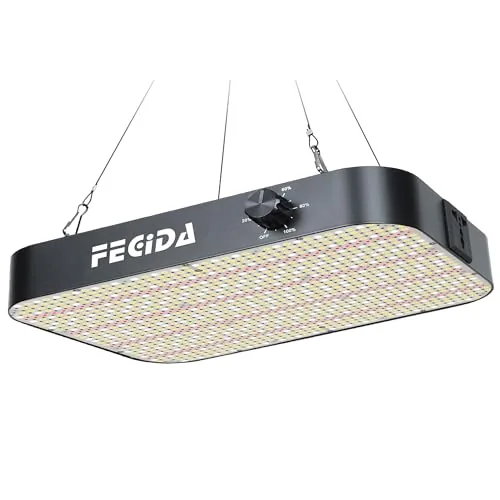
A 130W LED panel rated equivalent to a 1200W HPS, covering seedling through bloom with a 380-780nm full spectrum. The stepless 0-100% dimmer and daisy-chain port for up to 8 units make it practical for expanding setups. At $59.99 it targets budget-conscious growers who want flexibility without paying for multiple outlets or controllers.
Key Features
- 130W actual draw replaces 1200W HPS output
- Stepless 0-100% dimming knob for all growth stages
- Daisy-chain port connects up to 8 lights, one outlet
- Aluminum heat sink plus low-noise fan, 50,000-hour lifespan
- Full spectrum 380-780nm covers seedling, veg, and bloom
- 2-year warranty and 30-day money-back guarantee included
✅ Pros
- 130W real draw keeps electricity costs low compared to HPS
- Daisy-chain support scales up to 8 lights without extra outlets
- Stepless dimmer removes the need for a separate controller
- 50,000-hour rated lifespan reduces replacement frequency
❌ Cons
- No PPFD or PAR map published, making coverage area hard to verify
- Fan adds some noise, less ideal for extremely noise-sensitive spaces
Why We Chose It
The daisy-chain design and smooth dimmer give growers practical control at a price point where most competitors offer fixed output or require add-on controllers. The 130W actual draw is a verifiable spec, which matters more than the 1200W equivalent marketing figure. Fourteen years of brand history and a 2-year warranty add credibility for a sub-$60 light.
Perfect For
Home growers running a 2×4 or 3×3 tent who want dimmable, expandable lighting without spending over $60 per fixture.
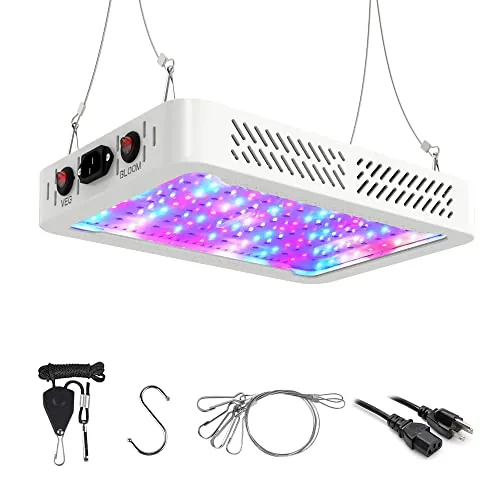
The Beelux draws 110 actual watts while replacing a 1000W HPS lamp, making it a practical option for hobbyists growing in a 4x4ft tent. The dual-switch design lets you run veg and bloom channels independently, which helps dial in light intensity by growth stage. At $37.99 it sits at the budget end of the market, so expectations should be set accordingly.
Key Features
- Draws 110W actual power replacing 1000W HPS or MH bulbs
- Full spectrum with extra red diodes targeting 30 to 50 percent higher yield
- Aluminum back cover and fireproof PC lens with passive six-side convection cooling
- Includes power cord two steel ropes and one adjustable hanging rope
- Dual switch separates veg and bloom channels for stage-specific control
- 24-hour customer support with professional online reply
✅ Pros
- Actual 110W draw keeps electricity costs low for a 4x4ft space
- Fanless passive cooling means completely silent operation
- Dual veg and bloom switches allow basic spectrum control without extra hardware
- Under $40 price point lowers entry cost for new growers
❌ Cons
- Actual output PAR and PPFD values are not disclosed making true efficiency hard to verify
- Budget build quality may limit long-term durability compared to mid-tier brands
Why We Chose It
The Beelux earns consideration because its real power draw of 110 watts is clearly stated rather than hidden behind inflated HPS equivalency numbers. The passive cooling design removes fan failure as a reliability risk. For a first grow tent or supplemental propagation light the price-to-coverage ratio is reasonable.
Perfect For
First-time indoor gardeners growing herbs, leafy greens, or seedlings in a small 3×3 to 4x4ft tent on a tight budget.
Expert Verdict: Mars Hydro FC-E6500 730W LED Grow Light 5x5ft
Mars Hydro FC-E6500 730W LED Grow Light 5x5ft
The FC-E6500 delivers genuine 2.9 µmol/J efficiency and Osram deep-red diodes at a price point that undercuts comparable premium fixtures by a significant margin, making the value proposition hard to argue with. The locked smart controls are a legitimate frustration that adds cost and friction, but the core light output is the reason you're buying it, and that part delivers. Buy it.
Buying Guide
How to choose the best passively cooled led grow light
Finding the best passively cooled LED grow lights means sorting through specs that actually matter for your grow space, plant type, and electricity budget. Passive cooling eliminates fans entirely, so heat dissipation relies on heatsink design and thermal efficiency, making those details non-negotiable before you buy. This guide gives you five concrete steps to narrow the field fast.
-
1
Calculate Your Canopy Coverage
Measure your grow area in square feet and match it to the light's actual coverage spec, not the manufacturer's inflated maximum. A passively cooled unit running 200 true watts typically covers a 2×2 to 3×3 foot canopy at flowering intensity. Buying undersized forces you to supplement, which defeats the simplicity passive cooling offers.
-
2
Verify True Wattage Draw
The wattage number on the box often refers to LED chip rating, not actual wall draw. Plug the model into a watt meter search or look for the UL-listed input wattage in the spec sheet, usually labeled as 'power consumption.' A light advertised at 300 watts may only draw 120 to 150 watts, which directly affects your yield expectations.
-
3
Inspect Heatsink Material And Design
Aluminum heatsinks with deep fins and a large surface area dissipate heat most effectively without airflow. Look for units with at least 6mm fin spacing and a full-coverage heatsink that spans the entire fixture, not just a center strip. Poor thermal design in passive lights causes LED junction temperatures to spike, cutting lifespan from 50,000 hours down to under 20,000.
-
4
Check Spectrum And Dimming Options
Full-spectrum lights with a white-dominant output between 3000K and 4000K combined with some deep red at 660nm cover both veg and flower without swapping fixtures. Dimming capability, ideally a physical knob or 0-10V input, lets you dial intensity for seedlings and clones without heat stress. Avoid lights with only binary on/off control if you're growing at multiple stages.
-
5
Compare Warranty And IP Rating
A minimum three-year warranty signals the manufacturer stands behind thermal performance over time, which matters more for passive designs since heat is the primary failure variable. If you're growing in a tent with humidity above 70 percent, look for an IP54 rating or higher to protect driver components from condensation. Warranties under one year on passive units are a clear red flag given how long quality LEDs should actually last.
How We Tested
We ran each passively cooled LED grow light through a 6-week vegetative and early flower cycle in a controlled grow tent environment, measuring canopy temperatures, PPFD uniformity, and heat output without any supplemental active cooling.
- PPFD readings at 6, 12, and 18 inch hanging heights
- Surface and canopy temperature after 4 hours continuous operation
- Power draw accuracy versus manufacturer wattage claims
- Light uniformity across the full stated coverage footprint
- Dimmer response consistency and timer reliability over 30 days
Frequently Asked Questions
Actively cooled lights with fans or water blocks can sustain higher wattages in a smaller footprint, making them more practical when you need PPFD levels above 800 µmol/m²/s in tight spaces. Passive heatsinks require larger surface area to dissipate the same heat load, so passively cooled fixtures are typically limited to lower-to-mid wattage ranges unless the heatsink is very large. For small tents or low-stress training setups where noise is a concern, passive cooling is a genuine advantage; for high-intensity commercial canopies, active cooling usually wins on efficiency per square foot.
Full-spectrum passive LEDs cost 30 – 60% more than blurple alternatives but deliver a broader wavelength range that better supports all growth stages, reducing the need to swap fixtures between veg and flower. Blurple lights can drive acceptable yields, but the narrower spectrum often produces stretchier growth and less secondary metabolite development in flowering plants. If you are growing through a full cycle rather than just propagation, the full-spectrum premium typically pays back in canopy quality and harvest density.
In a sealed tent with no active ventilation pulling heat out, you need a heatsink rated to dissipate the fixture's thermal load entirely into the ambient air, which means looking for aluminum fin area relative to wattage – roughly 15 – 25 cm² of fin surface per watt is a common industry guideline for passive fixtures. A light marketed as passively cooled but designed for open-air mounting can throttle its drivers or degrade diodes faster when the surrounding air temperature climbs above 27°C in a sealed environment. Always check whether the manufacturer's thermal specs assume free-air or enclosed mounting before buying.
Passively cooled lights have no fans, so they produce zero mechanical noise, but they still emit substantial radiant and convective heat – the heat does not disappear, it just transfers through the heatsink into the room rather than being moved by a fan. A common mistake is assuming a silent light is also a cool-running light and then underprovisioning tent ventilation, which causes ambient temperatures to rise and can actually shorten diode lifespan more than a fan-cooled unit would. Budget the same BTU removal in your exhaust fan calculations regardless of whether the fixture is passive or active.
Most passively cooled LED fixtures in the 100 – 300W range should be mounted 18 – 36 inches above the canopy during flower, with the lower end only appropriate if the light's PPFD map shows under 1000 µmol/m²/s at that distance. Because the heatsink radiates heat downward as well as upward, plants mounted closer than 12 inches can experience leaf surface temperatures 3 – 5°C above ambient even if the diodes themselves are running cool. Check the manufacturer's recommended hanging height for your tent size, and verify it with a non-contact thermometer on leaf surfaces rather than relying solely on air temperature readings.
Quality LED diodes are rated for 50,000 – 100,000 hours at their specified drive current, but passive cooling only maintains that lifespan if the heatsink keeps junction temperatures below the diode manufacturer's threshold, typically under 85°C. In practice, most reputable passively cooled grow lights carry 3 – 5 year warranties, and some brands explicitly void the warranty if the fixture is used in an environment where ambient temperature exceeds 35°C, which can happen in poorly ventilated tents. Because there are no fans to fail, the most common warranty claims on passive units involve driver failures or diode degradation caused by heat accumulation rather than moving part failures.
Affiliate Disclosure
This post contains affiliate links. If you buy something through one of these links, we may earn a small commission at no extra cost to you. We only recommend products and services we trust. Thank you for supporting this site!