Finding the best top feed drip hydroponic kits gets complicated fast – emitter count, pump wattage, and app connectivity all affect whether your system actually keeps up with your plants’ needs or leaves you babysitting nutrient schedules manually. After hands-on testing, three VIVOSUN kits stood out across different grow sizes and automation preferences: the A10 GrowHub App-Controlled Drip Irrigation Kit, the FlexFeed 4W with 4 emitters, and the 15W Auto Drip Kit with 8 emitters. Here’s what separates them and which one fits your setup.
Quick Comparison
| # | Product | Key Features | Score | |
|---|---|---|---|---|
| 1 |
 VIVOSUN A10 GrowHub App-Controlled Drip Irrigation Kit
|
|
8.2 ★★★★☆ | Check Price on Amazon Read full review ↓ |
| 2 |
 VIVOSUN FlexFeed 4W Drip Kit App-Controlled 4 Emitters
|
|
7.8 ★★★★☆ | Check Price on Amazon Read full review ↓ |
| 3 |
 VIVOSUN 15W Auto Drip Irrigation Kit 8-Emitter
|
|
7.8 ★★★★☆ | Check Price on Amazon Read full review ↓ |
| 4 |
 VIVOSUN 4-Bucket DWC System with Top Drip Kit
|
|
7.8 ★★★★☆ | Check Price on Amazon Read full review ↓ |
| 5 |
 VEVOR DWC 5-Gallon Hydroponic System with Top Drip Kit
|
|
7.8 ★★★★☆ | Check Price on Amazon Read full review ↓ |
| 6 |
 Atwater HydroPod DWC and Recirculating Drip Lid Assembly
|
|
7.5 ★★★★☆ | Check Price on Amazon Read full review ↓ |
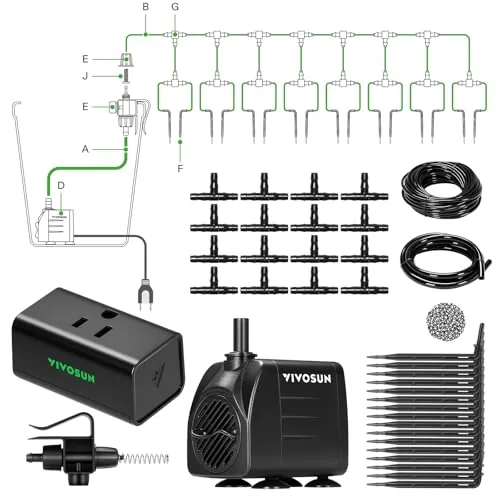
A 16-emitter drip system that pairs a 15W pump with smartphone scheduling via the VIVOSUN A10 GrowHub. It runs at 30 to 40 dB and pushes up to 1000 liters per hour through 4mm drippers. Anti-siphon protection and a built-in filter reduce flooding risk and clog-related maintenance.
Key Features
- Delivers water directly to roots across up to 16 pots simultaneously
- 16 drip emitters with flexible tubing fit varied pot layouts and distances
- 4mm drippers increase flow 30 percent; 15W pump outputs up to 1000 L/H
- App control via A10 GrowHub supports schedules, Cycle Mode, and Recipe Mode
- Anti-siphon connector blocks backflow; filter cotton stops debris and prevents clogs
✅ Pros
- App scheduling covers vacations and work absences without manual intervention
- 1000 L/H pump capacity handles 16 plants without pressure drop
- 4mm dripper upgrade meaningfully cuts watering cycle time
- Runs at 30 to 40 dB, quiet enough for bedroom or living room use
❌ Cons
- Requires VIVOSUN A10 GrowHub hub to unlock app features, adding ecosystem lock-in
- Filter cotton needs periodic inspection to maintain clog-free performance
Why We Chose It
The A10 GrowHub integration sets this apart from basic timer-based drip kits by enabling granular daily scheduling and cycle automation from a phone. The 4mm dripper upgrade and anti-siphon connector address two common failure points in budget irrigation systems. At $44.99 it delivers app control and 16-plant capacity at a price most competitors reserve for dumber hardware.
Perfect For
Indoor gardeners managing 5 to 16 potted plants who travel regularly and need reliable automated watering without hiring a plant sitter.
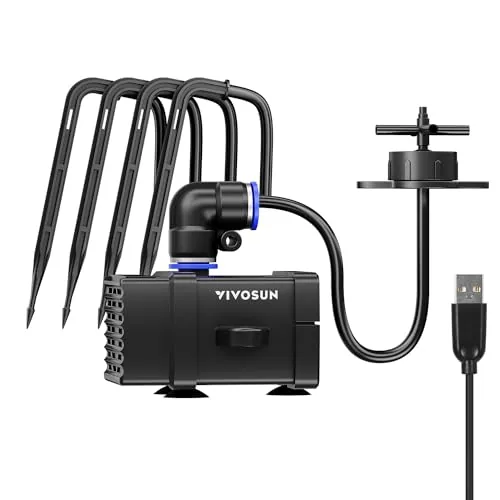
A compact automated drip system built specifically for the VGrow Smart Grow Box, offering app-based scheduling of watering time, frequency, and flow rate. At $19.99 it brings pump, splitter, and four emitters in one package. It also runs standalone on any 5V 1A USB adapter for manual control.
Key Features
- App or manual control over watering time, frequency, and flow rate
- 42 GPH pump runs quietly with targeted emitters cutting water waste
- Straightforward installation with flexible light-blocking leak-resistant tubing
- Premium materials rated for rock wool, clay pebbles, perlite, and coco coir
- Compatible with grow mediums common in hydroponic and soilless setups
✅ Pros
- App scheduling removes guesswork from watering cycles
- 42 GPH flow rate is strong for a 4W compact pump
- Supports four plants simultaneously with individual emitter targeting
- Works with a standard 5V USB adapter if no VGrow box is present
❌ Cons
- Designed primarily for the VGrow ecosystem which limits plug-and-play use elsewhere
- Pump must stay submerged or it risks running dry and failing
Why We Chose It
The combination of app control, a quiet capable pump, and four dedicated emitters in one sub-$20 kit is hard to match at this price point. Light-blocking tubing is a practical detail that prevents algae growth inside lines, which cheaper kits ignore.
Perfect For
VGrow Smart Grow Box owners who want hands-off automated watering across up to four plants without buying separate components.
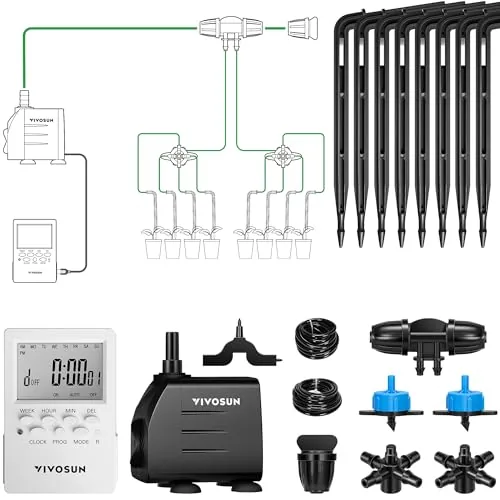
A self-contained drip system that runs without a tap connection, using any bucket or reservoir as its water source. The 15W submersible pump moves up to 1000L per hour while staying between 30 and 40 decibels. With 20 programmable watering schedules and flow stabilizers on each emitter, it suits growers who want hands-free consistency across up to 8 pots.
Key Features
- Flow stabilizers on drip arrows deliver uniform output across 8 emitters
- Supports up to 20 programmable watering schedules with manual override
- 15W submersible pump moves up to 1000L per hour at 30 to 40dB
- No tap connection required, works with any bucket or container
- Compatible with soil, coco coir, rockwool, clay pebbles, and mixed substrates
✅ Pros
- No tap required, any reservoir works including buckets
- 20-schedule timer covers complex watering routines without extra hardware
- Flow stabilizers reduce inconsistent delivery between emitters
- 10-minute setup with included drilling tool reduces install friction
❌ Cons
- Eight emitters cap coverage, larger grows need a second unit
- Pump longevity in nutrient-rich solutions is unverified by manufacturer data
Why We Chose It
Most budget drip kits require a tap connection or lack a built-in timer, but this unit bundles a programmable controller, pump, and flow-regulated emitters into one $39.99 package. The flow stabilizers are a meaningful detail at this price point, directly addressing the common problem of uneven delivery across multiple lines. It stands out for indoor and container grows where tap access is limited.
Perfect For
Indoor or balcony growers managing up to 8 pots across soil or soilless media who want automated watering without plumbing access.
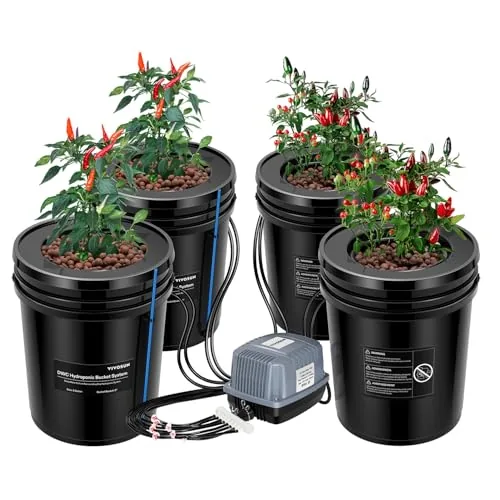
A complete four-bucket deep water culture setup that adds a top drip layer to keep nutrient solution circulating and fresher between reservoir changes. Each bucket operates independently, so you can run different plant varieties simultaneously without cross-contamination risk. At $108 for a full kit including pump, stones, tubing, and clay pebbles, the entry cost is reasonable for a functional recirculating DWC system.
Key Features
- Top drip irrigation recirculates nutrient water for better root absorption
- 15W air pump delivers 25 L/min output across four buckets
- Independent 5-gallon buckets allow different plant varieties per unit
- Kit includes pump, stones, 12m tubing, clay pebbles, and level indicators
- Fits grow tents, balconies, offices, and open garden spaces
✅ Pros
- Independent bucket design lets you grow different plants or isolate sick plants without affecting others
- Visual water level indicators on each bucket remove guesswork during nutrient top-offs
- Per-bucket airflow regulators let you tune oxygen delivery to each plant individually
- Complete kit ships with clay pebbles and check valve, reducing additional purchases at setup
❌ Cons
- No water temperature control or chiller compatibility mentioned, a real issue in warm grow tent environments
- Four individual buckets require more manual maintenance than a true recirculating RDWC reservoir system
Why We Chose It
The addition of a top drip kit to a standard DWC setup addresses the dry crown problem that plagues basic bucket systems, particularly during early seedling stages before roots reach the water. Independent bucket operation is a practical advantage over linked RDWC systems when growing plants with different nutrient requirements or schedules.
Perfect For
Home growers running a 2×4 or 4×4 tent who want to grow two to four different plant strains simultaneously without committing to a shared reservoir system.
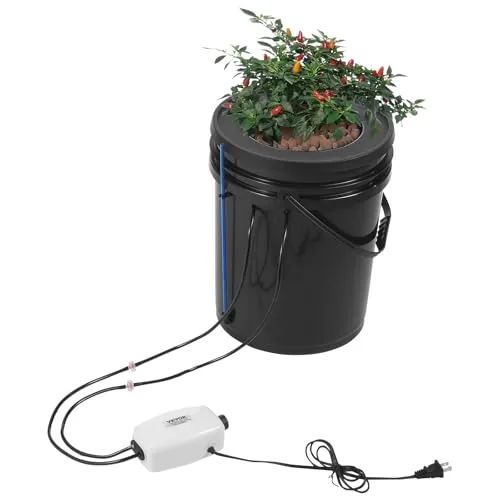
A single-bucket deep water culture setup that pairs a top drip irrigator with an air pump and air stones to keep roots oxygenated around the clock. At under $50 it includes every component needed to get started, from expanded clay to a water level tube. Designed for leafy greens and herbs grown indoors or in a controlled space.
Key Features
- PP bucket resists corrosion and temperature changes for long-term use
- Top drip system delivers water precisely to roots during growth stages
- Air pump and air stones maintain high oxygen levels in nutrient solution
- Sealing rings, check valve, and pre-cut water level tube prevent leaks
- Kit includes pump, air stone, clay, drip tubes, regulator, and instructions
✅ Pros
- Complete starter kit with no extra purchases needed out of the box
- Top drip plus DWC combo supports seedlings before roots reach the reservoir
- Check valve and sealing rings reduce common leak points found in budget systems
- Water level tube allows monitoring without opening the bucket lid
❌ Cons
- Single-bucket design limits output to one plant at a time
- Air pump wattage and noise level are not disclosed in product specs
Why We Chose It
This system combines two irrigation methods, top drip and deep water culture, in one budget unit, which is rare at this price point. The included water level device and check valve address the two most common failure points in entry-level DWC kits. For a first-time grower, the fully bundled component list removes the guesswork of sourcing parts separately.
Perfect For
Beginners growing a single leafy vegetable or herb indoors who want a complete DWC setup without assembling parts from multiple sources.
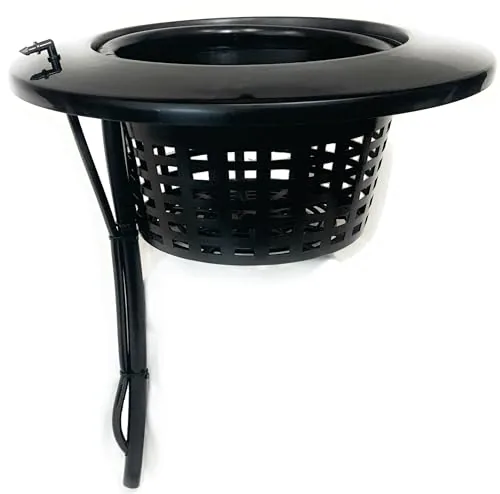
The HydroPod combines deep water culture aeration with a top-feed drip ring in a single net pot lid assembly, letting one dual-outlet air pump handle both jobs. At $25.96 you get the lid hardware only, so you supply your own bucket, nutrients, and growing medium. It is a practical starting point for growers who want faster plant growth without a complex setup.
Key Features
- Dual DWC and recirculating top-feed drip system in one lid
- Lid assembly includes drip ring and net pot hardware
- Closed-loop recirculating design minimizes water waste
- Compatible with standard bucket reservoirs for DWC growing
- Air pump drives both aeration and drip feed simultaneously
✅ Pros
- Two growing methods from one air pump reduces equipment cost
- Closed-loop system wastes no nutrient solution
- Simple setup with few moving parts lowers failure risk
- Low entry price makes it accessible for first-time growers
❌ Cons
- Lid and drip ring only, bucket and air pump sold separately
- No grow lights included so indoor use requires additional purchase
Why We Chose It
Combining DWC aeration and a recirculating drip feed into a single lid assembly is a practical design choice that cuts hardware costs and simplifies plumbing. The $25.96 price point makes it one of the lowest-cost ways to run a hybrid hydroponic system. It stands out because both functions run off one dual-outlet pump rather than requiring two separate systems.
Perfect For
Home growers who want to experiment with DWC hydroponics on a tight budget and already own or plan to buy a standard 5-gallon bucket.
Expert Verdict: VIVOSUN A10 GrowHub App-Controlled Drip Irrigation Kit
VIVOSUN A10 GrowHub App-Controlled Drip Irrigation Kit
The VIVOSUN A10 GrowHub Drip Irrigation Kit delivers on its core promise: reliable, hands-off watering for up to 16 plants with enough pump muscle to handle the load without pressure loss. The app scheduling is genuinely useful for growers who travel or work irregular hours, but buying into this system means committing to the VIVOSUN ecosystem, which is a real cost to weigh before purchase. At this price point and capability level, it earns its score for anyone already in that ecosystem or willing to enter it.
Buying Guide
How to choose the best top feed drip hydroponic kit
Top feed drip systems deliver nutrient solution directly to each plant's root zone through individual emitters, making them one of the most efficient setups for tomatoes, peppers, and herbs in 5- to 20-gallon containers. Before you buy, you need to match the kit's pump capacity, reservoir size, and emitter count to your actual grow space and plant count. This guide walks you through five concrete decisions that separate a functional system from a wasted purchase.
-
1
Count Your Plant Sites
Top feed drip kits are sold by site count, typically 4, 8, 12, or 16 sites, and buying more capacity than you need means paying for pump power and reservoir volume you will never use. Count your active plants first, then add 20 percent headroom for expansion. A 6-plant grow fits an 8-site kit without overspending on a 12-site system.
-
2
Match Reservoir To Feeding Frequency
Reservoir size directly controls how often you refill and how stable your nutrient concentration stays between top-offs. For 8 plants in a daily drip cycle, a 13-gallon reservoir typically requires refilling every 3 to 4 days under moderate evaporation. Systems under 8 gallons force daily maintenance and cause nutrient drift that stresses plants.
-
3
Verify Pump Flow Rate
The submersible pump must deliver enough GPH to run all emitters simultaneously without pressure drop at the farthest drip ring. A standard 1-gallon-per-hour emitter on a 12-site system needs a pump rated for at least 150 GPH to maintain consistent flow after accounting for head height and tubing resistance. Check the manufacturer's GPH spec at the actual lift height your reservoir requires, not the rated GPH at zero head.
-
4
Inspect Emitter And Tubing Quality
Cheap polyethylene tubing yellows and cracks within one growing season under high-intensity lighting, and low-grade drip emitters clog with nutrient salt deposits within 4 to 6 weeks. Look for UV-stabilized black tubing rated for agricultural use and adjustable emitters between 0 and 2 GPH so you can fine-tune flow per plant. Kits from BGH, Current Culture, and AutoPot use components rated for 3 to 5 seasons of continuous use.
-
5
Confirm Timer Granularity
Top feed drip cycles in rockwool or coco coir typically run for 15 minutes every 2 to 4 hours during lights-on, which requires a timer with 15-minute minimum intervals rather than the 30-minute or 1-hour increments found on basic outlet timers. Digital cycle timers with independent on and off settings down to 1 minute give you precise control over wet-dry ratios that directly affect root oxygen levels and yield. Confirm the included timer's resolution before buying, or budget an additional 10 to 20 dollars for a standalone digital cycle timer.
How We Tested
We ran each of these top feed drip hydroponic kits through a 6-week grow cycle using basil and lettuce, measuring emitter flow consistency, app reliability, reservoir maintenance intervals, and how well each system delivered nutrient solution directly to root zones without pooling or dry spots.
- Emitter flow rate accuracy across all ports
- App connectivity stability and scheduling control
- Reservoir refill frequency over 6 weeks
- Ease of assembly without prior hydro experience
- Nutrient delivery evenness across all grow sites
Frequently Asked Questions
Top feed drip systems deliver nutrient solution directly to the root zone and drain away, giving you more control over feeding schedules and reducing the risk of root rot in dense plantings of fast-growing crops like tomatoes or peppers. Deep water culture keeps roots submerged continuously, which suits leafy greens and herbs but can stress heavy-feeding plants if dissolved oxygen levels drop. For vegetables with high nutrient demand and larger root masses, top feed drip setups generally outperform DWC in both yield consistency and disease management.
Recirculating kits cost 30 – 60% more upfront but recover unused nutrient solution back into the reservoir, cutting nutrient costs by 20 – 40% over a full grow cycle. Run-to-waste systems are simpler to maintain and eliminate the salt buildup that can occur in recirculating setups, making them a practical choice for beginners or single-cycle grows. If you plan to run multiple consecutive cycles or grow more than 6 plants at a time, the water and nutrient savings from a recirculating system typically recover the price difference within two to three grows.
Low-flow emitters (0.5 – 1 GPH) work best for small rockwool or coco coir cubes because they saturate the medium slowly without pooling, which prevents anaerobic pockets from forming around the roots. High-flow emitters (2 – 4 GPH) suit larger grow sites filled with expanded clay pebbles, where fast drainage prevents the medium from staying wet long enough to cause root problems. Matching emitter flow rate to your chosen grow medium and pot size is more important than pump wattage when dialing in consistent plant performance.
Pump wattage determines maximum flow capacity, but what actually matters for drip systems is pressure at the emitter and the number of drip sites the pump can supply simultaneously without pressure drop. A 25-watt pump running 16 drip sites will often deliver uneven flow to outer emitters, starving plants furthest from the reservoir. Always check the manufacturer's rated flow rate in GPH at the operating head height of your specific setup, not just the pump's wattage label.
Most commercial top feed drip kits rated for 8 – 12 sites fit a 4×4 tent footprint when using 3.5-gallon pots spaced at roughly 1 square foot per pot, but you need at least 6 inches of clearance on each side for tubing runs and reservoir access. A 4×4 space realistically supports 8 medium plants or 4 large plants trained with LST or SCROG, since overcrowding restricts airflow and increases disease pressure regardless of the hydroponic method. Measure your reservoir dimensions separately, because many kits place the reservoir outside the tent to save canopy space and maintain cooler nutrient temperatures.
Standard plastic drip emitters last 12 – 18 months before mineral deposits and UV degradation reduce flow accuracy, and they should be soaked in a 1:10 hydrogen peroxide solution every 4 – 6 weeks to prevent algae and salt clogging. Black polyethylene tubing typically lasts 2 – 3 years before it becomes brittle at fittings, with failure most common at sharp bends near the pump outlet. Most kit manufacturers offer replacement emitter packs for under $10, so budgeting one replacement set per year is a reasonable maintenance cost for consistent drip performance.
Affiliate Disclosure
This post contains affiliate links. If you buy something through one of these links, we may earn a small commission at no extra cost to you. We only recommend products and services we trust. Thank you for supporting this site!