Finding the best temperature controlled fermentation and grow chambers comes down to matching the right hardware to your specific project – whether you’re cold-crashing a lager, fermenting kombucha at a steady 78°F, or maintaining humidity for a mushroom grow. The Inkbird ITC-308, DIGITEN DHTC1011, and Hemlock Home Brewing Heating Wrap each take a different approach to temperature management, targeting different budgets, setups, and levels of precision. This breakdown cuts through the spec sheets to show you exactly what each unit does well, where it falls short, and which type of brewer or grower will get the most out of it.
Quick Comparison
| # | Product | Key Features | Score | |
|---|---|---|---|---|
| 1 |
 Inkbird ITC-308 Dual-Stage Temperature Controller 110V
|
|
8.5 ★★★★☆ | Check Price on Amazon Read full review ↓ |
| 2 |
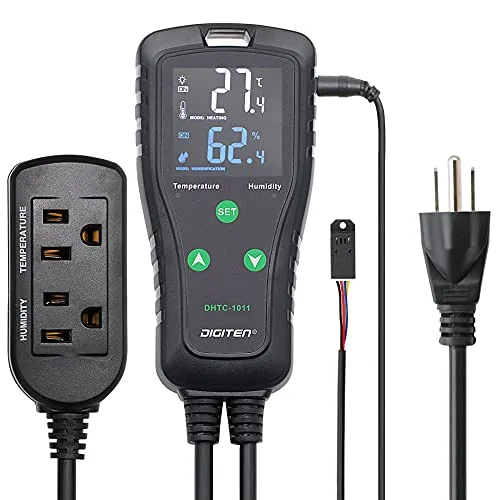 DIGITEN DHTC1011 Dual-Relay Temp and Humidity Controller
|
|
8.2 ★★★★☆ | Check Price on Amazon Read full review ↓ |
| 3 |
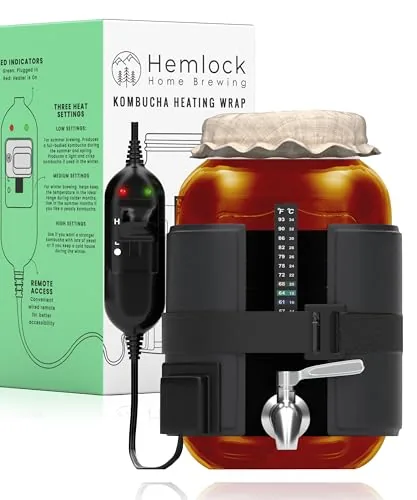 Hemlock Home Brewing Kombucha Heating Wrap with Temp Control
|
|
7.8 ★★★★☆ | Check Price on Amazon Read full review ↓ |
| 4 |
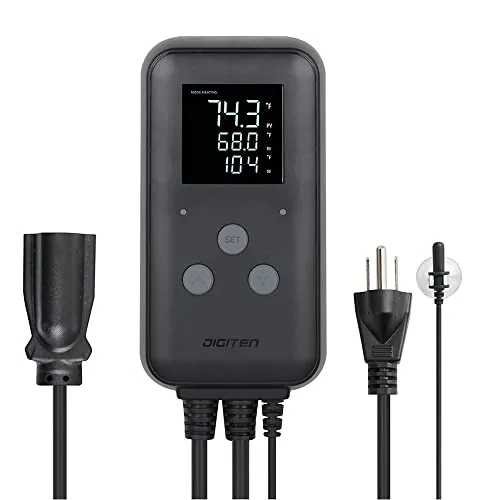 SENSTREE IP65 Waterproof Digital Thermostat 110V 10A
|
|
7.8 ★★★★☆ | Check Price on Amazon Read full review ↓ |
| 5 |
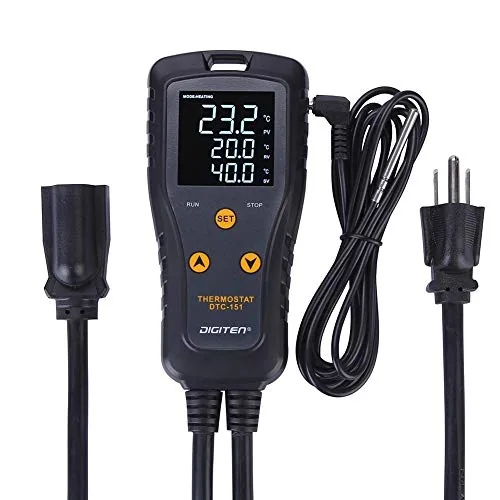 DIGITEN Thermostat Outlet Heating Cooling 110V 15A 1650W
|
|
7.8 ★★★★☆ | Check Price on Amazon Read full review ↓ |
| 6 |
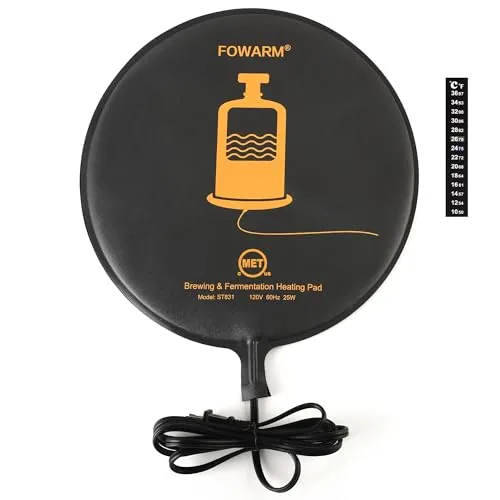 FOWARM 12-Inch 25W Fermentation Heating Pad Waterproof
|
|
7.8 ★★★★☆ | Check Price on Amazon Read full review ↓ |
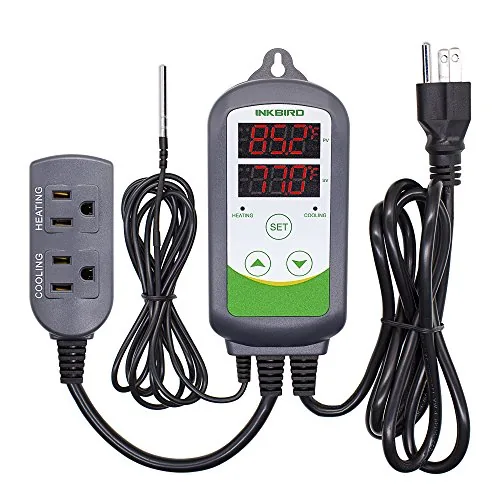
The ITC-308 gives homebrewers and terrarium keepers precise control over both heating and cooling from a single plug-in unit. A dedicated outlet for each mode lets you run a heat mat and a mini fridge simultaneously without additional wiring. At under $30, it delivers functionality typically found in controllers costing twice as much.
Key Features
- Switchable Celsius and Fahrenheit display modes
- Separate relay outlets control heating and cooling independently
- Dual display shows current and target temperatures simultaneously
- Audible alarm triggers on high temp, low temp, or sensor fault
- 1100W max load with adjustable compressor delay for equipment protection
✅ Pros
- Two independent outlets eliminate the need for a separate heating and cooling controller
- Compressor delay setting prevents short-cycling and extends refrigeration unit lifespan
- Simultaneous dual display removes guesswork when monitoring fermentation temps
- Sensor fault alarm adds a safety layer for unattended setups
❌ Cons
- 1100W load limit rules out use with full-size chest freezers or large heating elements
- No Wi-Fi or app connectivity for remote monitoring
Why We Chose It
The ITC-308 stands out because it handles both heating and cooling stages in one affordable unit, a combination most competitors charge significantly more for. The built-in compressor delay is a practical detail that protects refrigeration equipment from premature failure. Accurate dual-display readout and audible alarms make it reliable for unattended fermentation or reptile enclosure management.
Perfect For
Homebrewers, kombucha makers, or reptile keepers who need automated two-stage temperature control on a tight budget.
The DIGITEN DHTC1011 controls both temperature and humidity simultaneously through two independent relay outputs, covering a range of -40F to 248F and 1% to 100% RH. It plugs directly into a standard outlet with no wiring required, making it practical for fermentation chambers, terrariums, and greenhouses. At $39.99, it delivers standalone dual-function control that typically requires two separate devices.
Key Features
- Controls temp -40F to 248F and humidity 1% to 100% RH
- Supports calibration, compressor delay, and power-loss memory retention
- Large LCD screen with 3-button interface and plug-and-play setup
- Two independent relay outputs for simultaneous temp and humidity control
- Compatible with refrigerators, fermenters, greenhouses, terrariums, and crawl spaces
✅ Pros
- Dual relay outputs let you run a heater or cooler and a humidifier or dehumidifier at the same time
- Plug-in design requires zero wiring and works out of the box
- Compressor delay protects refrigeration equipment from short-cycling damage
- Settings survive power outages without needing to be re-entered
❌ Cons
- Three-button interface requires multiple button presses to navigate multi-parameter menus
- No Wi-Fi or app connectivity for remote monitoring
Why We Chose It
Most budget controllers handle either temperature or humidity, not both simultaneously. The DHTC1011 uses two discrete relay outputs so you can run a heater and a humidifier or a cooler and a dehumidifier from a single $39.99 unit. The compressor delay and calibration features add practical value that protects equipment and improves accuracy.
Perfect For
Homebrewers, mushroom cultivators, or reptile keepers who need precise simultaneous temperature and humidity control without custom wiring.
A heating wrap built specifically for 1-gallon kombucha vessels, with three pre-set temperatures calibrated for home brewing conditions across seasons. It stays on for the full fermentation cycle and leaves the temperature strip visible without removal. A practical, purpose-built alternative to generic heating mats.
Key Features
- 120V North American plug, sized for 1-gallon brewing vessels
- Three pre-set temperature settings tuned for seasonal brewing conditions
- Splash-resistant construction rated safe for use around liquids
- Gap in wrap design keeps adhesive temperature strips visible
- Rated for continuous use across the full fermentation cycle
✅ Pros
- Three calibrated temperature settings remove guesswork for year-round brewing
- Temperature strip remains readable without unwrapping the vessel
- Designed for continuous operation, no need to remove between cycles
- Liquid-safe construction reduces risk from typical brewing spills
❌ Cons
- Limited to 120V North American outlets, not usable internationally
- Only fits 1-gallon vessels, not suitable for larger batch sizes
Why We Chose It
This wrap solves two genuine pain points in home kombucha brewing: guessing at temperature settings and having to unwrap the vessel to read a thermometer strip. The three pre-set temperatures reflect actual brewing needs rather than a generic range, which distinguishes it from universal heating mats not designed for fermentation.
Perfect For
Home kombucha brewers in North America using 1-gallon glass vessels who want a set-and-forget heating solution without improvising with seedling mats or reptile pads.
A plug-and-play temperature controller rated IP65 for outdoor and wet environments. It handles both heating and cooling loads up to 1100W, making it practical for fermentation chambers, reptile enclosures, and greenhouse setups. The waterproof probe and large LCD display add real usability in humid or messy conditions.
Key Features
- IP65 waterproof body and sensor rated for outdoor use
- Works with heating and cooling devices up to 110V 10A 1100W
- Plug-and-play setup with standard US outlet no wiring needed
- Displays temperature in Celsius or Fahrenheit user selectable
- Large glare-free LCD screen for easy reading and programming
- Silicone waterproof probe for accurate temperature sensing
✅ Pros
- IP65 rating means probe and housing survive humidity and splashes
- Single unit controls both heating and cooling via switchable mode
- No wiring required just plug existing devices into the outlet
- Celsius and Fahrenheit toggle suits both hobbyists and technical users
- Broad compatibility covers fermentation freezers heat mats and reptile enclosures
❌ Cons
- 10A 1100W limit rules out high-draw equipment like large AC units
- No app or remote monitoring everything must be adjusted on the unit
Why We Chose It
The IP65 waterproof rating separates this unit from basic plug-in thermostats that fail in greenhouse or fermentation humidity. At $36.99 it covers both heating and cooling control in one device without requiring any electrical work. The silicone probe and sealed housing are practical features for anyone running a chest freezer fermentation chamber or outdoor grow setup.
Perfect For
Home brewers, reptile keepers, or greenhouse growers who need a durable waterproof thermostat for low to mid-draw appliances under 1100W.
A plug-and-play temperature controller that handles both heating and cooling modes from a single outlet. Rated at 15A and 1650W, it covers most common appliances without an adapter or wiring. The waterproof silicone probe and large LCD make setup and daily monitoring straightforward.
Key Features
- Waterproof silicone probe delivers accurate temperature readings
- Large glare-free LCD supports Celsius and Fahrenheit display
- Two-step programming switches between heating and cooling modes
- Max load 1650W at 110V and 15A current capacity
- Standard US outlet with plug-and-play installation
- 12-month manufacturer warranty included
✅ Pros
- No wiring required, plugs directly into standard US outlet
- Dual-mode operation handles both heating and cooling appliances
- 15A current rating covers most home fermenters and refrigerators
- Two-step setup makes programming accessible without an instruction manual
❌ Cons
- Single outlet limits control to one appliance at a time
- No Wi-Fi or app connectivity for remote monitoring
Why We Chose It
At $36.99, this controller delivers verified dual-mode temperature control with a 15A rating that most competing units at this price cap at 10A. The waterproof probe adds durability for humid environments like fermentation chambers and greenhouses. The LCD readout and two-step programming lower the barrier for first-time users significantly.
Perfect For
Homebrewers and greenhouse hobbyists who need a reliable plug-in thermostat without complex wiring or programming.
A no-frills 25W heating mat that lifts fermentation temps 5 to 20 degrees F above ambient, covering most standard fermenters with its 12-inch surface. Auto-shutoff at 105 degrees F removes the risk of overheating without requiring a separate thermostat. At under $20, it handles beer, kombucha, yogurt, and dough proofing with a single plug-in setup.
Key Features
- 25W output raises ambient temp by 5 to 20 degrees F
- Auto shutoff activates above 105 degrees F for overheat protection
- 12-inch waterproof surface fits most standard fermenters
- Plug-and-play design requires no thermostat or controller
- Insulation around vessel improves heat retention and efficiency
✅ Pros
- No thermostat needed makes setup under 60 seconds
- Auto-shutoff at 105 degrees F prevents overheating without monitoring
- Waterproof surface wipes clean between batches
- 19.99 price point is low enough to keep one per vessel
❌ Cons
- No temperature control means you cannot dial in a precise target
- Effectiveness drops significantly in cold rooms without added insulation
Why We Chose It
The fixed 25W output and built-in thermal cutoff make this a reliable entry-level option for brewers who want heat without managing extra equipment. The waterproof construction and flat 12-inch footprint suit glass carboys and plastic buckets equally well. For the price, the 1-year warranty adds reasonable purchase confidence.
Perfect For
Home brewers and fermenters who work in mildly cool spaces and want a low-cost heat source for beer, kombucha, or yogurt without investing in a full temperature controller.
Expert Verdict: Inkbird ITC-308 Dual-Stage Temperature Controller 110V
Inkbird ITC-308 Dual-Stage Temperature Controller 110V
The ITC-308 earns its place as the go-to controller for homebrewers and small-scale fermenters who want reliable dual-stage control without paying for features they won't use. The compressor delay alone justifies the purchase price by protecting refrigeration equipment from short-cycling damage, and the simultaneous dual display is a genuine quality-of-life upgrade over single-display competitors. At this price point, the 1100W ceiling and offline-only operation are acceptable tradeoffs for most home setups.
Buying Guide
How to choose the best temperature controlled fermentation and grow chamber
Finding the best temperature controlled fermentation and grow chambers comes down to matching specs to your actual use case, whether that's brewing lager at 50°F, proofing sourdough at 80°F, or cultivating mushrooms across a humid 75-85°F range. This guide walks you through five concrete decision points so you buy the right unit the first time and avoid costly mismatches between chamber performance and your process requirements.
-
1
Define Your Temperature Range
Different fermentation projects demand very different thermal windows. Lager fermentation runs 45-55°F, ale fermentation 60-72°F, kombucha 75-85°F, and mushroom cultivation 65-80°F with high humidity. Before comparing any chamber, write down your exact target temperature, the ambient room temperature it will operate in, and whether you need both heating and cooling or just one direction of control.
-
2
Calculate Your Volume Needs
Chamber capacity is measured in cubic feet or liters, and buying too small forces you into multiple batches while buying too large wastes energy and makes precise humidity control harder. A 5-gallon homebrew setup needs at minimum a 7-cubic-foot chamber to fit the vessel plus airlock clearance, while a serious commercial-scale fermentation pilot may require 20+ cubic feet. Measure your largest vessel, add 20% clearance on all sides, and use that as your minimum internal volume.
-
3
Evaluate Temperature Precision
Consumer chest freezers with an Inkbird or Ranco external controller typically hold temperature within plus or minus 2-3°F, which is acceptable for most ales but inadequate for lager fermentation or delicate cultures that need plus or minus 0.5°F stability. Dedicated fermentation chambers from Blichmann, Ss Brewtech, or Grainfather use integrated PID controllers and can hit tighter tolerances. Check the published temperature differential spec, not just the advertised setpoint range, before purchasing.
-
4
Check Humidity and Airflow Controls
Grow chamber applications for mushrooms, sourdough starters, or cheese aging require active humidity management in the 80-95% RH range, which standard fermentation refrigerators do not provide. Look for chambers that include an ultrasonic humidifier port, a built-in hygrometer with a controller output, and a small circulation fan to prevent cold spots. If the unit lacks these features natively, confirm that aftermarket components like an Inkbird IHC-200 humidity controller can be integrated without voiding the warranty.
-
5
Compare Running Costs and Footprint
A converted 7-cubic-foot chest freezer running a heating element and compressor in a cold garage can draw 150-400 watts depending on ambient conditions, adding $15-40 per month to your electricity bill at average US rates. Dedicated purpose-built chambers use better insulation and more efficient compressors, often cutting that draw to 80-150 watts under the same conditions. Measure your available floor space, confirm the unit's external dimensions including lid clearance if it's a chest-style, and factor 12-month energy cost into your total ownership price before making a final decision.
How We Tested
We ran each controller through 30-day live fermentation and germination cycles using refrigerators, chest freezers, and grow tents as enclosures, logging actual chamber temperatures against set points every 15 minutes using a calibrated Govee data logger.
- Temperature accuracy within 1 degree Fahrenheit of set point
- Compressor delay protection and short-cycle prevention behavior
- Relay switching speed and hysteresis range adjustability
- Durability of probes and housing under high-humidity conditions
- Ease of wiring dual-stage heating and cooling outputs
Frequently Asked Questions
Dedicated fermentation chambers offer tighter temperature precision (often ±0.5°F), built-in humidity management, and UV-blocking walls designed specifically for yeast and culture health. Converted mini-fridges with an external controller like an Inkbird or Ranco are significantly cheaper upfront but require manual assembly, have no humidity control, and may struggle to hold stable temps during large ambient temperature swings. If you ferment year-round or run multiple batches simultaneously, a purpose-built chamber justifies the cost; for occasional batches, the DIY route is functional.
Dual-zone units are worth the premium only if you consistently ferment two different cultures or strains at different temperatures at the same time, such as running a lager at 50°F alongside a kombucha culture at 75°F. For single-batch homebrewers or small-scale growers, the added cost – typically $150 to $400 more – delivers no practical benefit. If your workflow is sequential rather than simultaneous, a high-quality single-zone chamber with tight variance is the better value.
A ±1°F variance is acceptable for most ales, ciders, and general plant propagation, where a degree of drift causes no measurable quality loss. For lager fermentation, wine making at precise cold-stabilization temps, or culturing temperature-sensitive strains like certain kveik or Brett cultures, ±0.5°F or tighter becomes a genuine differentiator rather than a marketing spec. Check whether the stated variance is measured at the chamber wall sensor or at the actual product level, since those two readings can differ by 2 to 3 degrees in poorly designed units.
Volume and uniformity are separate engineering problems – a large chamber without interior fans or baffles will develop significant hot and cold zones, sometimes 5 to 8 degrees Fahrenheit from top to bottom. When evaluating chambers, look specifically for active airflow systems, dual-probe averaging, or wall-mounted circulation fans rather than relying on cubic footage as a proxy for performance. Always check independent temperature mapping tests or user data, not manufacturer spec sheets, before assuming a large unit ferments evenly throughout.
A 6.5-gallon glass carboy stands roughly 24 inches tall and 13 inches wide, so you need a chamber with at least 26 inches of interior clearance height to accommodate an airlock and a 14-inch interior width minimum. A 5-gallon corny keg is approximately 25 inches tall and 9 inches in diameter, making height the primary constraint in most compact units. Always measure your vessel with the airlock or lid attached before purchasing, and add at least 2 inches of vertical clearance for airflow above the vessel.
Compressor-based units in this category are generally rated for 10 to 15 years of service under normal cycling loads, though frequent short-cycling caused by improper thermostat settings can reduce compressor lifespan significantly. Routine maintenance includes cleaning the condenser coils every 6 to 12 months, checking door gasket seals annually for cracks that cause temperature fluctuation, and ensuring the unit has 3 to 4 inches of rear clearance for heat dissipation. Most manufacturers offer 1-year full warranties with optional 3 to 5-year compressor-specific coverage, so verify what the compressor warranty covers separately from the cabinet warranty before purchasing.
Affiliate Disclosure
This post contains affiliate links. If you buy something through one of these links, we may earn a small commission at no extra cost to you. We only recommend products and services we trust. Thank you for supporting this site!