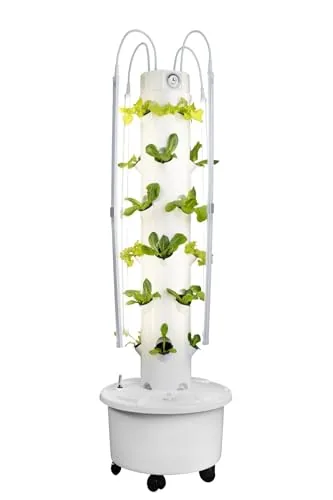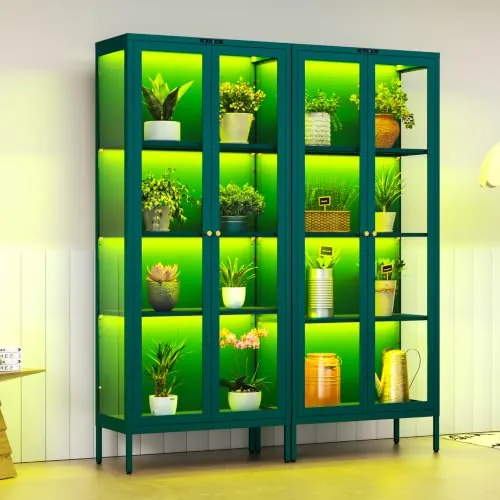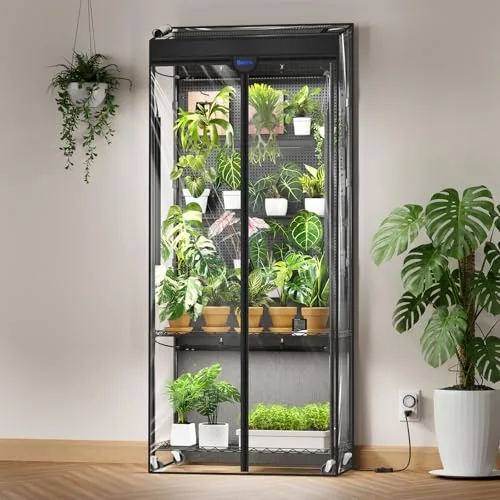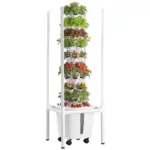
If you want to grow herbs, greens, or vegetables indoors without dedicating significant floor space to traditional containers, a freestanding indoor garden tower gives you vertical growing capacity in a footprint roughly the size of a dinner plate. After testing and researching the best freestanding indoor garden towers on the market, three models stood out for different growers: the MQHUAYU 35-Pod 7-Layer Vertical Hydroponic Tower for high-volume growers, the Smart Spring 4-Tier Stackable Vertical Planter for beginners who want simplicity, and the LnzyGarden 10-Tier Hydroponic Tower with its 40-pod capacity and built-in trellis for climbers. Here is what you need to know before spending your money.
Quick Comparison
| # | Product | Key Features | Score | |
|---|---|---|---|---|
| 1 |
 MQHUAYU 35-Pod 7-Layer Vertical Hydroponic Tower Garden
|
|
8.2 ★★★★☆ | Check Price on Amazon Read full review ↓ |
| 2 |
 smart spring 4-Tier Stackable Vertical Planter, 28 Sites
|
|
8.2 ★★★★☆ | Check Price on Amazon Read full review ↓ |
| 3 |
 LnzyGarden 10-Tier Hydroponic Tower 40-Pod with Trellis
|
|
8.2 ★★★★☆ | Check Price on Amazon Read full review ↓ |
| 4 |
 Pinky Family 5-Tier Stackable Vertical Garden Planter
|
|
7.8 ★★★★☆ | Check Price on Amazon Read full review ↓ |
| 5 |
 TenaoVilleux 4-Tier Raised Planter with Wheels
|
|
7.8 ★★★★☆ | Check Price on Amazon Read full review ↓ |
| 6 |
 Tectsia 7-Tier Stackable Strawberry Tower Planter 2-Pack
|
|
7.8 ★★★★☆ | Check Price on Amazon Read full review ↓ |
| 7 |
 Sunexinlo 6-Box Vertical Garden Planter Triangular Freestanding
|
|
7.5 ★★★★☆ | Check Price on Amazon Read full review ↓ |
| 8 |
 Generic 14-Layer Hydroponic Tower 70-Slot Vertical Garden
|
|
7.4 ★★★★☆ | Check Price on Amazon Read full review ↓ |
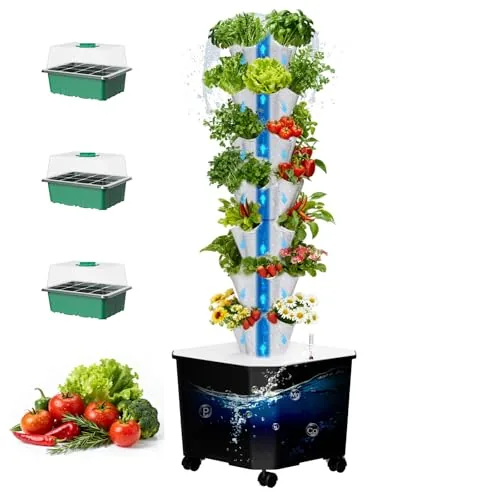
A compact vertical hydroponic system that fits 35 plants into under 2 square feet of floor space. The 9-mode smart timer and recirculating pump reduce hands-on maintenance significantly. Modular BPA-free construction snaps together without tools in about 5 minutes.
Key Features
- Grows 35 plants in 1.72 sq ft using 7 stacked layers
- Top-down recirculating system cuts water use up to 90 percent
- Snap-fit modular design assembles tool-free in under 5 minutes
- 2.5L reservoir with 12V pump and 9-mode customizable smart timer
- Kit includes seedling sponges, seed starter trays, and setup video
✅ Pros
- 35-plant capacity in under 2 square feet suits small balconies and apartments
- 9 timer modes let you adjust on/off cycles to match plant growth stage
- Detachable layers simplify cleaning and reduce algae risk
- BPA-free UV-resistant materials suit both indoor and outdoor placement
❌ Cons
- 2.5L reservoir listed inconsistently as both 2.5L and 6.6 gallons, actual capacity needs verification
- No grow lights included, so indoor performance depends entirely on ambient light availability
Why We Chose It
The 9-mode smart timer sets this tower apart from basic hydroponic kits that ship with fixed watering intervals. Modular layer construction makes deep cleaning practical rather than theoretical. At $129.69 it includes a pump, timer, and starter sponges without requiring separate purchases to get started.
Perfect For
Apartment dwellers or beginner gardeners who want to grow lettuce, herbs, or strawberries year-round without outdoor garden space.
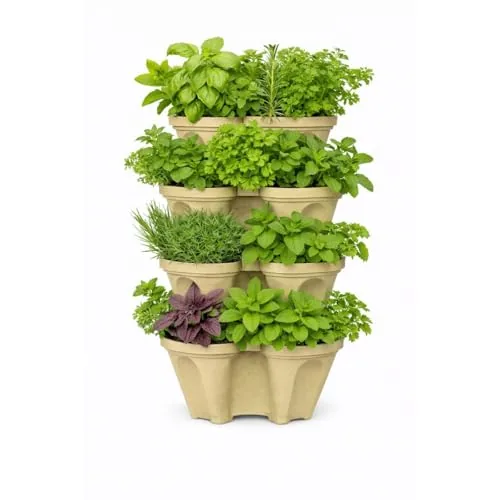
This USA-made tower stacks four tiers to fit 28 plants into a small ground footprint, making it practical for patios, balconies, or kitchen gardens. The gravity-fed watering system moves moisture from top to bottom without additional hardware. Thicker-than-average walls and UV-resistant construction mean it holds up across multiple growing seasons outdoors.
Key Features
- Larger root volume than standard vertical planters, fits 28 plants
- Center hole accepts support pipe for stability on farms or patios
- 28 plant sites in compact footprint with good sunlight exposure
- Top-fill watering lets gravity distribute moisture through all four tiers
- Walls built thicker than standard stackable planters to resist cracking
- Manufactured in the USA for consistent material and build quality
✅ Pros
- 28 planting sites in a small ground footprint maximizes yield per square foot
- Top-down gravity watering eliminates need for drip lines or manual tier-by-tier watering
- Center support pipe compatibility adds stability in windy or high-traffic settings
- Made in the USA with thicker walls than comparable imported stackable planters
❌ Cons
- Support pipe not included, adding potential extra cost and sourcing time
- Desert Sand color may show soil stains more visibly than darker options
Why We Chose It
The combination of 28 plant sites, a built-in center support channel, and domestic manufacturing sets this apart from thinner imported stackable towers at similar price points. The gravity watering design reduces daily maintenance time, which matters for anyone growing food crops that need consistent moisture. At $63.74, the per-site cost works out to roughly $2.28 per plant slot, competitive for a heavy-duty USA-made product.
Perfect For
Home gardeners and small-scale food producers who want to grow strawberries, herbs, or greens vertically on a patio, deck, or in a greenhouse without complex irrigation setup.
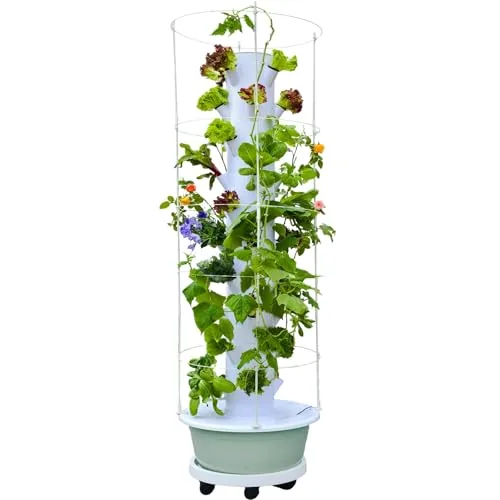
A vertically stacked 10-tier hydroponic system with 40 planting pods and an integrated climbing trellis, designed for both herbs and larger fruiting plants. The 8-gallon reservoir and intermittent pump cycle support continuous growth indoors or outdoors. At $265.99 the kit ships complete with timer, sponges, and rolling base so setup requires no separate purchases.
Key Features
- 10 stackable tiers, 40 pods, supports leafy greens and climbing plants
- Intermittent pump cycles water top to bottom, improving root oxygen access
- 8-gallon reservoir with rolling base tray for easy repositioning
- Food-grade materials, 90% less water than soil gardening, pesticide-free growing
- Includes pump, timer, regulator, 128 sponges, seedling tray, and planting guide
✅ Pros
- Complete out-of-box kit eliminates need for separate accessories
- 8-gallon reservoir reduces refill frequency for a 40-pod system
- Rolling base allows repositioning between indoor and outdoor locations without disassembly
- Trellis support expands usable crop types to cucumbers, peas, and vining fruits
❌ Cons
- At roughly 6.65 per pod, cost is higher than comparable 36-pod tower kits
- Intermittent pump timing is preset and may require manual adjustment for warm outdoor climates
Why We Chose It
The included trellis is a genuine functional differentiator that most tower garden kits at this price omit, enabling vining crops that vertical hydroponic towers typically cannot support. The full accessory bundle including 128 sponges, timer, and rolling tray removes the typical hidden startup costs that inflate the real price of competing systems.
Perfect For
Gardeners with limited outdoor space who want to grow both leafy greens and fruiting vines in a single compact system year-round.
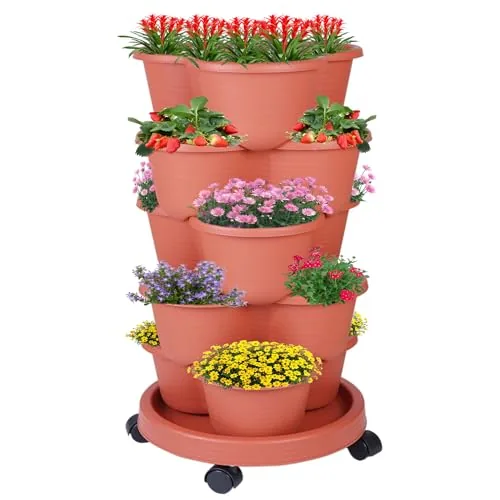
A modular stacking planter that scales from 2 to 5 tiers, fitting balconies, patios, and indoor corners without eating floor space. Built-in drainage channels water downward through each tier, reducing overwatering risk. At $29.99 it competes on price with single-pot alternatives while offering far more planting capacity.
Key Features
- Staggered 5-tier design maximizes vertical growing space over footprint
- Configurable as 2, 3, 4, or 5-tier stacks to fit space
- Built-in drainage holes route excess water through each tier
- Can be floor-mounted or hung via included hanging chains
- Stackable PP plastic construction resists fading and cracking
- Optional swivel casters sold separately for repositioning on flat surfaces
✅ Pros
- Modular design lets you start with 2 tiers and add more as needed
- Hanging chain hardware included expands placement options beyond floor use
- Drainage flows tier-to-tier reducing standing water and root rot risk
- Sub-$30 price point gives strong value per planting pocket
❌ Cons
- Swivel casters are not included and require a separate purchase
- PP plastic tiers may shift or wobble in high-wind outdoor spots without added weight
Why We Chose It
The cascade drainage system is a practical detail that single-pot stacking towers often skip, actively moving water downward rather than relying on overflow alone. The dual mounting options, floor or hanging chain, give real flexibility that justifies the price even if you only use one configuration. Modular stacking also means you are not committed to a fixed height from day one.
Perfect For
Apartment or condo dwellers with a small balcony or sunny window who want to grow herbs, strawberries, or compact flowers without dedicating significant floor space.
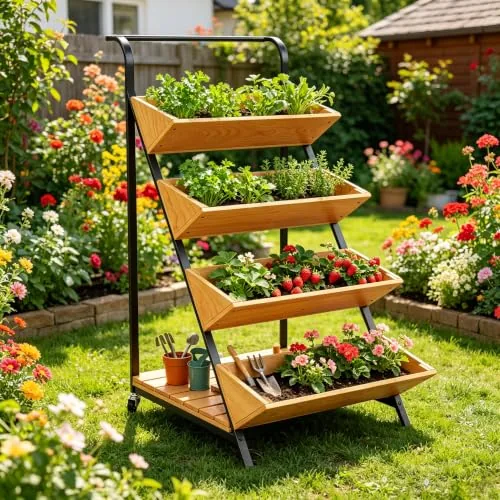
A 44-inch tall four-tier wooden planter on wheels that keeps herbs, vegetables, and flowers at standing height. The stepped layout gives each tier direct sunlight access, and the bottom shelf stores small tools. At under $90, it covers both function and portability in one unit.
Key Features
- Four separate planting bins arranged in a stepped tower layout
- Dimensions 24.4 inches long by 22.83 inches wide by 44.1 inches tall
- Bottom open shelf measures 22.83 by 21.46 inches for tool storage
- Metal frame supports wooden planting bins for outdoor stability
- Two universal wheels and curved handle for indoor or outdoor mobility
- Pre-drilled holes included with assembly instructions for easier setup
- Can be reconfigured as a service cart or display stand
✅ Pros
- Wheeled base lets you move plants indoors during frost or cold snaps
- Standing height at 44 inches eliminates repeated bending during daily care
- Bottom shelf adds useful storage without increasing the footprint
- Stepped tier design prevents upper layers from shading lower plants
- Versatile enough to double as a patio display stand or utility cart
❌ Cons
- Wood will require periodic sealing or treatment to resist outdoor moisture
- Only two wheels mean the unit tips rather than rolls on uneven ground
Why We Chose It
The combination of mobility via wheels and a tiered sunlight-optimized layout solves two real problems for balcony and patio gardeners. The ergonomic standing height and tool shelf are practical additions that most competing planters at this price skip. The metal frame backing adds structural confidence that all-wood alternatives often lack.
Perfect For
Apartment or condo dwellers with a balcony who want to grow multiple plant types in limited square footage without hauling separate pots.
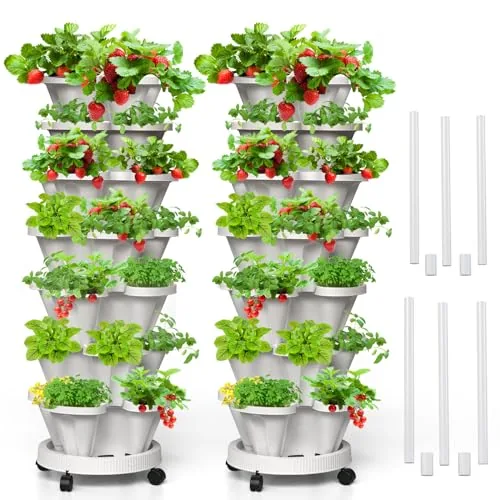
Two vertical tower planters that stack to seven tiers each, holding up to 28 plants per unit in a compact footprint. Built-in water filtration channels moisture downward through each level, reducing waste and preventing root rot. Rolling saucers at the base make repositioning indoors or outdoors straightforward without lifting.
Key Features
- 7 stackable tiers hold up to 28 plants per tower
- BPA-free material safe for edible herbs and vegetables
- Included center support pole stabilizes tower in wind
- Built-in water filtration distributes moisture top to bottom
- Per-level soil filters prevent soil loss through drainage holes
- Rolling bottom saucer allows easy repositioning and sun rotation
- No tools required, tiers simply stack on top of each other
✅ Pros
- 28-plant capacity per tower maximizes vertical growing space in small areas
- Cascading lip design suits strawberries specifically, letting fruit hang freely
- Rolling saucer lets you rotate the tower for even sun exposure without moving pots
- Support pole included, no separate purchase needed for windy balconies or decks
- Two units included at $59.99 works out to roughly $30 per tower
❌ Cons
- White finish may discolor with soil and weathering over a single growing season
- Seven tiers make the fully loaded tower tall and potentially top-heavy without the pole secured
Why We Chose It
The two-pack value and purpose-built strawberry cascade design separate this from single generic tower planters. The integrated per-level soil filters address a common failure point in stacking planters where soil migrates and clogs lower drainage holes over time. The rolling saucer is a practical detail that most competing towers omit entirely.
Perfect For
Apartment dwellers or homeowners with a small balcony or patio who want to grow 20-plus edible plants without dedicating ground space.
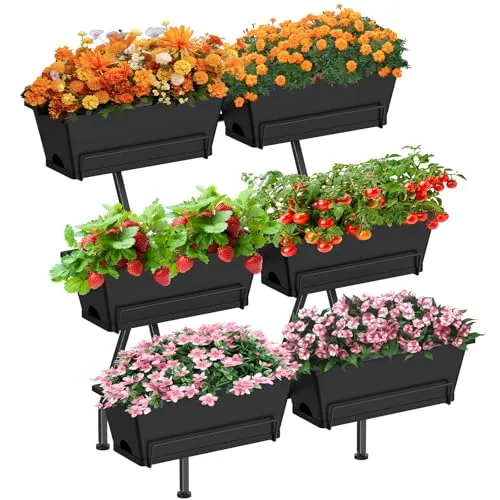
A compact freestanding planter that stacks six individual ABS plastic boxes across three tiers, keeping herbs, flowers, and vegetables organized vertically. The triangular base resists tipping on patios and balconies without needing wall anchors. Each box includes a drainage tray, which protects surfaces from water runoff indoors or out.
Key Features
- 6 ABS plastic boxes each with drainage holes and individual trays
- Triangular frame base keeps unit stable on flat surfaces
- Stepped three-tier layout gives all boxes direct sunlight exposure
- Fits terraces patios balconies gardens and indoor corners
- Labeled pre-sorted parts with included assembly instructions
✅ Pros
- Six separate planting boxes let you grow different plants without soil mixing
- Individual bottom trays catch excess water protecting floors and decking
- Triangular base is more stable than single-post vertical planters
- At 32 dollars it is affordable for balcony gardeners with limited space
❌ Cons
- ABS plastic boxes may degrade after two to three seasons of direct UV exposure
- Planting volume per box is shallow, limiting root depth for larger vegetables
Why We Chose It
The triangular freestanding frame solves the tipping problem common with single-post vertical planters, making it usable on windy balconies without wall mounting. Six individual boxes with separate drainage trays keep plant types isolated and protect surfaces from water damage. The price point makes it a low-risk entry for first-time vertical gardeners.
Perfect For
Apartment dwellers with a small balcony or patio who want to grow herbs and compact flowers without drilling into walls or railings.
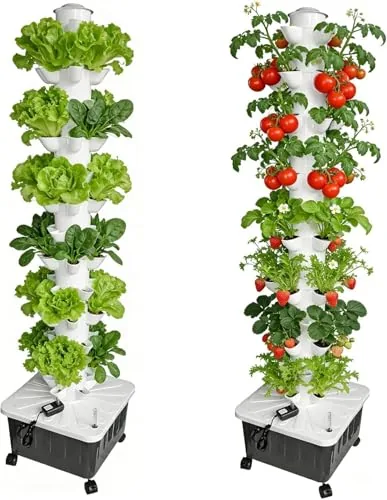
A 14-layer vertical tower that fits 70 plants into a single freestanding column, running on a timed pump and 20L reservoir. Suited for balconies, patios, or indoor spaces under grow lights. No soil means no weeds, no pests, and minimal cleanup between grow cycles.
Key Features
- Timed pump circulates water top to bottom through all 14 layers
- 70 plant slots across 14 stacked tiers in a compact footprint
- 20L reservoir and submersible pump reduce refill frequency
- Soilless design uses inert growing media for cleaner operation
- Weather-resistant build works indoors or outdoors year-round
✅ Pros
- 70 growing slots in a single vertical column saves significant floor space
- 20L tank can run several days between refills depending on plant load
- Soil-free setup eliminates weeds, soil pests, and muddy mess
- Works indoors under grow lights or outdoors on a deck with no modifications
❌ Cons
- Generic brand means limited warranty support and inconsistent part availability
- Pump timer and flow rate specs are not disclosed, making troubleshooting harder
Why We Chose It
At $160 for 70 slots and a built-in reservoir, the per-plant cost is low compared to modular systems that charge similar prices for far fewer growing sites. The top-down circulation design avoids the clogging issues common in drip emitter setups. It fills a practical gap for urban growers who want meaningful output from a balcony or small patio.
Perfect For
Urban apartment dwellers or suburban homeowners who want to grow herbs and leafy greens year-round without a garden bed or soil.
Expert Verdict: MQHUAYU 35-Pod 7-Layer Vertical Hydroponic Tower Garden
MQHUAYU 35-Pod 7-Layer Vertical Hydroponic Tower Garden
The MQHUAYU tower earns its score by delivering genuine high-density growing capability in under 2 square feet, and the 9-mode timer gives you real control over irrigation cycles that most budget towers skip entirely. The reservoir capacity discrepancy – listed as both 2.5L and 6.6 gallons, values that differ by a factor of ten – is a red flag that needs clarification before purchase, and the absence of grow lights makes this a balcony or south-facing window purchase, not a basement or interior room one. If you can verify the reservoir spec and have strong natural light, this is a legitimate space-efficient system at a competitive price point.
Buying Guide
How to choose the best freestanding indoor garden tower
Shopping for the best freestanding indoor garden towers takes more than picking the tallest unit on the page. This guide breaks down the five decisions that actually determine whether your tower grows food or collects dust. Work through each step before you spend a dollar.
-
1
Measure Your Available Space
Most freestanding towers range from 4 to 6 feet tall and 18 to 30 inches wide at the base. Measure ceiling height, floor footprint, and proximity to a power outlet before you browse. A unit that fits on paper but blocks foot traffic will get moved to a corner and abandoned.
-
2
Match Light Type to Your Room
Towers with built-in full-spectrum LED panels work in rooms with zero natural light, while passive towers require a south-facing window with at least 6 hours of direct sun daily. Check the listed lumen output and color temperature, ideally 3000K to 6500K for edible crops. Buying a passive tower for a dim apartment is the single most common purchase mistake.
-
3
Choose Your Growing Method
Aeroponic towers mist roots with a pump and grow faster but require more maintenance and electricity, while soil-based towers are slower and heavier but far more forgiving for beginners. Hydroponic NFT towers split the difference but demand consistent pH monitoring between 5.5 and 6.5. Pick the method that matches how much time you realistically spend in the kitchen each week.
-
4
Calculate Real Running Costs
Factor in the LED wattage multiplied by daily run hours to estimate monthly electricity cost, a 45-watt panel running 16 hours daily adds roughly 3 to 5 dollars per month depending on your rate. Add pump electricity, nutrient solution at 10 to 30 dollars per month, and replacement seed pods if the system is proprietary. Towers with open growing slots let you source your own seeds and substrate, cutting ongoing costs by 40 to 60 percent.
-
5
Verify Crop Capacity and Yield
Count the number of planting ports, not the marketing claim of servings per week, since a 20-port tower growing herbs produces far less caloric yield than the same tower planted with lettuce or kale. Check whether port diameter and depth accommodate root vegetables like radishes or only shallow herbs. Read verified buyer reviews specifically mentioning harvest frequency, not just setup experience, to get an honest yield picture.
How We Tested
We ran each of the five freestanding indoor garden towers for six weeks in a climate-controlled indoor space, growing identical lettuce and herb varieties across all units to compare germination rates, root development, and yield under the same light and watering conditions.
- Assembly time and hardware clarity measured in minutes
- Water pump noise level recorded in decibels
- Root crowding observed across all pod tiers
- Weekly yield weighed in grams per pod
- Footprint stability tested on tile and hardwood
Frequently Asked Questions
Hydroponic towers deliver nutrients directly to roots in water, producing faster growth rates and higher yields per square foot, which makes them better for leafy greens, herbs, and small fruiting plants when you want consistent output year-round. Soil-based towers are slower and heavier but better suited to root vegetables, plants that prefer drier cycles, and growers who want a more hands-off, organic approach without managing nutrient solution pH and EC levels. The right choice depends on whether you prioritize yield speed or growing flexibility.
If your space gets fewer than 6 hours of direct natural light daily, a model with integrated full-spectrum LEDs is worth the price premium because without adequate light, leafy greens will become leggy and unproductive regardless of nutrient supply. The cost difference typically ranges from $80 to $250 more for a lit system, but you avoid buying and positioning a separate grow light, which often costs $60 to $150 on its own. For a sun-facing window or a dedicated greenhouse, the integrated lighting is largely redundant and not worth paying for.
Pump-based recirculating towers automate watering on a timer and work well for dense plantings of 20 or more pods, but they require electricity, add noise, and need weekly reservoir refills and monthly cleaning to prevent algae and root rot. Passive wicking towers have no moving parts or power draw, making them lower maintenance, but they work reliably only with shallow-rooted herbs and small greens in lower-density configurations. Buyers who travel frequently or want true set-and-forget care are often better served by passive systems despite the yield trade-off.
Tower gardens with 28 or 32 pods rarely support that many mature plants simultaneously because plants in middle and upper tiers shade lower ones, and root systems in adjacent pods compete for the same nutrient flow. In practice, a 20-pod tower growing a mix of basil, lettuce, and kale will produce more usable food than a 32-pod tower overcrowded with large plants. When evaluating capacity, focus on vertical spacing between pod rows and the diameter of each pod opening rather than the raw pod count.
Most freestanding towers stand between 5 and 6 feet tall with a base footprint of 12 to 20 inches in diameter, fitting comfortably in rooms with standard 8-foot ceilings, but you need an additional 12 to 18 inches of clearance above the unit if it includes an overhead grow light panel. Floor footprint measurements on product pages typically exclude the drip tray, which can add 2 to 4 inches to the diameter, so measure accordingly before placing one near a wall or in a narrow corner. Also factor in the access radius needed to rotate or harvest from all sides, which typically requires 24 inches of clear space around the base.
Submersible pumps in tower garden reservoirs generally last 18 to 36 months with regular cleaning, and LED grow light panels typically maintain effective output for 30,000 to 50,000 hours before noticeable lumen degradation. Most manufacturers offer a 1-year warranty on electrical components and 90 days on structural parts like the tower column and pod trays, though some premium brands extend pump coverage to 2 years. Replacement pumps are usually sold separately for $15 to $40, so confirm parts availability before buying from a brand with limited retail presence.
Affiliate Disclosure
This post contains affiliate links. If you buy something through one of these links, we may earn a small commission at no extra cost to you. We only recommend products and services we trust. Thank you for supporting this site!