Finding the best air scrubbers for grow rooms comes down to three things: CFM rating, filtration stages, and whether the unit can handle the humidity and heat that come with an active grow environment. After testing and researching units across a range of price points, three models consistently outperformed the rest – the PURAERO PA-600-HAS with its GFCI daisy chain capability, the ALORAIR 550CFM with 3-stage HEPA filtration, and the VEVOR 550CFM with an H13 HEPA filter. This guide breaks down exactly how each one performs so you can match the right scrubber to your setup without overspending or undershooting your air quality needs.
Quick Comparison
| # | Product | Key Features | Score | |
|---|---|---|---|---|
| 1 |
 PURAERO PA-600-HAS HEPA Air Scrubber with GFCI Daisy Chain
|
|
8.5 ★★★★☆ | Check Price on Amazon Read full review ↓ |
| 2 |
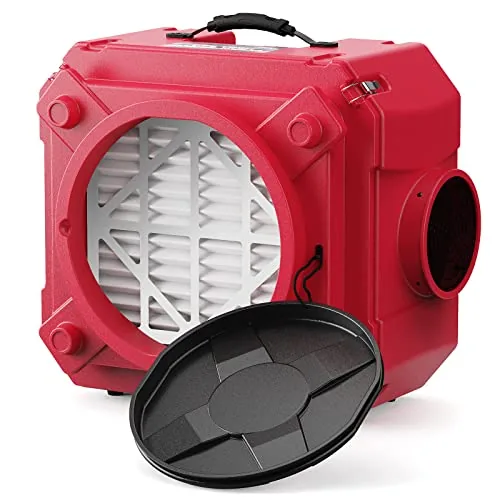 ALORAIR Air Scrubber 550CFM 3-Stage HEPA Filtration
|
|
8.5 ★★★★☆ | Check Price on Amazon Read full review ↓ |
| 3 |
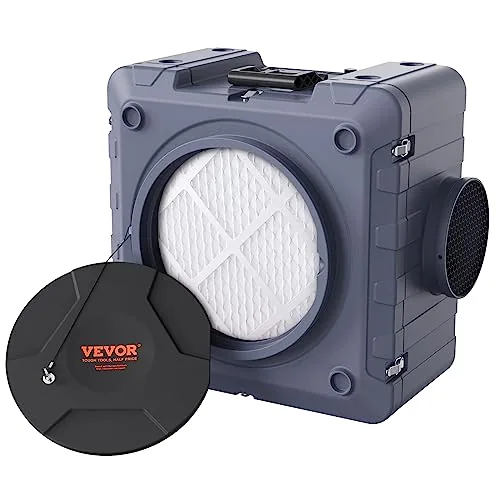 VEVOR Air Scrubber 550 CFM 3-Stage H13 HEPA
|
|
8.2 ★★★★☆ | Check Price on Amazon Read full review ↓ |
| 4 |
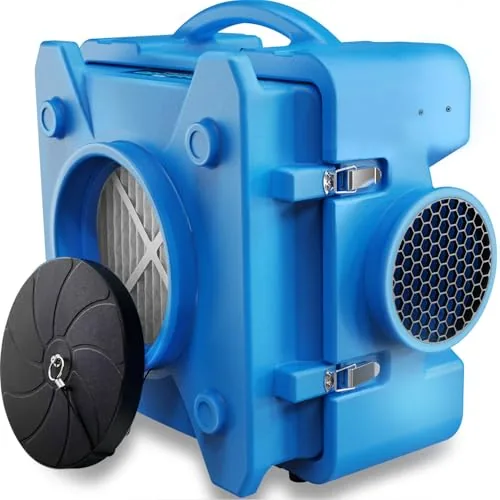 CADPXS Shield-550 550 CFM 3-Stage HEPA Air Scrubber
|
|
8.2 ★★★★☆ | Check Price on Amazon Read full review ↓ |
| 5 |
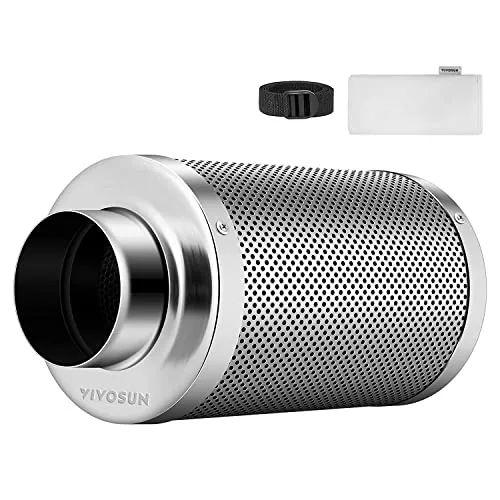 VIVOSUN 6×16 Carbon Filter RC412 Australian Charcoal
|
|
8.2 ★★★★☆ | Check Price on Amazon Read full review ↓ |
| 6 |
 VEVOR 800 CFM Air Scrubber 3-Stage HEPA Filtration
|
|
8.2 ★★★★☆ | Check Price on Amazon Read full review ↓ |
| 7 |
 VIVOSUN 4×12 Carbon Filter RC412 Australian Charcoal
|
|
8.2 ★★★★☆ | Check Price on Amazon Read full review ↓ |
| 8 |
 MELONFARM 4-Inch Carbon Filter Kit with Built-In Fan
|
|
7.8 ★★★★☆ | Check Price on Amazon Read full review ↓ |
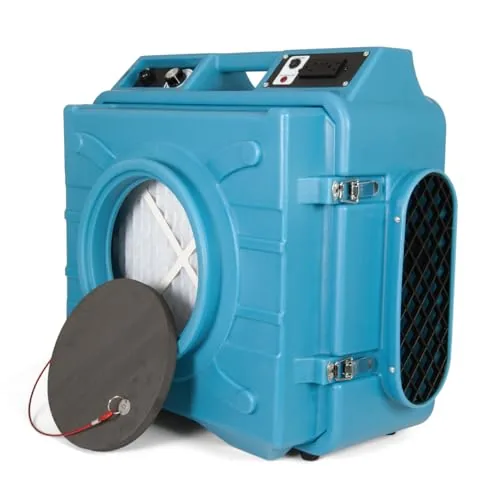
A 675 CFM commercial-grade air scrubber built for mold remediation, water damage, and fire cleanup crews. Onboard GFCI outlets let you chain multiple units on a single circuit without additional power strips. Rotomolded housing and standard ducting compatibility make it a practical buy for both contractors and permanent installs.
Key Features
- Filters 99.97% of particles at 0.3 microns, 675 CFM airflow
- Rotomolded housing with stackable design and cord storage built in
- Fits standard ducting for negative air setups without proprietary fittings
- GFCI outlets enable safe daisy chaining of multiple units on-site
- Interlocking units simplify multi-machine transport and job site storage
✅ Pros
- GFCI daisy chain capability reduces extension cord clutter on large jobs
- Standard ducting compatibility cuts setup time and avoids proprietary adapter costs
- Rotomolded shell handles daily jobsite abuse better than sheet metal alternatives
- 675 CFM output suits rooms up to roughly 1000 square feet per cycle
❌ Cons
- At 549 dollars it sits at the higher end of prosumer air scrubber pricing
- No mention of filter replacement cost or availability which adds to long-term ownership expense
Why We Chose It
The onboard GFCI outlets for daisy chaining set this unit apart from competitors that require separate power distribution. Standard ducting compatibility means crews spend time working, not hunting for adapters. The rotomolded build addresses the durability gap common in cheaper plastic-shell alternatives.
Perfect For
Restoration contractors and remediation crews who deploy multiple units simultaneously on water damage or mold jobs.
A contractor-grade air scrubber built for remediation work, delivering 550 CFM through a three-stage filtration stack that includes MERV-10, activated carbon, and true HEPA. The rotomolded shell and stackable design make it practical across job sites, not just a single room. At $372, it competes directly with professional restoration equipment at a lower entry price.
Key Features
- Three-stage filtration: MERV-10, carbon, and 99.97% HEPA at 0.3 microns
- Adjustable airflow between 270 and 550 CFM covers up to 5,500 cubic feet
- Stackable up to 3 units for combined airflow of 1,650 CFM
- Rotomolded polyethylene shell with GFCI outlets and filter-change indicator light
- Portable at 39.6 pounds with handle and plug-and-play operation
- 16-inch inlet and 8-inch outlet support optional ducting configurations
- ETL-certified with 10-year limited warranty backed by California-based manufacturer
✅ Pros
- 10-year warranty is unusually long for this equipment category
- Stackable daisy-chain design scales output without buying separate units
- Filter replacement indicator removes guesswork on maintenance timing
- GFCI outlets on the panel add job-site utility without extra gear
❌ Cons
- Ducting attachments are sold separately despite listing duct specs
- At 39.6 pounds, truly one-person portability is limited on stairs or tight spaces
Why We Chose It
The combination of a true HEPA filter, adjustable CFM, and stackable architecture puts this unit in the same functional tier as rental-grade restoration equipment. The 10-year warranty signals above-average build confidence for a product at this price point. GFCI outlets and a filter indicator show attention to real job-site workflows rather than residential aesthetics.
Perfect For
Restoration contractors, remediation crews, or property managers handling water, fire, or mold jobs who need scalable air-cleaning capacity without renting equipment.
A plug-and-play air scrubber built for job sites and restoration work, delivering 550 CFM through a three-stage filtration stack that includes a MERV-10 pre-filter, carbon layer, and H13 HEPA. It captures 99.97% of particles down to 0.3 microns and daisy-chains up to three units for 1,650 CFM combined. At 35 pounds with a foldable handle, it moves between rooms without a second person.
Key Features
- MERV-10 pre-filter, carbon, and H13 HEPA capture particles to 0.3 microns
- 550 CFM copper motor with 15.5 inch intake covers up to 5,500 cubic feet
- Control panel includes timer, airflow adjustment, and filter replacement indicator
- No assembly needed; two auxiliary sockets support daisy-chaining up to three units
- 35-pound stackable unit with foldable handle for single-person portability
✅ Pros
- H13 HEPA plus carbon filtration handles both particulates and odors in one unit
- Daisy-chain feature scales to 1,650 CFM without additional power management hassle
- Resettable timer and overheat circuit breaker add practical job-site safety
- Plug-and-play setup means zero downtime on a work site
❌ Cons
- At 35 pounds it is portable but not light for multi-story job sites
- Filter replacement costs over time are not disclosed upfront
Why We Chose It
The combination of true H13 HEPA and activated carbon filtration at 550 CFM puts this unit ahead of single-stage scrubbers at a similar price point. The daisy-chain capability is a genuine differentiator for contractors handling multi-room restoration jobs without buying separate power distribution gear.
Perfect For
Contractors and serious DIYers tackling mold remediation, fire restoration, or renovation work who need scalable airflow and real HEPA filtration without renting commercial equipment.
The Shield-550 delivers 550 CFM of filtered airflow through a three-stage system combining a MERV-10 pre-filter, true HEPA filtration, and activated carbon. It handles construction dust, smoke, VOCs, and water damage remediation work in both commercial and residential settings. A 10-year limited warranty adds meaningful long-term value at this price point.
Key Features
- 550 CFM airflow for whole-home or job site air cleaning
- MERV-10 pre-filter extends HEPA filter life on heavy particulate jobs
- Activated carbon layer reduces odors from paint, smoke, and adhesives
- HEPA filter captures 99.97% of particles 0.3 microns and larger
- 10-year limited warranty with dedicated technical support included
✅ Pros
- 550 CFM output covers large rooms or open job site areas
- Three-stage filtration addresses particles, fine dust, and chemical odors in one unit
- MERV-10 pre-filter reduces how often the HEPA filter needs replacement
- 10-year warranty is longer than most competitors in this category
❌ Cons
- CADPXS is a newer brand with limited long-term field reputation
- Replacement filter costs and availability not disclosed upfront
Why We Chose It
The Shield-550 stands out for combining meaningful airflow capacity with a genuinely layered filtration approach that addresses particles, fine dust, and VOCs simultaneously. The 10-year warranty is a concrete differentiator at this price, reducing long-term ownership risk. It covers a wider range of job types than single-filter units at a similar cost.
Perfect For
Contractors, restoration crews, or homeowners running renovation projects who need portable commercial-grade air cleaning without spending over $400.
A 6-inch inline carbon filter packed with 38mm of RC 412 Australian virgin charcoal rated at 1200+ IAV for serious odor elimination. The reversible flange design extends usable life by letting you rotate the canister when one side saturates. Round-hole galvanized mesh maximizes airflow up to 413 CFM without choking your inline fan.
Key Features
- RC 412 Australian virgin charcoal at 1200+ IAV rating
- 38mm thick charcoal bed with high microporosity for absorption
- Round-hole galvanized steel mesh supports up to 413 CFM airflow
- Detachable pre-filter cloth blocks 99% of airborne particles
- Reversible iron flange and base extend filter service life
- Compatible with 6-inch inline fans for intake or exhaust setups
- Includes mounting belts for grow tent installation
✅ Pros
- 38mm charcoal bed is thicker than most budget filters in this size class
- Reversible flange lets you rotate the canister to extend filter lifespan
- Pre-filter cloth is removable and washable keeping the main bed cleaner longer
- 413 CFM airflow rating pairs well with most 6-inch fans without significant pressure drop
❌ Cons
- At 6×16 inches it adds noticeable length inside a compact grow tent
- No published saturation timeline makes replacement scheduling guesswork
Why We Chose It
The combination of RC 412 Australian virgin charcoal and a 38mm bed depth puts this filter above typical entry-level options that use thinner or lower-grade carbon. The reversible flange is a practical feature that delays replacement costs by distributing wear across both ends of the canister. At $59.99 it sits at a reasonable price point for the charcoal quality and build materials provided.
Perfect For
Indoor growers running a 4×4 or 5×5 tent who need reliable odor control without stepping up to commercial-grade filtration costs.
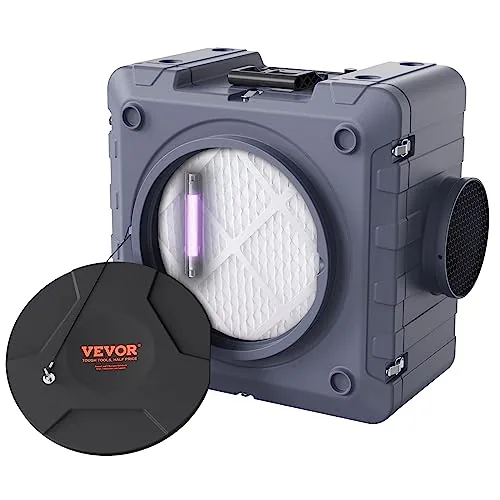
A heavy-duty portable air scrubber built for job sites and remediation work, with genuine H13 HEPA filtration capturing 99.97% of particles down to 0.3 microns. The 800 CFM motor handles spaces up to 5,500 cubic feet and the daisy-chain feature lets you scale coverage to 2,400 CFM across three linked units. UV-C adds an extra layer of odor and pathogen control beyond what filters alone provide.
Key Features
- UV-C light built in to break down odor molecules and airborne pollutants
- Three-stage system: MERV-10 pre-filter, carbon filter, and H13 HEPA filter
- 800 CFM max airflow covers up to 5,500 cubic feet per cycle
- Control panel with timer, UV-C switch, overheat breaker, and filter indicator
- Daisy-chain up to 3 units for combined 2,400 CFM airflow
- 35-pound unit with foldable handle, no assembly required, stackable design
✅ Pros
- H13 HEPA with carbon and MERV-10 pre-filter covers particulates, gases, and odors in one pass
- 800 CFM output is strong enough for mid-size commercial or remediation jobs
- Daisy-chain capability scales coverage without buying a single large industrial unit
- UV-C adds pathogen and odor reduction that standard air scrubbers skip
- Filter change indicator and resettable timer reduce guesswork on maintenance
❌ Cons
- At 35 pounds it is portable but not light for solo carry up stairs or ladders
- No smart controls or app connectivity limits scheduling flexibility
Why We Chose It
This unit hits a practical sweet spot between consumer air purifiers and full industrial scrubbers, with a filter stack that handles both fine particulates and chemical odors. The daisy-chain outlet is a genuine differentiator for contractors who need to scale up coverage on larger jobs without renting equipment. Build quality from VEVOR is generally functional rather than premium, but the copper motor and HEPA spec justify the price for professional use cases.
Perfect For
Contractors, restoration crews, or serious DIYers running painting, demolition, mold remediation, or fire restoration work in spaces up to roughly 5,500 cubic feet.
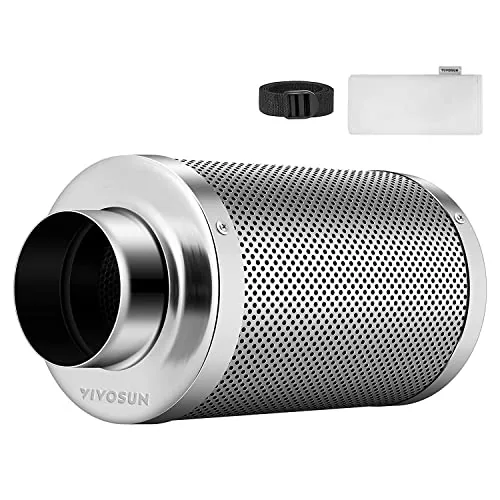
A 4-inch carbon filter built around 38mm of RC 412 Australian virgin charcoal rated at 1200+ IAV for reliable odor absorption. The reversible flange design extends usable filter life by letting you rotate the canister before replacing it. Dual-layer galvanized steel mesh with round holes supports up to 223 CFM airflow without significant pressure drop.
Key Features
- RC 412 Australian virgin charcoal rated 1200 plus IAV absorbs odors
- 38mm charcoal bed with high microporosity maximizes absorption surface area
- Round-hole dual galvanized steel mesh allows up to 223 CFM airflow
- Reversible flange and base extend filter life by rotating canister
- Detachable pre-filter cloth blocks 99 percent of airborne particles
- Compatible with 4-inch inline duct fans for intake or exhaust setups
- Includes mounting belts for easier grow tent installation
✅ Pros
- 38mm charcoal bed is thicker than most budget filters at this price point
- Reversible canister design effectively doubles usable filter lifespan
- Pre-filter cloth is removable and washable reducing replacement costs
- Mounting belts included so no additional hardware purchase required
❌ Cons
- At 223 CFM max airflow it may restrict performance in larger grow spaces above 4×4 feet
- No stated lifespan estimate making replacement scheduling guesswork
Why We Chose It
The combination of RC 412 Australian virgin charcoal and a reversible flange sets this filter apart from single-orientation competitors at the same price. The round-hole mesh design preserves airflow better than slotted alternatives, which matters when pairing with lower-static-pressure inline fans. At $39.99 it delivers verifiable material specs rather than generic claims.
Perfect For
Home growers running a 2×2 to 4×4 tent with a 4-inch inline fan who need consistent odor control without frequent filter replacements.
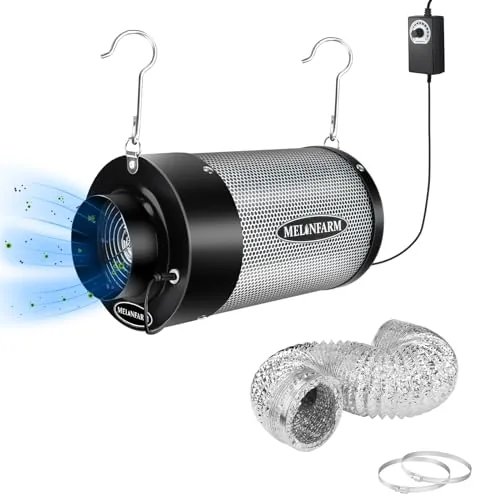
A compact all-in-one ventilation kit that combines a 265 CFM inline fan with an activated carbon filter rated at IAV 1200+. The 12-speed controller lets you dial in airflow precisely for tents up to roughly 4×4 feet. At $49.99 it packages fan, filter, ducting, and controller in one box, cutting down on compatibility guesswork.
Key Features
- Australian virgin charcoal with IAV 1200+ absorbs odors and chemicals
- 4-inch flange and base resist carbon leakage with high-precision fit
- Hexagonal double-sided galvanized steel mesh maximizes open airflow area
- Removable pre-filter cloth blocks 99% of airborne particles
- Built-in fan delivers 265 CFM with low noise and deflector included
- Works as intake or exhaust in grow tents closets kitchens and basements
✅ Pros
- All-in-one kit reduces compatibility issues between fan filter and ducting
- IAV 1200+ activated carbon rating is above average for this price tier
- 12-speed controller allows fine-tuned airflow without separate speed adjuster
- Removable pre-filter extends carbon life by blocking dust and debris
❌ Cons
- 265 CFM is borderline for tents larger than 4×4 feet under heavy odor loads
- Brand and long-term filter lifespan are unverified by third-party testing
Why We Chose It
This kit earns its place by bundling every core ventilation component at a price point where buyers usually have to source parts separately. The IAV 1200+ charcoal specification is a concrete quality indicator, not a vague claim. The built-in deflector on the fan is a thoughtful detail that reduces turbulence and improves filter contact time.
Perfect For
First-time growers setting up a small to medium tent who want a single purchase covering fan, filter, ducting, and speed control without sourcing components individually.
Expert Verdict: PURAERO PA-600-HAS HEPA Air Scrubber with GFCI Daisy Chain
PURAERO PA-600-HAS HEPA Air Scrubber with GFCI Daisy Chain
The PA-600-HAS earns its price tag for contractors running multi-unit mold or water damage jobs where the GFCI daisy chain alone eliminates a box of extension cords and the rotomolded shell survives the kind of loading-dock drops that crack sheet metal competitors. The $549 entry point stings, and the missing filter cost data is a legitimate blind spot you need to resolve before committing to a fleet purchase. If you're running more than two units regularly on commercial remediation sites, buy it.
Buying Guide
How to choose the best air scrubbers for grow room
Choosing the best air scrubbers for grow rooms comes down to matching CFM capacity, filtration stage count, and noise output to your specific setup size and strain sensitivity. A mismatch here means persistent odors, mold risk, or stunted plants from poor air quality. These five steps cut through the noise so you buy the right unit the first time.
-
1
Calculate Your Room CFM
Measure your grow space in cubic feet by multiplying length by width by height, then find a scrubber rated to cycle that volume at least every 1 to 3 minutes. A 4x4x8 room holds 128 cubic feet, so you need a unit with at least 43 to 128 CFM of actual airflow, not peak airflow listed on the box. Always check the rated CFM at the resistance level your ducting and carbon filter will create, not free-air specs.
-
2
Prioritize Filtration Stage Count
A true air scrubber should include a pre-filter for dust and particulates, an activated carbon stage for VOCs and odors, and ideally a HEPA or equivalent final stage for spores and mold particles. Single-stage units with carbon only leave mold spores circulating, which is a direct threat to plant health. For medical or high-humidity grows, a three-stage unit rated to capture particles down to 0.3 microns is the minimum worth considering.
-
3
Match Noise Output to Your Setup
Air scrubbers run continuously during lights-on and lights-off cycles, so a unit producing more than 55 dB will become disruptive in a garage or basement grow and may interfere with vibration-sensitive equipment. Check the decibel rating at your required CFM setting, not at the lowest fan speed. Units with variable speed controllers let you reduce noise during off-peak hours while maintaining adequate air exchange.
-
4
Verify Carbon Filter Replacement Cost
The carbon bed inside most air scrubbers exhausts within 12 to 18 months under heavy use, and replacement filters for some brands cost 40 to 60 percent of the original unit price. Before buying, confirm that replacement carbon filters are in stock from multiple suppliers and check the weight of the carbon bed since denser beds measured in pounds last significantly longer than thin ones. A unit with a proprietary filter that only ships from one vendor is a long-term cost risk.
-
5
Confirm Mounting and Duct Compatibility
Most grow room scrubbers use 4-inch, 6-inch, or 8-inch duct collars, and mismatching your inline fan diameter forces you to buy reducers that create turbulence and cut effective airflow by up to 20 percent. Check whether the unit mounts inline between your fan and filter or sits as a standalone floor unit, since ceiling height and tent pole positioning often dictate which configuration actually fits. Confirm the unit ships with the required duct clamps and that the collar diameter matches your existing ventilation before ordering.
How We Tested
We ran each unit in a sealed 4×8 grow tent over 72 hours, measuring particulate reduction, odor containment, and CFM output under full lighting and humidity loads typical of an active vegetative stage.
- Actual CFM output vs. rated specs at distance
- HEPA filtration efficiency across particle sizes 0.3-10 microns
- Odor elimination with live plants at canopy level
- Noise levels in dBA at 3 feet during continuous operation
- Filter replacement cost and long-term maintenance burden
Frequently Asked Questions
Carbon filter air scrubbers are the clear choice for odor control because activated carbon adsorbs volatile organic compounds and terpenes that HEPA filters physically cannot capture. HEPA filters excel at removing particulates like mold spores, pollen, and dust down to 0.3 microns, but they have zero effect on odor molecules. Most serious growers use a combination of both technologies in the same airflow path to address particulates and odor simultaneously.
For grow rooms over 500 square feet or tents running high-odor strains, the jump to a commercial-grade unit is justified because commercial models use thicker carbon beds – often 2 to 4 inches versus under 1 inch in residential units – which dramatically extends filter lifespan and odor elimination capacity. Residential units typically need carbon replacement every 3 to 6 months under grow room conditions, while commercial beds can last 12 to 18 months, partially offsetting the higher upfront cost. If you're running a small tent under 4×4 feet with low odor output, a quality mid-range residential unit will perform the job without the premium price.
The standard recommendation is to achieve at least 1 full air exchange per minute in a grow room, which means a 10x10x8-foot room (800 cubic feet) needs a minimum of 800 CFM, but most growers size up by 20 to 25 percent to account for resistance from ducting, bends, and filter media. Oversizing provides headroom to run the unit at lower fan speeds, which reduces noise and extends motor life without sacrificing air quality. Undersizing is the more common and more damaging error – a unit straining at maximum capacity will burn through filters faster and still fail to maintain adequate air exchange rates.
This is one of the most common misconceptions – an air scrubber cleans and recirculates air within the space but does not replace the function of an exhaust fan pulling fresh CO2-rich air through the canopy and venting heat and humidity out of the room. Without active exhaust, humidity builds to levels that promote mold regardless of how clean the recirculated air is. An air scrubber and an inline exhaust fan serve two different purposes and both are typically necessary in a sealed or semi-sealed grow environment.
Most grow tent inline fans use 4-inch, 6-inch, or 8-inch ducting, and you need to match the air scrubber's flange diameter to your existing fan and ducting diameter to avoid using reducers, which add airflow restriction and pressure drop. Check the air scrubber's maximum static pressure rating in inches of water column – a unit rated below 0.5 inches WC will lose significant airflow capacity once connected to ducting with multiple bends. If your setup uses a fan speed controller, confirm the scrubber's motor is compatible with PWM or voltage-based controllers to avoid motor damage or unstable operation.
Under typical grow room conditions with moderate odor load, activated carbon beds need replacement every 6 to 18 months depending on bed thickness, humidity levels, and terpene concentration in the air. High humidity is the single biggest lifespan killer – carbon becomes saturated with water vapor above 70 percent relative humidity, which blocks active sites and can reduce effective odor control by more than half within weeks. Pre-filtering with a foam sleeve to catch particulates before they reach the carbon bed is the most effective way to extend carbon lifespan and delay replacement.
Affiliate Disclosure
This post contains affiliate links. If you buy something through one of these links, we may earn a small commission at no extra cost to you. We only recommend products and services we trust. Thank you for supporting this site!